Balance sheet our top priority: Noble
Commodities group explains business model, addresses accounting criticisms; reaffirms balance sheet quality
Singapore
EMBATTLED Noble Group is ruling out no option to preserve the strength of its balance sheet, even if it means selling businesses that are considered core.
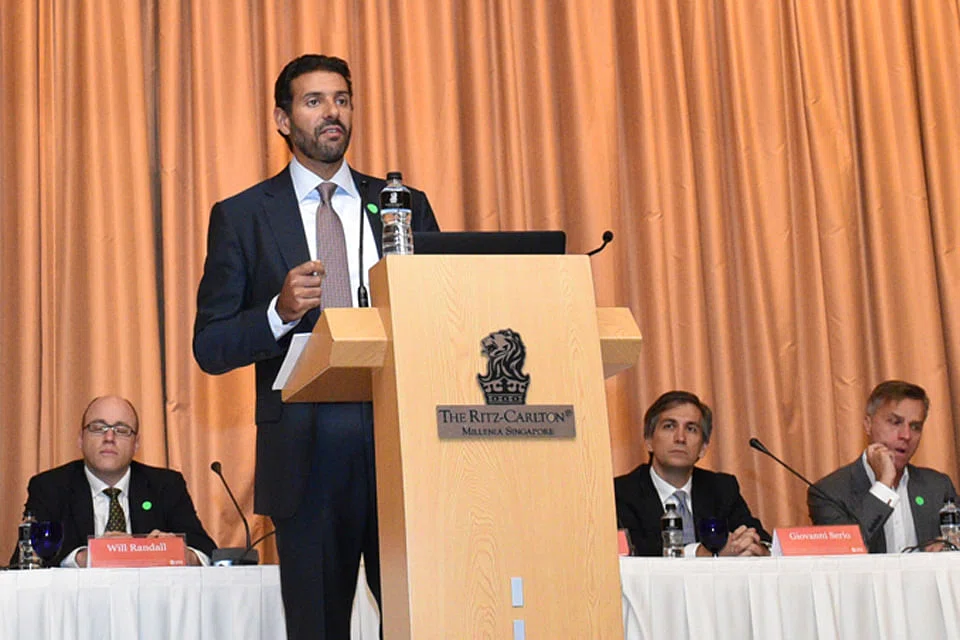
In its inaugural Investor Day on Monday, the group's management sought to explain its business model, address criticisms regarding its accounting practices and reaffirm the quality of its current balance sheet.
"We have a lot of options and propositions being presented to us," said its CEO Yusuf Alireza. This includes shutting down or deleveraging some businesses, working with banks to add credit facilities or even more strategic options with companies that understand the quality of the business and its management, he added.
"It's our responsibility to review all of those options including potentially selling businesses that we would not have considered under normal circumstances...We will prioritise the strength of our balance sheet above everything else."
Noble's shares took another beating to fall 7 per cent or 3.5 cents on high volumes to 45.5 Singapore cents on Monday, as the market closed before the 4.5-hour presentation to shareholders, members of the public and the media concluded at 6.30pm.
Mr Alireza emphasised to the 500-strong crowd that the commodities trading firm continues to enjoy strong support from key stakeholders who understand the business best: core shareholders, banks, counterparties and employees.
Staff turnover rate so far this year has been the lowest in five years, and business volumes continue to grow, showing the support from its counterparties, he said.
Asked later during the press conference whether any bank has registered concern over the downgrade of its credit outlook by Standard & Poor's and Moody's, the group revealed that the amount of banking lines made available to it has been reduced by US$500 million. This, nonetheless, was by "marginal banks" with whom Noble had no relationship with, and terminated for commercial reasons rather than concerns over its balance sheet.
"We were too small for them and they were too small for us," said Mr Alireza. The firm currently has US$15.2 billion in banking lines, one third of which are committed, or cannot be suspended by lenders based on market conditions.
In his view, the 60 per cent slide in Noble's share price since the beginning of the year was due to two factors: the bear commodities market, the pressure of which has also borne down on other commodities firms; and the specific challenges Noble has faced since anonymous outfit Iceberg Research launched its first report attacking its accounting practices in February.
Noble is now working to restore confidence in its balance sheet and earnings, so that the focus of the market and the share price will "go back to what it should be - how the management is delivering results and addressing challenges in the industry".
"It's not our responsibility to respond to Iceberg," said Mr Alireza. "It's our responsibility to address any and all concerns of our shareholders, so that the market and our shareholders can have confidence in the balance sheet, our accounts and the quality of our management team."
"If we can achieve that today, that people judge us by our facts and by our results, our share price will be a lot higher," he added, to applause from the audience.
The plunge in the firm's share price should also be viewed in the context of the fall in share prices of listed commodities firms in general, and not against the benchmark Straits Times Index (STI), he said.
The firm remains confident in its business, and sees no need for any white knight to rescue it from the crisis. "I don't think anybody who attends the session today would conclude that the company is beyond repair."
The day-long effort to meet analysts, bankers, shareholders and the media, nonetheless, represented a shift in the firm's rhetoric - that it had to better explain its business.
"The most important thing we need to do, and have done, and will continue to do is to educate the market and educate our stakeholders about our business," said Mr Alireza, adding that the more people understand its business, the less susceptible it will be to any attacks.
Asked what Noble's board has learnt from the past six months, its founder and chairman Richard Elman said: "Always plan for the worst."
Read more:
PwC to return to Noble by year-end to review implementation progress