Wall Street-backed crypto exchange takes aim at Asia FX market using won stablecoin
The goal is to create a cheaper, digital alternative to traditional non-deliverable forwards
 Add BT as a preferred source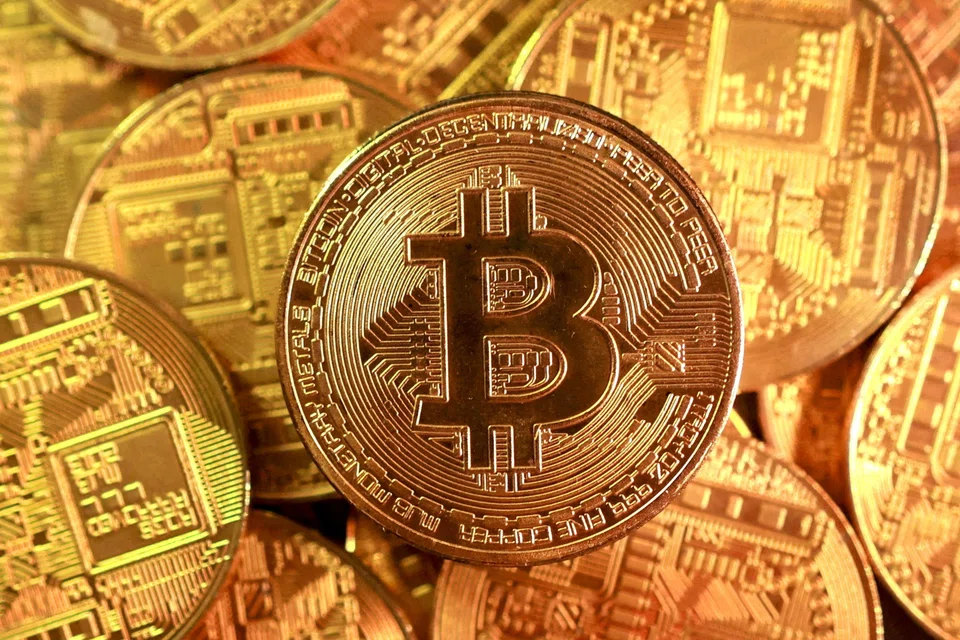
DeeperDive is a beta AI feature. Refer to full articles for the facts.
[SINGAPORE] A crypto exchange backed by Citadel Securities is creating the first blockchain-based derivative of the Korean won versus the US dollar, one of Asia’s busiest currency pairs.
EDXM International, the global arm of US-based EDX Markets, plans to launch a perpetual futures contract tracking the won. The goal is to create a cheaper, digital alternative to traditional non-deliverable forwards, or NDFs, which are used to bet on restricted currencies.
To achieve this, EDXM is relying on a won-US dollar stablecoin pair. This includes KRWQ, a first-of-its-kind won-backed stablecoin launched in October offshore, outside South Korea’s regulatory reach, by Cayman Islands-based Brainpower Labs. Trades are settled in USDC, a US dollar stablecoin issued by Circle Internet Group.
“Trading stablecoin perpetuals is a lot more efficient than NDFs, as these can be settled in real-time without the need for banking relationships and is much cheaper to take long or short exposure on KRW versus NDFs,” EDXM International chief executive officer Kai Kono said. He added that the product will launch by early April.
NDFs let traders bet on the direction of currencies such as the won without ever exchanging the currency itself. Instead, the contracts are settled in US dollars, with the winner paid the difference between the agreed rate and where the currency trades. It’s a workaround for markets where capital controls make it difficult to move currencies across borders. With roughly US$27 billion in average daily volume, won NDFs are the largest such market in the world.
EDXM wants to replicate that structure on the blockchain using perpetual futures. So-called perps are contracts that do not expire, allowing traders to go long or short KRWQ against USDC, with the price between them moving in line with the won-US dollar exchange rate. But just like traditional NDFs, gains and losses are paid out in US dollars – in this case, digital ones – because that’s where the liquidity is.
Navigate Asia in
a new global order
Get the insights delivered to your inbox.
While stablecoins are still in legislative limbo in South Korea as lawmakers debate the next phase of the country’s digital-asset legislation, Brainpower Labs believes it’s on solid legal footing. Unlike China, which has explicitly banned unapproved offshore yuan stablecoins, Korean officials have made no such edicts.
“We mint and redeem out of a Cayman entity, Brainpower Labs,” said Dave Shin, chief operating officer of the KRWQ project. “We have obtained legal advice from a Korean law firm that minting KRW stablecoins from offshore is not an issue.”
South Korea’s Financial Services Commission, which is leading regulatory efforts on stablecoins in the country, did not respond to calls from Bloomberg News seeking comment.
SEE ALSO




US dollar-backed stablecoins currently dominate the market, while emerging-market stablecoins have struggled to gain traction. But Shin thinks trading is the real prize.
“Emerging-market stablecoins have not been able to scale because they are focusing on the wrong use case – payments and settlements,” Shin said. “The high-potential adoption use case is in trading forex.”
Kono said EDXM’s goal for KRWQ perpetuals is to reach US$500 million in average daily volume within a year. The lure is a cost structure that Kono expects to be 50 to 75 per cent less than traditional NDFs.
The dual-market structure also creates a new arbitrage opportunity, where traders could offset positions against traditional NDFs, linking the two markets rather than replacing one with the other. Macro traders and hedge funds can bet on the spread between the two instruments, Shin said, since both track the won but trade on different rails.
Spark Systems will integrate its foreign-exchange trading platform into EDXM, said Devang Bhatia, the platform operator’s chief revenue officer.
The product comes at a time when South Korea is already moving to liberalise its currency markets. The country will allow 24-hour trading of the won starting this summer. There has also been talk of loosening rules around offshore trading – the reason that the won NDF market has grown so large, with 35 per cent more daily trading volume than the next largest, the Indian rupee.
This could soon mean more competition or possibly a shift in regulatory positioning towards offshore financial instruments.
“Capital controls have been top of mind for Korean policymakers as stablecoin rules are being debated,” said Angela Ang, head of policy and strategic partnerships for Asia-Pacific at blockchain intelligence firm TRM Labs. “An offshore stablecoin would likely draw attention from regulators, especially if meaningful demand emerges.”
For the KRWQ project, which has support from Seoul-based blockchain infrastructure firm IQ and US-based stablecoin infrastructure provider Frax, maintaining adequate liquidity for large institutional players could be key to success.
“Issuing offshore may provide issuers with more optionality, including targeting offshore use cases such as the NDF market, provided they are able to establish sufficient liquidity,” Ang said. BLOOMBERG
Decoding Asia newsletter: your guide to navigating Asia in a new global order. Sign up here to get Decoding Asia newsletter. Delivered to your inbox. Free.
Share with us your feedback on BT's products and services