

Halcyon finds bounce in the old rubber trade
Chief sees market returning to normal in 3-6 mths. By JAMIE LEE
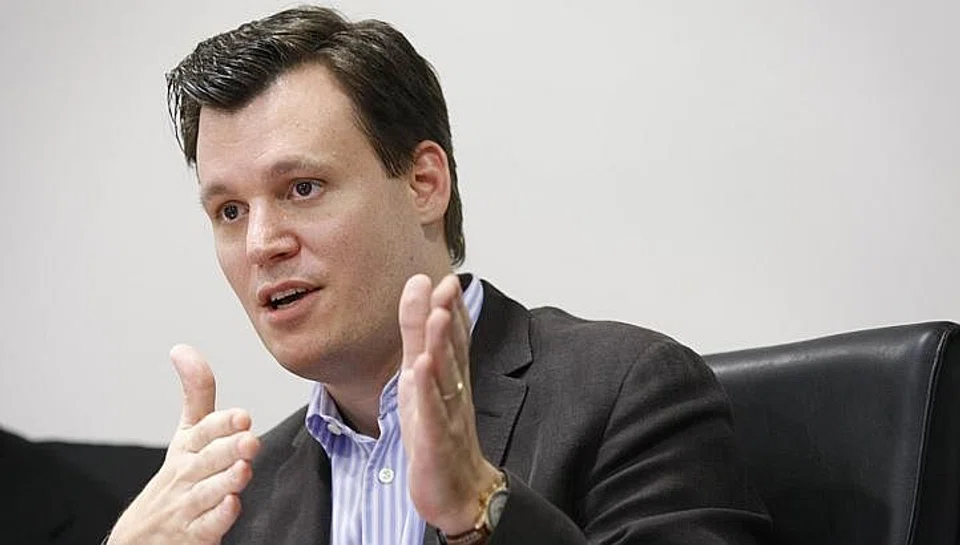
THERE'S a new force in the rubber sector. With prized assets from industry stalwart, Lee Rubber, Halcyon Agri Corporation's chairman Robert Meyer wants to take on a clubby business that has yet to be reinvented in the way that other forms of commodity productions have. Halcyon's ambitions, backed mainly by debt-loaded acquisitions, will need traction from Mr Meyer's expectation that the rubber market will return to normalcy in three to six months' time.
Rubber is currently trading at depressed prices not seen in several years.
The rubber market's abnormal state has already hit the bottom line of Halcyon, a company producing rubber for tyre makers.
Yet, for Mr Meyer, the dysfunctional market has been a stroke of good fortune, unearthing acquisition opportunities for a company that was, in its previous self, a private company that invested and restructured companies from various industries.
"It was fortuitous timing, no means by design," said Mr Meyer, also the young firm's chief executive and who took it for a S$22 million Catalist listing in February last year. He plans to move Halcyon to the mainboard by early next year.
The 40-year-old stepped in as a bidder for Lee Rubber's nine Indonesian factories that deal with crumb rubber - or rubber mainly from scrap tyres, controlled since the early 30s by the same illustrious Lee family that built OCBC Bank. The assets were up for sale by families that have, in Mr Meyer's words, made so much money that their investments are "a multiple of the residual value of these factories".
"The rubber industry has always been an old boys' network. On the other hand, there is a transition now, because the incumbent generation is at the point where they need to hand over. And their next generation don't want to do this business," he told BT. "If markets start giving you a headache, you'd accelerate your divestment plans, rather than put in three years of hard work and then sell it. Three years is a long time when you're 86."
While he has cut his teeth mainly in the area of investments and corporate restructuring, Mr Meyer is well-acquainted with the rubber magnates. He and his family arrived in Singapore six months after he was born in Germany, following Mr Meyer's father who worked in the rubber trade.
Between 1980 and 1989, Mr Meyer's father ran the operations of New Continent Enterprises, a rubber distributor with a reach into the US, Europe, and China, owned by rubber veteran Oei Hong Bie. That was, until two weeks ago. New Continent will soon come into the folds of Halcyon, after a US$30 million purchase announced in the middle of this month.
Mr Meyer, who has also known the Lee family for years, left large commodity players in a trail of dust during the bid for Lee Rubber's assets in Indonesia. Industry sources were stunned, noting that the final bids from big commodity names were similar, or matched Mr Meyer's offer price of S$450 million. The decision, thought Mr Meyer, came down to understanding legacy, with Halcyon pledging to continue hiring the same staff at Lee Rubber's factories, and at New Continent.
"This is a bit like selling your grandfather," he said, referring to the Lee Rubber deal. "Their nightmare scenario is to sell it to an asset stripper."
At first glance, it is a big deal to swallow. Notably, at S$450 million, the Lee Rubber deal is larger than Halcyon's market value, and about seven times the combined Ebitda (earnings before interest, taxes, depreciation and amortisation) on paper. During pre-Lehman days, leveraged buyouts were at about eight times Ebitda. Mr Meyer noted that by his calculations, the leverage ratio for the Lee Rubber deal is closer to three times, which he is comfortable with. To derive this, he considered the net cash balance and current assets of Anson Group - under which the nine factories operate in - that brings the purchase price to a net S$240 million, and a marketing margin that was previously captured in a related entity to Anson, and will now be transferred to Halcyon.
About 40 per cent of Anson will be controlled by an investment vehicle owned by Mr Meyer via preference shares - which offers higher shareholder protection in the event of bankruptcy. Mr Meyer finds a default scenario unlikely, and said that this structure, through which he provided S$75 million of funding, was set up to provide a short to medium term equity support and limit dilution to ordinary shareholders for now.
"Hopefully, Halcyon will be in a position to acquire the preference shares soon, such that Anson becomes a 100 per cent subsidiary of Halcyon, as it is planned all along."
Halcyon has bank loan commitments for about four years, and funds from its heavily subscribed S$125 million bond issue. The five-year bonds offer a 6.5 per cent coupon, with a step-up of 2 per cent if the bonds are not redeemed in three years.
The company also has the backing of famed angel investor Koh Boon Hwee's private-equity firm, Credence Partners, which has invested nearly S$30 million for a 13 per cent stake in the rubber company. And the pressure from Credence? Zero, said Mr Meyer. "I have worked with other private equity players before. They were bossy, international, gwai lo firms that drove me up the wall. And I very quickly paid them back, and got rid of them. Credence is the opposite. They have built companies. They understand business."
With the nine factories in the bag, Halcyon will stand among the world's top five rubber producers, and is expected to supply 10 per cent of global rubber supply from 14 factories that will have a combined annual capacity of over 700,000 tonnes. It also owns about 10,000 hectares of land in Kelantan, most of which will be developed for rubber planting over the next five years.
But the transformation goes deeper. By snapping up plantations, factories, and controlling the distribution channels - an acquisition prowl that Mr Meyer said will soon be concluded - Halcyon will become the world's first fully integrated supply chain manager in rubber, a model employed by the likes of Wilmar International, Olam International and Noble Group.
Halcyon sells about 80 per cent of its rubber through long-term contracts, and the prices are pegged to the Sicom TSR (technically specified rubber) futures contracts. Its operating model means no matter how the market fluctuates in ordinary cycles, the company is focused on creaming off the margins of planting, manufacturing, and distribution processes.
"I've never traded a gram of rubber in my life, nor do I want to," said Mr Meyer. "I like industrial processes. Maybe it's my German heritage."
Yet, the current dysfunctional rubber market has hit Halcyon. It posted a 77 per cent plunge in second-quarter net profit from a year ago to US$622,000, hit by the double whammy of lower selling prices and a fall in sales volume, as well as higher sales and administrative expenses linked to its aggressive acquisition. Net operating cash also reversed into negative territory, with a net outflow of US$5.1 million, compared to a net inflow of US$6.4 million.
"We are now affected by the market, because it's too low. At these levels, the raw material suppliers don't get enough cash return to pay their bills. So the tappers are bit by bit pulling back," he said.
When physical supply contracts, market prices should rise, not fall. Yet, there are speculators in China and Thailand who are pushing prices down, said Mr Meyer. Citing figures from the Association of Natural Rubber Producing Countries, he noted a significant contraction in Chinese rubber inventories for the year up to July, as total consumption outpaced total import at a level not seen in over two years.
"Within three to six months, I think prices will normalise, whereby the contraction in raw material is going to drive prices off the floor. Then once again, I become price agnostic. I don't care what the market is, I will just follow."
Shares of Halcyon have more than doubled its IPO price of 36 Singapore cents. The stock closed on Friday at 81.5 Singapore cents.
TRENDING NOW

He built the Vingroup empire. Now South-east Asia’s richest man is handing some key roles to his sons
Despite the de-dollarisation debate, demand for dollar liquidity in Asia is growing
Can a first-time homebuyer couple earning S$18,000 a month afford a new EC unit?
Asia needs new energy security architecture

