Singtel hit by second disruption a day after eight-hour outage
Cybersecurity experts say it is possible for the two outages to be unrelated because telco networks are made up of many different systems
 Add BT as a preferred source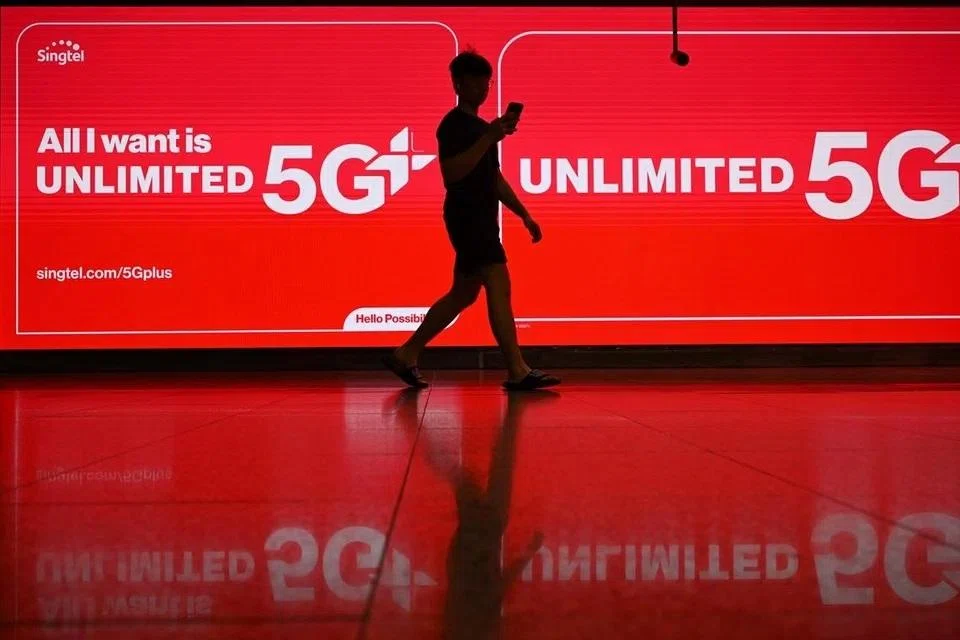
DeeperDive is a beta AI feature. Refer to full articles for the facts.
[SINGAPORE] Some Singtel users could not connect to the telco’s mobile network on Mar 17, a day after they were hit by more than eight hours of outage.
In a Mar 17 Facebook post at 11.30 am, Singtel acknowledged that a “small number” of customers were facing connectivity issues.
But the telco said the problems were unrelated to the outage on Mar 16 that affected thousands of users and disrupted essential services in Singapore, including payments, ride-hailing and food delivery.
At around 5 pm, Singtel said on Facebook that mobile connectivity had been restored. “We apologise for the inconvenience caused. If you are still experiencing issues, please contact us at 1688,” said the telco.
In a statement, sector regulator, the Infocomm Media Development Authority (IMDA), said: “We are aware of another disruption to Singtel’s mobile network services which started in the morning of Mar 17, 2026.”
Noting Singtel’s update that the two events are unrelated, IMDA said: “Preliminary investigations for both incidents do not suggest any evidence that the incidents are cyber related.”
Navigate Asia in
a new global order
Get the insights delivered to your inbox.
The regulator added: “We take a serious view of any service disruptions and will investigate both incidents. We will not hesitate to take strong regulatory action against Singtel should any lapses be identified.”
Customers had been advised to switch their devices to airplane mode and back, or restart their phones a few times to restore connectivity.
But many Singtel and GOMO users still could not restore their connection. They were also frustrated with the slow customer service response. GOMO is a Singtel no-frills sub-brand.
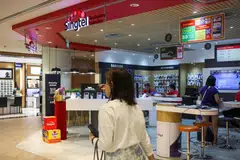

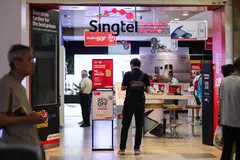
Homemaker Priscilla Wee, 56, said she had tried many times to turn her phone on and off. She even reloaded her GOMO e-SIM, but to no avail.
She was cut off from mobile connectivity on the morning of Mar 16, and lamented that she could have missed a call from her clinic about an important medical report.
Frustrated, she terminated her GOMO line on Mar 17 and opened a new account with StarHub. “The trust factor with Singtel is now gone,” she said.
Gail Tham, 40, could not get any Singtel signal from noon on Mar 16.
“I had zero bars on my phone,” said the civil servant, who had to ask a colleague to hail a ride for her on Grab.
She could not get any signal even after Singtel said mobile connections were restored on the evening of Mar 16. She rebooted her phone several times, but it did not help.
On Mar 17, she worked from home to remain connected to her home landline in anticipation of a call back from Singtel’s support staff.
She was promised a call back at 8 am, but it did not come. After making about seven calls to the Singtel hotline, her connection was finally up at 5 pm.
“I’m definitely going to switch my telco provider after this,” said Tham.
Cybersecurity experts said it is possible for the two outages to be unrelated because telco networks are made up of many different systems.
Aaron Ang, chief technology officer of Singapore-based cybersecurity company Cyber Leaders Nexus, said engineers responding to a major outage often restart systems, reroute traffic or apply quick fixes.
The remedial works sometimes involve shifting loads to backup systems – similar to diverting traffic to smaller roads after a highway accident.
“Restoring one part of the system can put stress on other parts or expose hidden issues, leading to a second, separate outage,” said Ang.
Matthias Yeo, chief executive of Singapore-based cybersecurity research company CyberXCenter, said the telco should review its resiliency after having two back-to-back outages. Specifically, it should review recovery processes, failover mechanisms and system dependencies. THE STRAITS TIMES
Decoding Asia newsletter: your guide to navigating Asia in a new global order. Sign up here to get Decoding Asia newsletter. Delivered to your inbox. Free.
Copyright SPH Media. All rights reserved.