Space ETFs booming in anticipation of SpaceX IPO
Analysts highlight sector growth but warn of overlapping holdings and niche market risks
 Add BT as a preferred source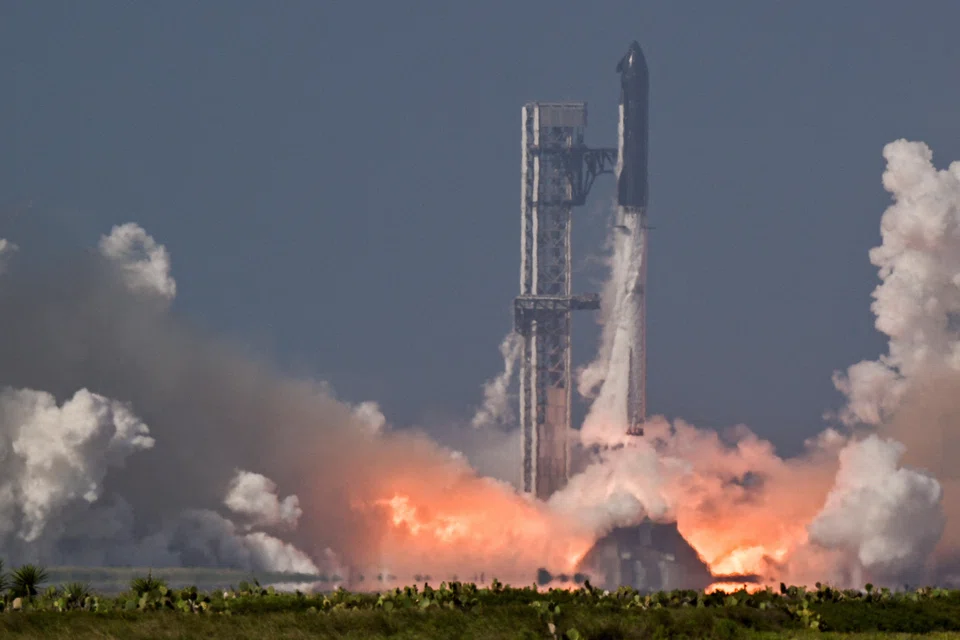
[PROVIDENCE, Rhode Island] Space-themed exchange-traded funds (ETFs) are blasting off, with asset managers rushing to issue new products ahead of the much-anticipated initial public offering by industry giant SpaceX and investors jumping aboard the space bandwagon.
Space-related ETFs have attracted US$1.3 billion in new cash in the last month alone, pushing total assets under management in the embryonic segment to US$3.3 billion, according to Morningstar Direct.
The popularity has been driven by Elon Musk’s SpaceX as well as a realisation among investors that this may mark only the beginning of meaningful growth in the space economy, as envisaged by Musk and his plans to colonise Mars.
“We tend to see this happen whenever something new and shiny appears on the scene,” said Bryan Armour, an ETF analyst at Morningstar, referring to the proliferation of new products.
Until this year, investors who wanted to put their money into an ETF dedicated to the space economy rather than the much broader aerospace and defence sector had only a single option: the Procure Space ETF, also known as UFO, launched in 2019.
But in the last three months, since SpaceX began signalling to the market that it would indeed forge ahead with an IPO in 2026, UFO has been joined by six more funds, each with its own twist on the space theme in its ticker.
One of them, the US$1.27 billion Tema Space Innovators ETF, has accumulated more in assets in the seven weeks since its launch than the US$972 million UFO has in the seven years since its debut, data from Morningstar Direct showed.
New launches accelerate
The rush is far from over. Another two ETFs targeting the same theme are likely to lift off within weeks of the expected mid-June SpaceX debut, and some issuers are planning leveraged and enhanced income ETFs tied specifically to SpaceX, recent filings with the Securities and Exchange Commission showed.
The most recent space ETFs to launch are the VanEck Space ETF and the Corgi Space and Satellite Communications ETF, which debuted only a day apart at the beginning of May and together have already pulled in US$13.6 million in assets.
SEE ALSO





“We had been monitoring this for a while,” said Nick Frasse, product manager at VanEck. “But it is only in the last few months that we have felt there was an inflection point; that there would be enough diverse but pure-play companies for this kind of thematic ETF to work.”
He added that SpaceX would bring other companies along with it into the space economy.
“While some investors (in these funds) may just want to be sure of getting into SpaceX when it goes public, we’re focused on what it means for the sector,” he said. “I think everyone is seeing the writing on the wall, that this is a big growth story.”
Beyond SpaceX hype
SpaceX may be soaking up a lot of the oxygen in the room, but the managers of these new ETFs are quick to point out that even before that much-ballyhooed IPO, stocks such as Rocket Lab and AST SpaceMobile were on a tear, gaining 393 per cent and 258 per cent, respectively, over the last 12 months.
“In the last year or two, we’ve finally started to see that people are accepting that space may not be too far out into the future to be investable,” said Procure CEO Andrew Chanin.
Two-thirds of the inflows into its UFO ETF have come in the last 12 months, and 20 per cent in the last month alone, according to Morningstar Direct.
Chanin said that UFO was labelled the worst ETF launch of the year by Morningstar in 2019. Morningstar data now shows the ETF has posted a 49 per cent year-to-date return and a one-year gain of 133.6 per cent.
“We have been saying since the start that the space economy is misunderstood; it’s really a tollbooth on the AI superhighway” and will benefit as companies find satellites and even, potentially, orbiting data centres, vital in the next stage of the communications revolution, he said.
Overlap concerns emerge
Todd Sohn, ETF strategist at Strategas, said the eye-popping gains of recent months should not distract investors from the fact that the “space economy” is still a tiny niche in the much broader technology universe.
He warned that the “chase after SpaceX and space and the next big thing” may be problematic.
“There are still so few companies involved that the overlap between the holdings of these funds is going to be quite significant,” he added.
A Reuters analysis of the largest holdings of the seven existing pure-play space ETFs shows that all of them include the same four stocks, including Rocket Lab, in their top 10 holdings, and that all of them have an overlap of 50 per cent or more in the list of their holdings.
“I start to worry when everybody is thinking the same way; it just makes it hard for any single manager or fund to differentiate themselves except through marketing,” Sohn said. REUTERS
Decoding Asia newsletter: your guide to navigating Asia in a new global order. Sign up here to get Decoding Asia newsletter. Delivered to your inbox. Free.
Share with us your feedback on BT's products and services