SingPost to keep, enhance SingPost Centre in U-turn from plan to sell it
The cash cow is now part of 3 new priorities aimed at sustainable growth
 Add BT as a preferred source
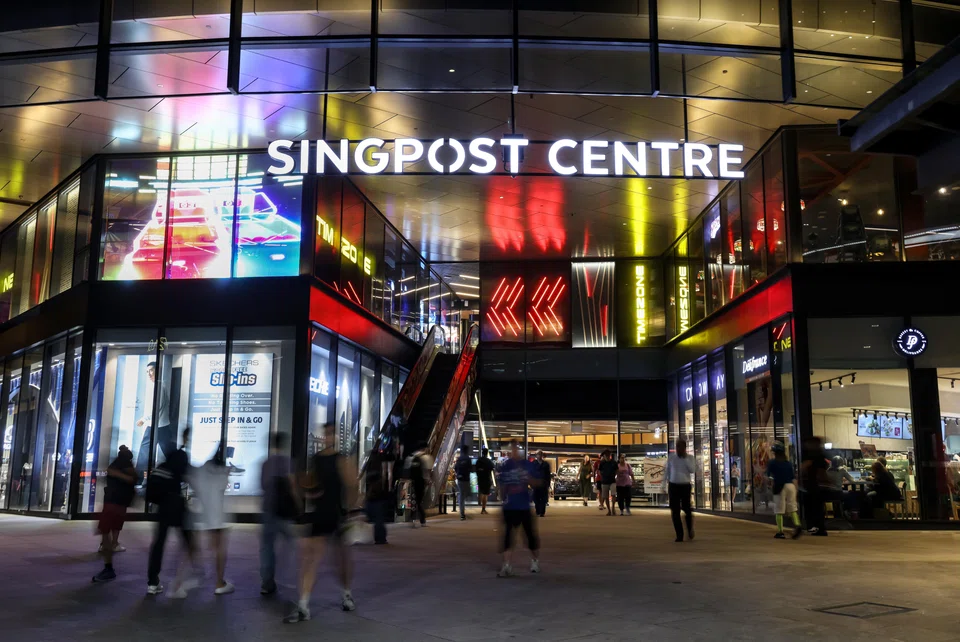
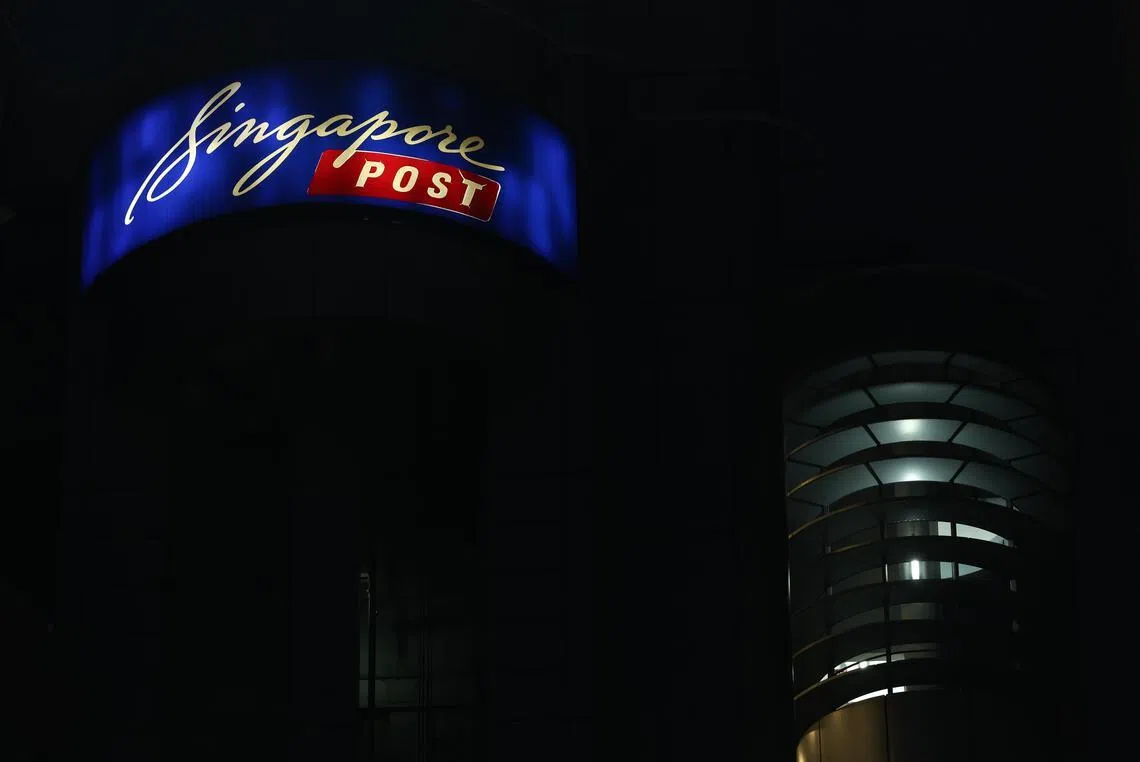
[SINGAPORE] Singapore Post (SingPost) has decided against divesting its flagship building, SingPost Centre (SPC).
Instead, the postal and logistics player – being bullish about the property’s upside potential – will carry out enhancements to further milk the cash cow.
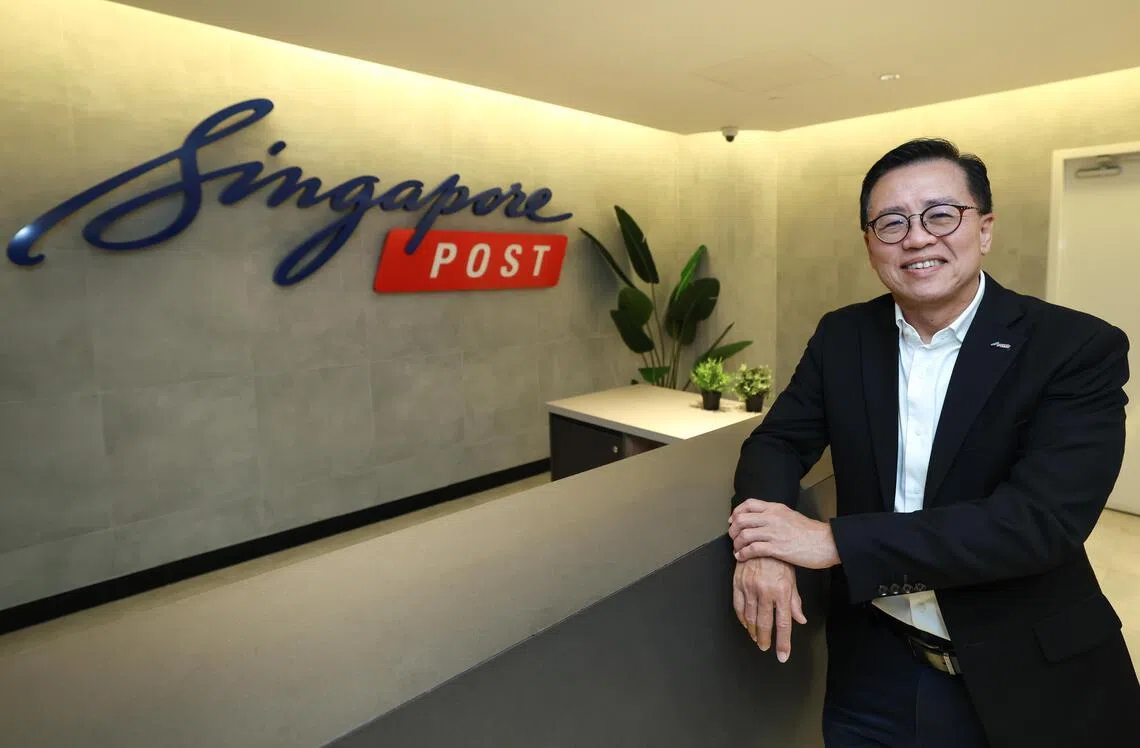
“It is not for sale,” said SingPost CEO Mark Chong categorically. “SPC remains a crucial part of our portfolio; we are retaining it.”
The new plan marks a U-turn from the 2023/2024 decision, made by SingPost’s previous board, to divest the building in Paya Lebar where it is headquartered.
It is also part of a set of initiatives to help the group achieve sustainable growth through three new strategic priorities.
Chong laid out these priorities – strengthening fundamentals, building scalable capabilities and capturing growth opportunities – to The Business Times in an exclusive interview on Wednesday (May 13).
Navigate Asia in
a new global order
Get the insights delivered to your inbox.
SPC, which was previously valued at S$1.1 billion, had been deemed by SingPost’s previous board as a non-core asset and earmarked for divestment.
However, the property has been SingPost’s top earner since it sold its Australian logistics business in March 2025, as the group struggles with a declining mail-delivery business and a highly competitive e-commerce logistics business.
On Thursday, the group posted an 81.5 per cent drop in its net profit to S$41.2 million for its second half ended Mar 31. Revenue for the six months also fell, by 18.2 per cent on the year to S$187.6 million from S$229.5 million.
SEE ALSO










SingPost is now eyeing a potential redevelopment of SPC, should height restrictions in the area be lifted when Paya Lebar Air Base is relocated from the 2030s.
“We believe the height restrictions, when lifted, will offer SPC an opportunity to redevelop and reap further value,” said Chong.
“The government blueprint for the development around Paya Lebar... could also provide a further boost to SPC’s asset value and redevelopment upside.”
SPC has 55 years left on its lease. The overall occupancy rate at the mixed-use development stood at 99.4 per cent as at Mar 31, higher than the 98.2 per cent in the year before.
Even as SingPost awaits the unveiling of development details for Paya Lebar, it has already appointed an architect to carry out asset enhancements over the next 18 to 24 months, with the goal of improving the retail experience at SPC.
It will also make more commercial space available in the building to increase its rental income.
Three strategic priorities
Chong said that strengthening SingPost’s fundamentals entails optimising the group’s operations, technology and network through an improved operating model.
“We expect to reduce our cost-to-serve by more than 10 per cent,” he added.
One way the group will seek to rein in costs is by optimising its post office space while maintaining about 40 of them; some will become unmanned like auto lobbies to maintain public accessibility.
Optimising its post office footprint will allow it to rent out the freed-up space and increase its rental income.
SingPost will expand the product and service offerings of its post office network; for example, it recently offered the service of some of its branches to Singtel for the telco’s shareholders to sell their special discounted shares.
“With regard to the post office network, we believe we are on a firm path to achieve commercial sustainability,” said Chong, who took the helm in November 2025.
He stressed that the transformation to a sustainable model for postal services will not come at the expense of customer service or convenience, as auto lobbies offer 24/7 access.
As it seeks to build scalable capabilities, SingPost will invest in customer experience and automation. The use of autonomous vehicles and artificial intelligence, as well as modernising the post office network, are part of this initiative.
In capturing growth opportunities, the group is targeting sensitive, high-trust logistics, the domestic business-to-business and enterprise market, and sector partnerships.
Its recent partnership with international player Asendia is part of its efforts to increase cross-border logistics business.
SingPost intends to leverage its warehouse space – it has one million square feet of industrial space across its properties – and expand into new logistics services.
“This will enable us to serve our customers more comprehensively and unlock new revenue streams on customer expansion,” said Chong.
Shifting to variable cost structure
He listed three ways that the group intends to cut the cost-to-serve for its logistics and letter business.
First, there will be a S$30 million investment in a parcel sortation system.
This will treble processing capacity of small to medium-sized parcels to 300,000 parcels a day when the system goes live in July, bringing the group’s total daily capacity to 400,000 parcels.
Chong said this will position SingPost to handle spikes in parcel volumes from its customers, such as when e-commerce platform operators hold sales campaigns.
Second, SingPost will consolidate all its e-commerce parcel sorting at its e-commerce logistics hub by the end of 2026, improving efficiency and productivity.
Third, the national postal provider will tap AI for delivery route optimisation.
“As a result of these initiatives, we will shift from a largely fixed cost structure to one that is more variable and more efficient in cost base,” Chong added. “We will get the financial flexibility to adapt and scale with new opportunities.”
Pricing discipline
SingPost will continue to attract more business from e-commerce – its core volume driver – but Chong stressed that this will be done with pricing discipline despite the keen competition.
“We will not sacrifice margins for volumes,” he said, adding that he believes this discipline can be maintained as a result of the cost savings and greater efficiencies reaped from the use of automation and technology.
Chong is confident that this, along with SingPost’s competitive advantage from exclusive access to letterboxes – the lowest-cost delivery network available – will position the group competitively against its peers.
For now, SingPost is not looking at overseas expansion, he added.
The group’s logistics investment in Australia was its previous cash cow. Shareholders have been looking forward to the reset strategy that the national postal service provider has promised since the sale of the Australian business in 2025.
Shares of SingPost finished 5.3 per cent or S$0.02 lower at S$0.355 on Thursday.
Decoding Asia newsletter: your guide to navigating Asia in a new global order. Sign up here to get Decoding Asia newsletter. Delivered to your inbox. Free.
Copyright SPH Media. All rights reserved.