

Exxon reaffirms confidence in S'pore's edge
It's building two more plants here, making the Republic its top specialty chemicals manufacturing site
Singapore
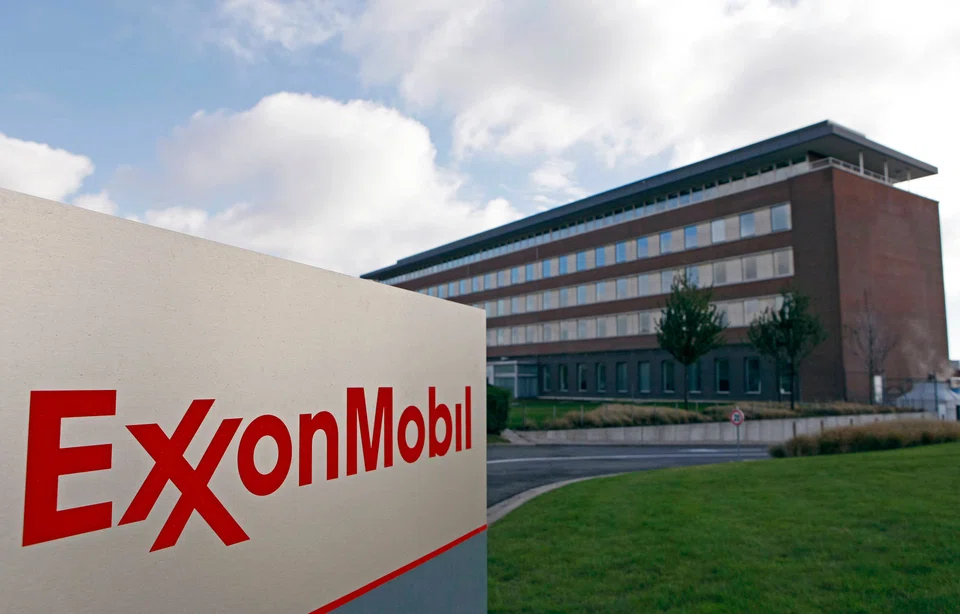
THE Republic is still a good place to invest in, said a senior executive of ExxonMobil, as the firm broke ground for two plants that would make Singapore its largest specialty chemicals manufacturing site in the world.
"In the past 10 years we've invested more into Singapore than any other location in the world, and that speaks of our confidence in this country and this region," said ExxonMobil Chemical senior vice-president Neil Chapman, who is responsible for the firm's global polymer business and oversees its marketing, sales, customer service and supply chain activities.
The halobutyl rubber plant and hydrocarbon resins plants - additional downstream investments at ExxonMobil's second petrochemicals complex on Jurong Island - will each be the largest in the world, with a capacity of 140,000 tonnes and 90,000 tonnes respectively. They are expected to be completed in 2017, and will add about 140 new jobs.
ExxonMobil did not reveal specific investment figures, but in terms of capacity, the halobutyl rubber facility is comparable to Lanxess's 100,000 tpa butyl plant here which costs some S$800 million. The two plants will also enhance Singapore's position as ExxonMobil's largest manufacturing site worldwide, with the energy group having invested well over US$10 billion here so far; its second petrochemicals complex, which officially opened only in January, already cost US$5 billion to US$6 billion.
Halobutyl rubber is used for tyres; it helps maintain tyre pressure without the need for inner tubes. Hydrogenated resin is used for hot-melt adhesives which go into packaging, bookbinding, woodworking and other applications.
Specialty chemicals such as these do not vary as much in their margins as commodity chemicals such as polyethene do, said Mr Chapman, as the technology is not readily available to other companies. In halobutyl rubber, for example, the firm has only four to five competitors, versus more than 100 in polyethene. ExxonMobil will be using proprietary technologies in its new plants.
It is on such technologies and innovation that Singapore is banking on to maintain its competitiveness in the industry, rather than feedstock prices per se, as the shale gas revolution in the US brings about cheap energy and feedstock options for US manufacturing sites, said S Iswaran, Second Minister for Home Affairs and Trade and Industry at the ground-breaking ceremony on Tuesday.
He also outlined how the government is keeping energy costs competitive in Singapore:
Companies such as Lanxess and Shell have flagged Singapore's rising costs as concerns.
Besides energy and feedstock costs, Mr Chapman told BT that distribution and logistics costs matter too: "It depends on where you're moving the product to as much as where the plant is located."
ExxonMobil is also building another halobutyl plant in Saudi Arabia under a joint venture with SABIC. Both plants are geared towards the Asia-Pacific, where demand for new cars is higher.
The constantly changing energy market also means that it is more important for ExxonMobil to have a balanced portfolio of locations than to place all its eggs in one basket. "Five years ago (energy costs in the US) weren't the same. We hear people talking about what will be five years later, but we don't know . . . We don't want to predict the future," said Mr Chapman. "We strive to be the most competitive in the region we participate in."
TRENDING NOW
‘We don’t want to stay as we are’: CEO Patrick Ng builds a more resilient Huationg
URA to review guidelines on floor space to give developers more design flexibility: Chee Hong Tat

He built the Vingroup empire. Now South-east Asia’s richest man is handing some key roles to his sons
32 companies, 6 individuals bag accolades at Singapore Corporate Awards 2026

