

US job openings drop in March; hires increase sharply
Economists see growing downside risks to the labour market from the US-Israeli war
 Add BT as a preferred source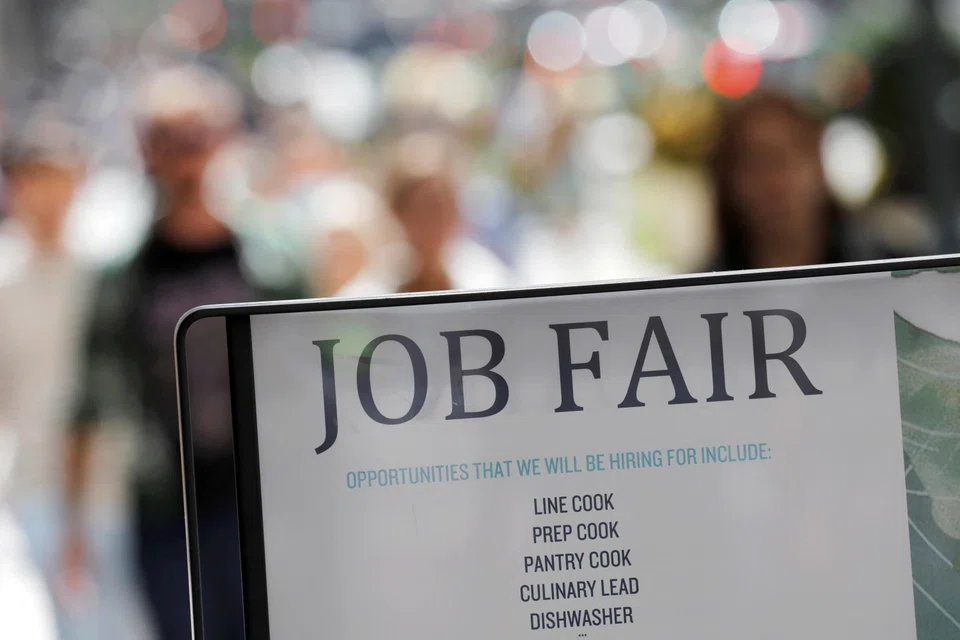
[WASHINGTON] US job openings slipped in March, but a surge in hiring suggested the labour market was regaining its footing after struggling last year.
Job openings, a measure of labour demand, were down 56,000 to 6.866 million by the last day of March, the Labor Department’s Bureau of Labor Statistics said in its Job Openings and Labor Turnover Survey, or JOLTS report. Economists polled by Reuters had forecast 6.835 million unfilled jobs.
The job openings rate eased to 4.1 per cent from 4.2 per cent in February. Hiring jumped by 655,000 to 5.554 million.
The hires rate increased to 3.5 per cent from 3.1 per cent in February. Layoffs and discharges, however, increased by 153,000 to 1.867 million, with the rate for that category climbing to 1.2 per cent from 1.1 per cent in the prior month.
Economists see growing downside risks to the labour market from the US-Israeli war with Iran, which has disrupted shipping through the Strait of Hormuz, boosting the prices of oil, fertiliser, aluminum and other commodities.
Labour market stability for now is supporting financial market expectations that the Federal Reserve will keep interest rates unchanged this year. The US central bank last week left its benchmark overnight interest rate in the 3.50 per cent to 3.75 per cent range, citing rising inflation concerns. REUTERS
Decoding Asia newsletter: your guide to navigating Asia in a new global order. Sign up here to get Decoding Asia newsletter. Delivered to your inbox. Free.
Share with us your feedback on BT's products and services
TRENDING NOW

On the board but frozen out: The Taib family feud tearing Sarawak construction giant apart

New EC rules to cool prices: MOP doubled to curb flipping, no more deferred payments and more units for first-timers

Singapore Instagram seller must pay Louis Vuitton S$510,000 in damages over counterfeit goods case
Thai and Vietnamese farmers may stop planting rice because of the Iran war. Here’s why

