It’s not just about what AI can’t do. It’s also about what humans need.
Rather than race to automate everything, we should be deliberate about when and how we engage with the technology
 Add BT as a preferred source
DeeperDive is a beta AI feature. Refer to full articles for the facts.
THE hierarchy we’ve lived with for generations is getting upended before our eyes.
The work that requires human presence, judgment in context, and relationships turns out to be exactly what artificial intelligence (AI) can’t replicate, whether that’s a plumber diagnosing a mysterious leak, a nurse comforting a frightened patient, or a teacher reading the room and adjusting their lesson.
To be clear, this isn’t about knowledge workers becoming obsolete. It’s about every worker rethinking which parts of their job require human judgment and which don’t, and what will matter most when AI handles the routine work.
Ume Habiba is a great example. Her computer science background is hardly useless. She’s just using it in a different way than she was taught. The rigorous thinking that engineering teaches remains invaluable: how to break complex problems into components, think systematically, and understand how pieces connect. The job itself, however, is transforming.
Tomorrow’s software engineers will spend less time writing code and more time understanding what code should be written. Less time debugging, more time collaborating to define problems worth solving. Less time optimising algorithms, more time navigating the ethical implications of what they build.
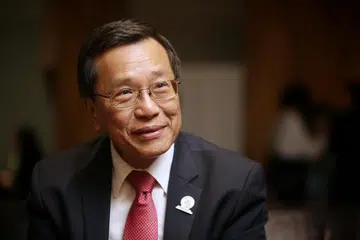
Paul Cheek is a senior lecturer and the senior adviser for entrepreneurship and AI at the Massachusetts Institute of Technology.
Navigate Asia in
a new global order
Get the insights delivered to your inbox.
He teaches at a place where more than a quarter of undergraduates are computer science majors and says that the changing reality of work, especially as it pertains to computer scientists, is one that schools and students must confront together.
“The question that I go to is: Are they prepared to react to new-found uncertainty? The fact that they can’t get a job, are they prepared to react to that? Can they react in an instant like an entrepreneur?”
While Cheek believes that entrepreneurial thinking is going to become the key to succeeding in tomorrow’s economy, he knows the word “entrepreneur” feels inaccessible to most, especially those outside the tech sector.


“The ‘collar system’ sorted us by what we did. The next era will sort us by how well we can use this new technology to help us get better at the work that only we, as humans, can do.”
Are you creating solutions?
“Entrepreneurship is about more than just starting companies,” he says.
“I believe that the news and the media do a disservice to entrepreneurship in many ways because they set the expectation that those who pursue entrepreneurship are starting companies. And then they go out to raise massive rounds of funding. But the reality is that entrepreneurship is about so much more than that. It’s about creating more than is reasonable with the resources we have control of.”
That’s it: creating more than is reasonable with the resources we have control of. It’s innovating a little, making a change, and stepping off the efficiency treadmill to create something new. Not necessarily a company, but maybe a process or a project. Even just a single improvement.
Adds Cheek: “The question is not, ‘Are you this stereotypical entrepreneur?’. The question is, ‘Are you human?’. Because if you’re human, you have this natural inclination to try to create value from nothing.”
He demonstrates this when speaking to audiences. “I’ll ask for a volunteer. And I’ll have them come up on stage, and I’ll say: ‘Are you an entrepreneur?’. And they might say ‘no’, and I’ll be like, ‘Not yet’.”
Then, he asks them to “think about the most messed up thing that (they) saw in the world around (them)” last week. They’ll mention a problem from a flight or restaurant. “I’ll say: ‘Okay, how might you fix that?’” Suddenly, they’re generating solutions.
“That is entrepreneurial,” he says with a smile.
“A nurse in a hospital who can figure out some way to increase patient outcomes by manipulating some process or some care initiative or some communication between different medical professionals all of a sudden, if they can do that and have an impact on society simply by doing that, that is entrepreneurial.”
This shift towards entrepreneurial thinking is starting to happen in every field.
The people figuring it out aren’t racing to automate everything; they’re being deliberate about when and how they engage with AI. They’re using the technology to free up time for what only humans can do: lead the conversation, set the direction, and make the calls that require judgment, creativity and wisdom.
The “collar system” sorted us by what we did. The next era will sort us by how well we can use this new technology to help us get better at the work that only we, as humans, can do. Being more entrepreneurial is a great place to start.
Both writers are from LinkedIn. Ryan Roslansky is chief executive officer and Aneesh Raman is chief economic opportunity officer.
This is an edited excerpt from Open to Work (Copyright © 2026 by LinkedIn Corporation), published with permission from Harper Business, an imprint of HarperCollins Publishers
Decoding Asia newsletter: your guide to navigating Asia in a new global order. Sign up here to get Decoding Asia newsletter. Delivered to your inbox. Free.
Copyright SPH Media. All rights reserved.