Silver Support Scheme is first step to a minimum pension guarantee
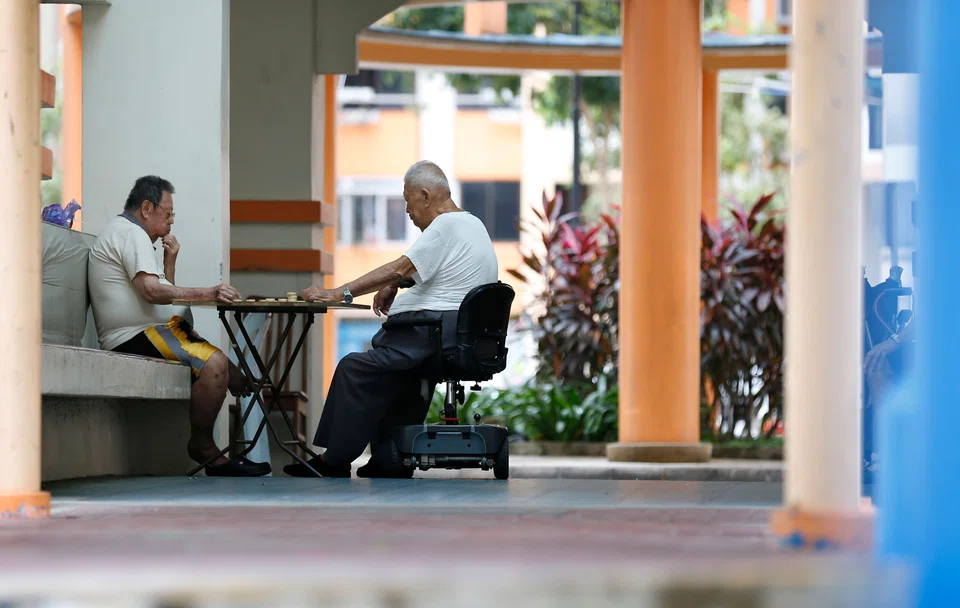
IN the 2015 Budget, the government introduced a major policy to address retirement adequacy: the Silver Support Scheme, a permanent programme that will provide payments of up to S$750 per quarter to needy seniors throughout their retirement. In recent years, several major measures - such as the WIS Scheme, CPF Life, and the GST Voucher scheme - have steadily provided greater support for low-income Singaporeans at different stages of life. The Silver Support Scheme further enhances social protection for low-income Singaporeans by sharing the burden of retirement with the rest of society.
While many Singaporeans welcome these measures, others may be concerned at the apparent weakening of the principle of personal responsibility. Can Singapore avoid the worst excesses of the "welfare state", characterised by high taxes and a low incentive for work? Although there are real trade-offs between social protection and personal incentives, greater provision of social welfare does not contradict personal responsibility. Rather, social welfare systems can be designed to strengthen society by protecting individuals against risks that are difficult to address using market systems alone.
Adhering strictly to an ethos of personal responsibility leaves individuals poorly equipped to protect themselves against many basic risks of life. For example, we can, and should, aim to save adequately for our retirement. But most Singaporeans would not have enough for their retirement if they lived much longer than expected, or if standards (and costs) of living were to rise significantly after their retirement. Likewise, we can lead a healthy lifestyle, but the healthiest person can still be a victim of a catastrophic accident, or be diagnosed with a serious disease.
Private investment and insurance markets address these risks imperfectly. One problem is that of access: lower-income Singaporeans are less likely to be covered by private solutions because they either lack the disposable income or knowledge necessary to buy the appropriate protection. But the larger problem is that certain risks are difficult to insure privately, because of adverse selection. A private annuity, for example, will be priced higher because individuals who expect to live longer have a much stronger incentive to purchase life-long retirement payments. Although private markets provide an important supplement, particularly for those with higher incomes, the government is best positioned to pool risks across all Singaporeans to provide a basic level of social protection. Some might argue the Silver Support Scheme is not a significant improvement over the existing means-tested public assistance schemes available in Singapore. However, one major difference is that needy seniors need not apply - they will be entitled to payments, which will be made automatically based on administrative records. This reduces the likelihood that needy seniors will fall through the cracks simply because they fail to apply properly. Requiring formal applications for welfare support can hinder access for the truly needy. For example, in the US, in some years, barely half of those eligible for the national food voucher programme actually enrolled for benefits. Providing the Silver Support Scheme automatically to needy seniors is an important policy innovation over our existing public assistance schemes, and represents the first formal step towards a minimum pension guarantee in Singapore.
The problem of requirement adequacy among our pioneers is linked to our rapid growth as a nation. Singapore's GDP per capita at independence was around S$1,600. Today, it is close to S$70,000. Even after adjusting for inflation, Singaporeans today enjoy incomes and a standard of living many times better than our pioneers did at independence. But retirement savings and investments have simply not grown at the same rate as the rest of the economy. Nor have earnings risen at the same rate for all groups. As a result, many pioneers have insufficient savings to afford an adequate retirement in Singapore today. The Silver Support Scheme will directly address the problem of retirement adequacy by providing additional cash support. While the debate will now shift to whether the amount of support is sufficient, the Silver Support Scheme has the potential to improve retirement adequacy among our pioneers substantially.
In the coming years, it will be important to improve the future retirement adequacy of working Singaporeans by encouraging greater individual savings for retirement. Our present retirement policy incentivises voluntary savings through tax deductions for top-ups to CPF and the Supplementary Retirement Scheme. However, a tax deduction-based incentive is inherently regressive and provides the greatest benefit to those who need the additional retirement savings the least. Re-examining our retirement policy system to provide greater incentives for the middle and lower-income to set aside savings for their retirement will do much to address this shortcoming.
READ MORE: