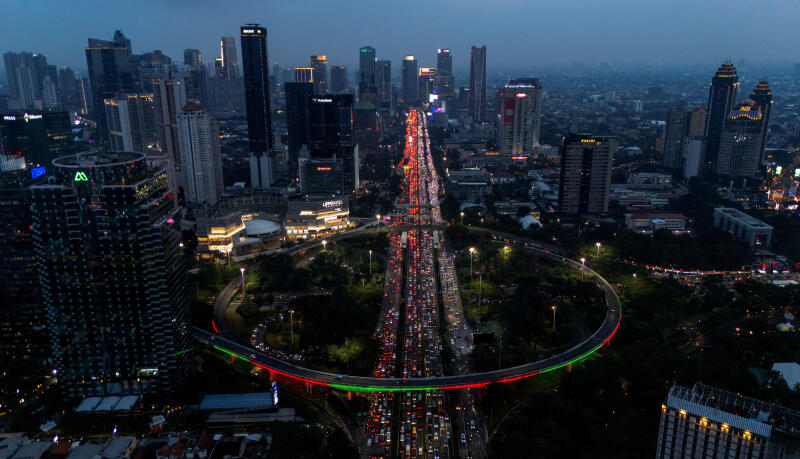
Jakarta’s glowing skyline during the evening commute. Indonesia faces a diplomatic twist, having signed its own reciprocal trade deal just a day before the US court ruling rendered it redundant. PHOTO: REUTERS
Dear BT reader,
If you’re a feng shui enthusiast, you have probably heard the buzz about the Fire Horse year - a time of resets and unexpected turns. Coincidence or not, this new lunar cycle kicked off with one such twist that could sway Asean’s trade fortunes.
In a landmark ruling, the US Supreme Court has struck down President Donald Trump’s emergency tariff powers, effectively resetting duties on most imports.
For exporters across South-east Asia, that means temporary relief as tariffs on shipments to the US could drop by around 3.5 percentage points compared to previously threatened “reciprocal” rates.
However, analysts caution against early celebrations. Washington’s trade landscape remains volatile and could shift again within months, as BT journalist Evan See and our regional correspondents explore in this comprehensive report.
Across the region, reactions are mixed. Malaysia anticipates short-term gains as US buyers rush orders, while Singapore's global firms are taking a cautious breather. Thailand welcomes the competitive boost, and Vietnam is scanning for signs of a more permanent reprieve.
Meanwhile, Indonesia faces an awkward twist as its reciprocal trade deal was inked just a day before the ruling.
Beyond the tariff debate, Indonesia’s sovereign wealth fund, Danantara, has reached its one-year milestone with its institutional framework largely established.
However, market observers told BT’s Elisa Valenta that the narrative is shifting. The true test for Danantara is no longer its launch announcements, but its governance and investment discipline, as it seeks to prove it is built for commercial returns rather than political agendas.
We hope you are keeping up with this unfolding situation. There's plenty more to read below! See you again next Friday.
Trending
Johor’s prosperity comes with a bill
While big money is flowing into Johor, the cost of living is hitting new highs. From RM10 (S$3.30) wanton mee to daily city-centre expenses reaching RM50, the "Johor premium" is becoming a reality for local residents.
It’s not just individuals feeling the pinch, SMEs are battling a "triple threat" of rising rent, labour, and logistics. Some business owners report that transport and raw material costs have spiked by up to 20 per cent post-pandemic.
Is the state’s growth outpacing its affordability? Read the full story here.