Analysts cut Sheng Siong target price as rising costs cloud earnings outlook
The revisions come as the company’s shares continue to fall, down as much as 9.4% on Monday
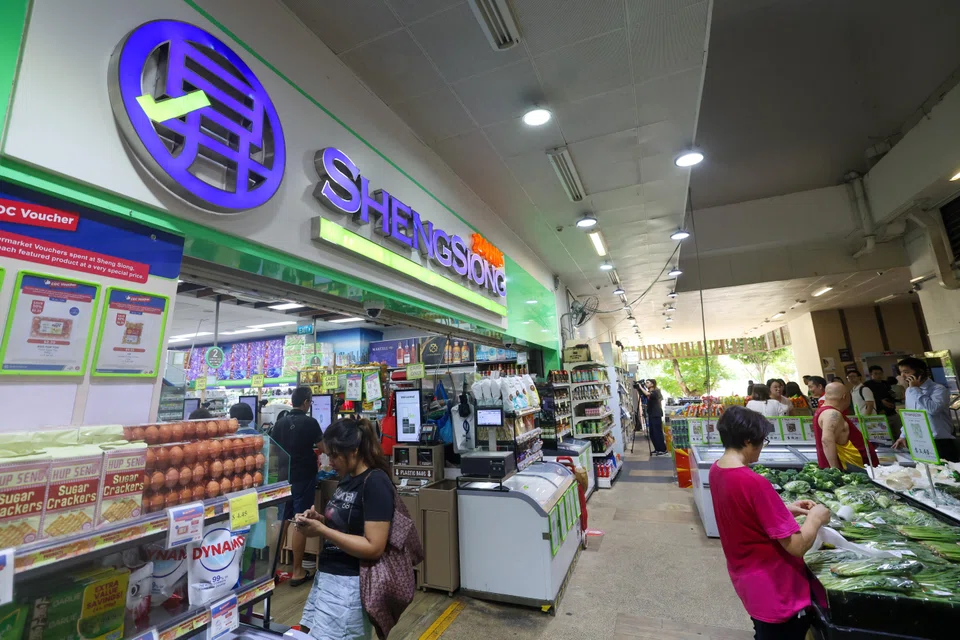
[SINGAPORE] Analysts have lowered their target prices for Sheng Siong following its third-quarter results, as rising operating costs and moderating sales growth threaten to weigh on the supermarket operator’s earnings.
DBS cut its target price to S$2.70 from S$3, maintaining its “hold” rating on the supermarket operator in a report on Monday (Nov 2). The broker’s revised target price represents an upside of 1.1 per cent, based on Sheng Siong’s closing price of S$2.67 on Friday.
CGS International (CGSI) lowered its target to S$3.10 from S$3.60 on Monday, while RHB cut its target price to S$3.20 from S$3.59 in a note on Tuesday. Despite the reductions, both brokers maintained their “buy” ratings.
These revisions come as Sheng Siong’s shares continued to fall. The counter closed 4.6 per cent lower on Friday, before sliding another 9.4 per cent to S$2.42 on Monday, its lowest level in a year. This represents a cumulative decline of about 13.5 per cent over the two trading sessions.
The group reported a marginal 1.9 per cent year-on-year increase in Q3 net profit to S$44.6 million, despite revenue rising 6.2 per cent to S$441.5 million. Higher staff costs, depreciation and other operating expenses offset gross profit growth.
Cost pressures
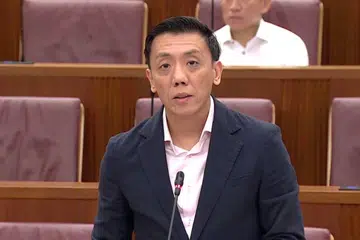
DBS analyst Chee Zheng Feng expects Sheng Siong’s revenue growth to slow in the fourth quarter to around 4 per cent, as the boost from Community Development Council vouchers tapers off, while higher operating costs persist.

He also flagged rising electricity costs as a key risk for FY2027. Sheng Siong has yet to renew its utilities contract, with prevailing rates around twice its existing contracted rate.
DBS trimmed its FY2027 earnings forecast by 2 per cent to account for higher utility and merchant fees. It also lowered the valuation multiple used to derive its target price, citing a more challenging growth outlook and rising bond yields.
RHB analyst Alfie Yeo similarly highlighted cost pressures, noting that higher staff costs, depreciation and other operating expenses weighed on Sheng Siong’s Q3 operating margin.

Although gross profit margin remained healthy at around 32 per cent, RHB expects rising oil prices to add pressure to labour, transport and electricity costs heading into FY2027.
It lowered its earnings forecasts for FY2026, FY2027 and FY2028 by 8 per cent, 11 per cent and 11 per cent, respectively.
CGSI analysts Meghana Kande and Lim Siew Khee also cited slower sales growth and higher operating costs in reducing their estimates for FY2026 to FY2028 earnings per share by 2 to 6 per cent.
They noted that Q3 revenue growth had moderated from 12 per cent in the first half, partly due to a high comparison base following the distribution of SG60 vouchers in July 2025.
The brokerage also highlighted potential pressure from electricity costs, which could rise to about 3 per cent of sales from 1.5 per cent currently, when Sheng Siong renews its utilities contract.
Store expansion offers longer-term support
Despite the near-term headwinds, RHB and CGSI remain positive on Sheng Siong’s store expansion prospects and defensive business model.
RHB expects growth to be supported by a full-year contribution from the 12 stores opened in 2025, as well as new outlets added this year. It also highlighted the group’s longer-term ambition of operating 120 stores.
CGSI expects the 19 stores opened since 2025 to contribute more meaningfully as they mature, helping offset higher operating expenses.
Both brokerages also view Sheng Siong’s planned S$520 million distribution centre as supporting its longer-term expansion.
DBS, while more cautious about near-term earnings growth, expects the new facility to improve operating efficiency over time. Slated for completion by end-2029, it is designed to support at least 120 stores.
The brokerage added that Sheng Siong’s defensive earnings model, strong cash position and longer-term expansion potential should help limit downside risks.
Decoding Asia newsletter: your guide to navigating Asia in a new global order. Sign up here to get Decoding Asia newsletter. Delivered to your inbox. Free.
Copyright SPH Media. All rights reserved.