Asia’s family offices cool to Anthropic IPO despite strong investor demand
They cite geopolitics, private-round gains and risk disclosures as reasons for enthusiasm being tempered

[SINGAPORE] Anthropic’s record-breaking US$81.3 billion initial public offering has reportedly attracted demand exceeding six times the shares on offer, but some Asia family offices are holding back, citing steep valuations and the prospect of better buying opportunities after the listing.
Despite the fanfare surrounding the landmark listing of the artificial intelligence firm, family offices and wealth advisers in Asia said that much of the company’s potential growth has already been priced in.
At the same time, geopolitical uncertainty and risks associated with the technology warrant caution, they noted.
Anthropic priced its IPO at US$83 a share on Wednesday (Nov 18), above its initial range of US$70 to US$78, valuing the AI company at about US$1.5 trillion. The company also expanded its offering to 980 million shares, up from the 825 million shares previously expected.
Anthropic’s shares are expected to begin trading on the Nasdaq on Thursday.
Cameron Harvey, CEO of Hong Kong-headquartered Landmark Family Office, said that sophisticated family offices are taking a selective approach rather than chasing day-one momentum.
For investors without existing positions, the risk-reward balance favours waiting for trading activity to settle, he noted. Recent IPO performance suggests that more attractive entry points could emerge after listing.
He added that investors should pay particular attention to post-listing discovery and the expiry of lock-up periods, which could release additional shares into the market.
Arnold Ho, head of trading at Moomoo Singapore, said that demand was being driven by major institutional commitments, including reported cornerstone investments from Nvidia and Altimeter Capital, alongside strong retail interest.
Existing backers are prioritised for allocations, with some reportedly offering pre-IPO shares at a 3 to 5 per cent premium, he said, adding that the day-one float will therefore be limited.
With a limited initial free float and elevated opening demand, there could be heightened volatility and wider bid-ask spreads as the market establishes a trading price, believes Ho.
“But strong subscription demand does not guarantee that the shares will trade above the IPO price,” he cautioned.
A comparable mega-listing was SpaceX, which listed in June this year.
Its offering was more than three times oversubscribed, with shares rising 19 per cent on the first day of trading. The equity fell below its listing price of US$135 about a month later on Jul 15. It closed at US$141.70 on Tuesday.
LN Sadani, founder and CEO of Singapore-based single family office Lensbridge Capital, said that Anthropic’s competitive advantage warrants closer scrutiny than Space X’s, given the latter’s established launch and satellite infrastructure.
He pointed to the potential for open-source models to erode pricing power, and to the AI firm’s own warnings about compute dependence, harmful model behaviour and legal or regulatory exposure as some reasons for staying cautious on Anthropic.
Value created in private markets
For some family offices, the bigger concern is that investors buying into Anthropic’s IPO may be arriving after much of the company’s valuation gains have already been realised as a private company.
Singapore sovereign wealth fund GIC has been an investor since 2025, most recently co-leading its US$65 billion fundraising in May. GIC reportedly holds about 1 per cent of the firm after investing north of US$4.5 billion in it, according to reports.
Singapore investment company Temasek has also invested in Anthropic, as part of its focus on deep-tech innovation.
“The Anthropic IPO is a landmark for private markets as much as public ones,” said Grace Tang, CEO and managing director of Phillip Private Equity.
“Most of the value creation has already happened, while the company was private. Family offices that want the next Anthropic need to be in private growth equity before the IPO, not after.”
Sadani similarly views the listing as a potential liquidity milestone for patient capital, but noted that substantial growth expectations are already reflected in private valuations.
Lensbridge Capital, however, did not invest in the pre-IPO rounds for Anthropic, as it expects more attractive opportunities to invest in the company to emerge after listing.
Broader technology sector
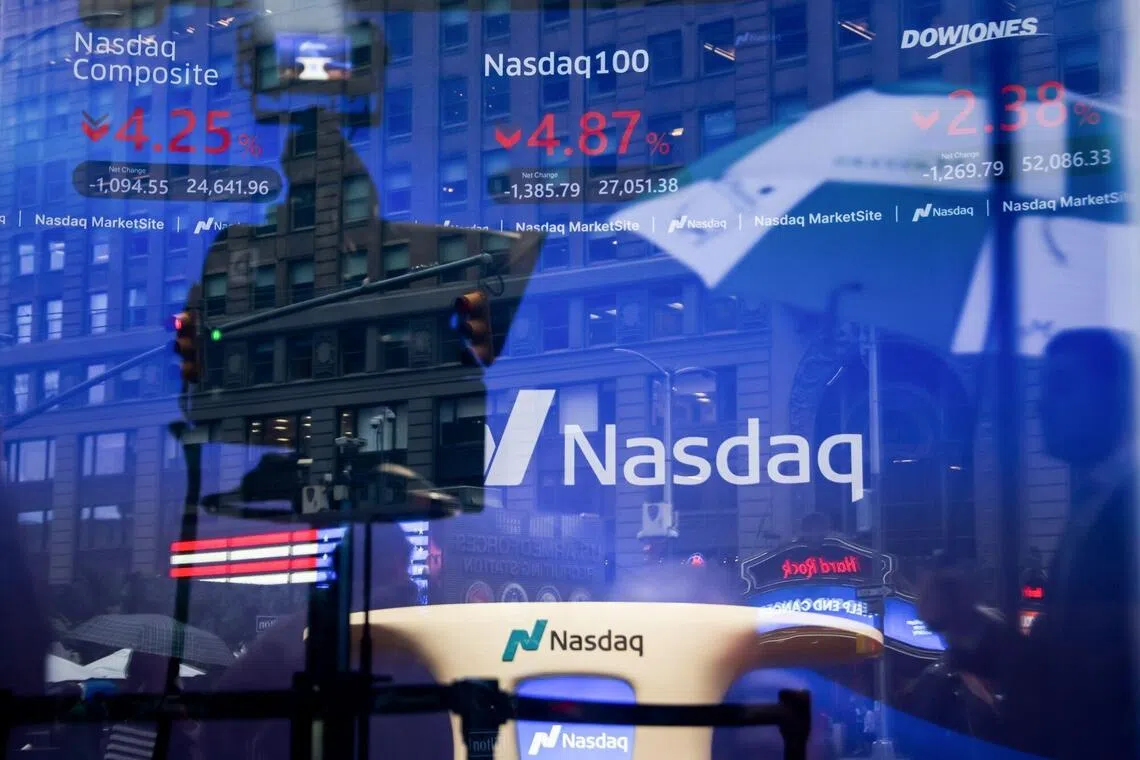
The listing is also being watched for its effect on the wider technology market, following a difficult month for the sector.
James Ooi, chief market strategist at Tiger Brokers, said the IPO could be an important test of market appetite for AI companies.
Meanwhile, Harvey described Anthropic – as the first frontier-AI model developer to list publicly – as a bellwether for the sector, at a time when the market is repricing future earnings assumptions.
The large raise will absorb significant institutional capital, potentially creating rotational pressure across legacy software and mega-cap tech peers as allocators rebalance their AI exposure, he noted.
Moomoo’s Ho also expects some savvy investors with concentrated exposure to semiconductor or cloud stocks to also review their positions to free up capital for Anthropic.
“However, we would not assume that clients will hedge systematically, or that the IPO will necessarily cause a liquidity drain from those stocks.”
Kam Kah Ken, CEO and chief investment officer of single family office Wellco Capital, noted that he has seen an aggressive shift of capital from AI and semiconductors into non-AI themes in recent weeks.
He nevertheless remains bullish on the sector. “Compute power is the new oil, and hyperscalers are still committed to spend (many) billions on data centres,” he said.
Geopolitics and risk disclosures
Kam added that the bigger drain on liquidity will be regulation and geopolitics, which are unfolding alongside the broader IPO market.
He highlighted the uncertainty over US restrictions on advanced AI chips, particularly their implications for South-east Asia data centres serving Chinese customers.
“Close to home, our biggest open secret is how South-east Asia regional data centres powered with advanced Nvidia chips cater to large Chinese customers like Alibaba and ByteDance,” he said.
“All the new regional data-centre builds depend on the US restricting only physical chip ownership, and not remote access by the Chinese.”
This risk has become more pressing as Washington moves to tighten restrictions on remote access to advanced AI chips, raising uncertainty over the region’s AI infrastructure expansion.
Meanwhile, Anthropic’s own risk disclosures add another layer of uncertainty for prospective shareholders.
Ooi said the extensive disclosures may introduce a dimension of uncertainty that is difficult to capture in traditional financial models.
“Investors are being asked to assess not just an emerging business model, but (also) a technology whose long-term risks and implications remain hard to quantify.”