UOB shares end 2.4% lower after months of steady gains
DBS and OCBC also decline, but much more modestly by 0.7% and 0.8%, respectively
 Add BT as a preferred source
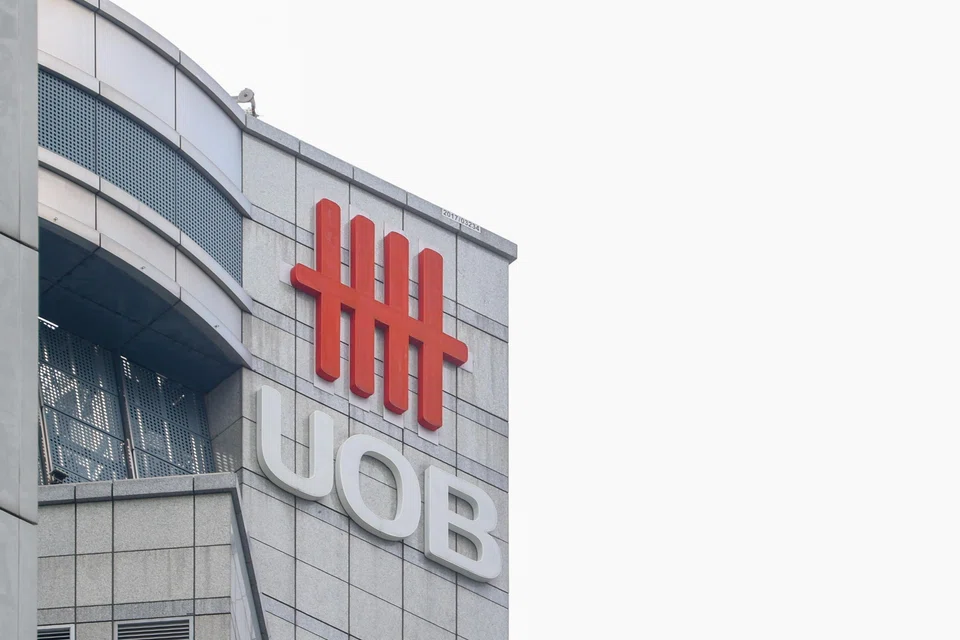
[SINGAPORE] Shares of UOB fell as much as 3.8 per cent on Friday (Jul 17) after a steady rise since the end of April.
The counter retreated by S$1.66 to S$41.84 in the first few minutes of trading, reversing momentum after gains of about 21.6 per cent in the past two months. UOB shares later pared losses to end the session 2.4 per cent lower at S$42.47.
Singapore’s two other banks – DBS and OCBC – also declined, but much more modestly at 0.6 per cent and 1.3 per cent, respectively. DBS shares finished 0.7 per cent down at S$71.96, and shares of OCBC closed 0.8 per cent lower at S$28.56.
Citi on Friday said that the market has been “overly optimistic” in pricing in an asset quality turnaround for UOB, and placed it on a 30-day downside catalyst watch.
Citi analyst Tan Yong Hong noted: “Recent UOB share price rerating is largely driven by short-covering and long funds covering their underweight positions.
“At the same time, short interest in OCBC is building, likely on valuations.”
He added that second-quarter earnings for DBS and OCBC are expected to be slightly above expectations. Meanwhile, UOB earnings may miss expectations when excluding one-off income.
Non-interest income for DBS and OCBC is also expected to grow about 20 per cent in contrast to UOB, which is likely seeing “muted growth due to credit cards expense and lower mix from wealth”.
Local banks have rallied
Shares of the three local banks had surged to record levels in the past week, helping lift the Straits Times Index to new highs.

The gains also helped DBS reach a milestone of S$200 billion in market capitalisation on Monday, making it the first Singapore-listed company to do so.
While analysts told The Business Times that the rally could have more room to run due to rising investor optimism ahead of the banks’ Q2 results in August, Friday saw that bullish outlook somewhat tested.
Jayden Vantarakis, head of Asean equity research at Macquarie Capital, said: “We are entering an environment where we believe Singdollar rates will be supportive of improving net interest income alongside continued strength in non-interest income.”
With assistance from Tan Nai Lun
Decoding Asia newsletter: your guide to navigating Asia in a new global order. Sign up here to get Decoding Asia newsletter. Delivered to your inbox. Free.
Copyright SPH Media. All rights reserved.