

Asian stocks, currencies rise as Fed rate hike bets ease
MSCI’s Asia-Pacific equities gauge climbs 0.3%
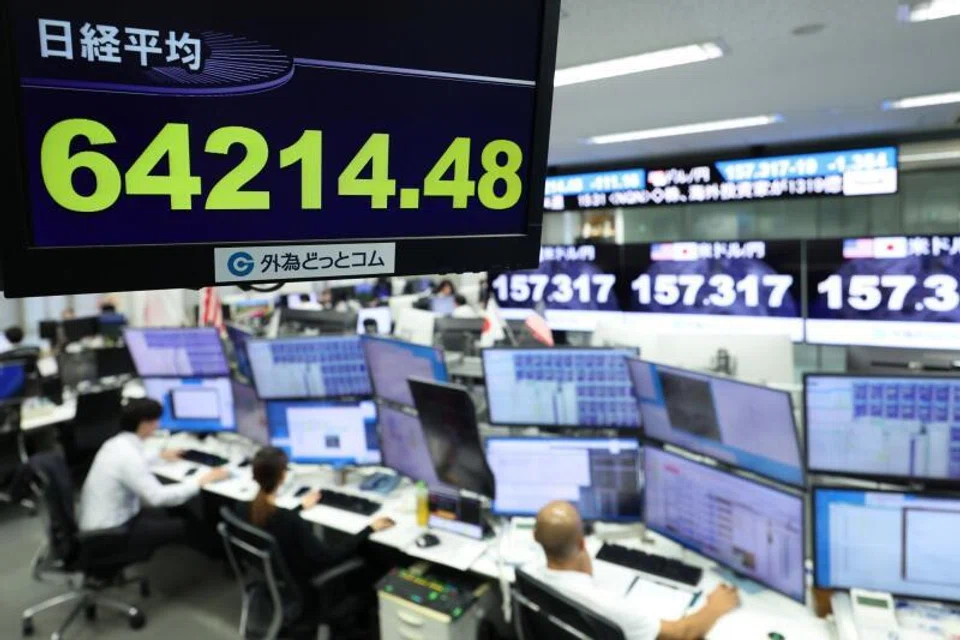
ASIAN stocks and currencies rose on Friday (Sep 4) as investors pared bets on a US Federal Reserve interest rate hike in September, weakening the US dollar, as the yen strengthened.
MSCI’s Asia-Pacific equities gauge climbed 0.6 per cent, boosted by Fed governor Christopher Waller’s comments that he would support keeping rates steady if price pressures continued to ease.
Among the main moves across markets, the S&P 500 futures were little changed as at 11.58 am Tokyo time.
Japan’s Topix fell 0.2 per cent, Australia’s S&P/ASX 200 was little changed, Hong Kong’s Hang Seng rose 2.2 per cent and the Shanghai Composite rose 0.5 per cent.
Swaps priced roughly even odds of a quarter-point hike in September, down from about 70 per cent earlier this week.
A Bloomberg gauge of the US dollar steadied after falling to its lowest since May. An index of Asian currencies climbed to levels last seen in October 2024. Treasuries and gold held their gains from Thursday.
Attention in Asia was once again on the yen, which strengthened about 2 per cent on Thursday, reversing a month of gradual decline.
Traders lifted bets on Bank of Japan (BOJ) rate hikes and remained vigilant to the risk of official action to further boost the currency. The currency traded at about 156 per US dollar, having climbed to as high as 155.30 in the prior session.
Stocks and bonds drew support from Waller’s comments after yields surged globally to multi-decade highs earlier this week, as rising oil prices and chair Kevin Warsh’s hawkish stance fuelled expectations for a Fed rate hike.

The rout also reflected demands for greater compensation amid years of heavy government spending, persistent price pressures and a wave of corporate borrowing to finance the artificial intelligence buildout.
The comments “are very meaningful because they might have changed or tilted the balance of next Fed policy decision”, Suresh Tantia, UBS global wealth management head CIO of Asia equity strategy, said on Bloomberg TV.
“At this point of time we are watching two key things, one is the nonfarm payrolls data coming on Friday, and the next inflation data. They are likely to decide whether Fed moves in the next meeting or not.”
In other corners of the market, Brent crude rose towards US$96 a barrel, on course for a gain of more than 7 per cent over the past five sessions, as renewed US-Iran hostilities this week heightened concerns about disruptions to energy flows.
Gold was steady near US$4,480 an ounce ahead of the US payrolls release.
Bitcoin traded near the US$81,000 mark, while the rate-sensitive two-year Treasury yield held at 4.34 per cent after declining in the previous session following the Fed governor’s remarks.
Waller said he was willing to support “holding the policy rate” at its current level if inflation continued moving towards the Fed’s 2 per cent target.
That gauge – the price index for the personal consumption expenditures component of US gross domestic product – was 3.7 per cent in July, down from 4.1 per cent in May.
Attention now turns to Friday’s nonfarm payrolls report, with markets increasingly leaning towards a hold, though that view could shift if inflation proves stickier than expected.
“We repeat our call that the Fed is more likely to hold than hike in September, though we think it is close and will indeed turn on the next set of inflation data,” said Krishna Guha, head of central bank strategy at Evercore ISI.
Back to the yen, the rebound from a fall to 160 earlier this week underscores market jitters ahead of the BOJ’s Sep 18 policy decision, when the central bank is widely expected to raise rates.
The BOJ could raise interest rates at three consecutive meetings through December in an extreme scenario where yen weakness persists, according to Nomura Securities.
The currency’s gains in New York trading, wrapped up its best day since Tokyo and Washington entered the market to prop up the yen just over a month ago.
“It appears the BOJ will pull the trigger and hike in September but then open the door to a potential pick up in the pace of hiking,” said Paresh Upadhyaya, a strategist at Pioneer Investments.
“We are finally seeing a follow through to intervention by some meaningful expectation on the policy front.” BLOOMBERG
Decoding Asia newsletter: your guide to navigating Asia in a new global order. Sign up here to get Decoding Asia newsletter. Delivered to your inbox. Free.
Share with us your feedback on BT's products and services






