‘Explosive’ US dollar rally is among biggest pain trades, HSBC says
The bank expects the greenback to strengthen gradually through the first half of 2027
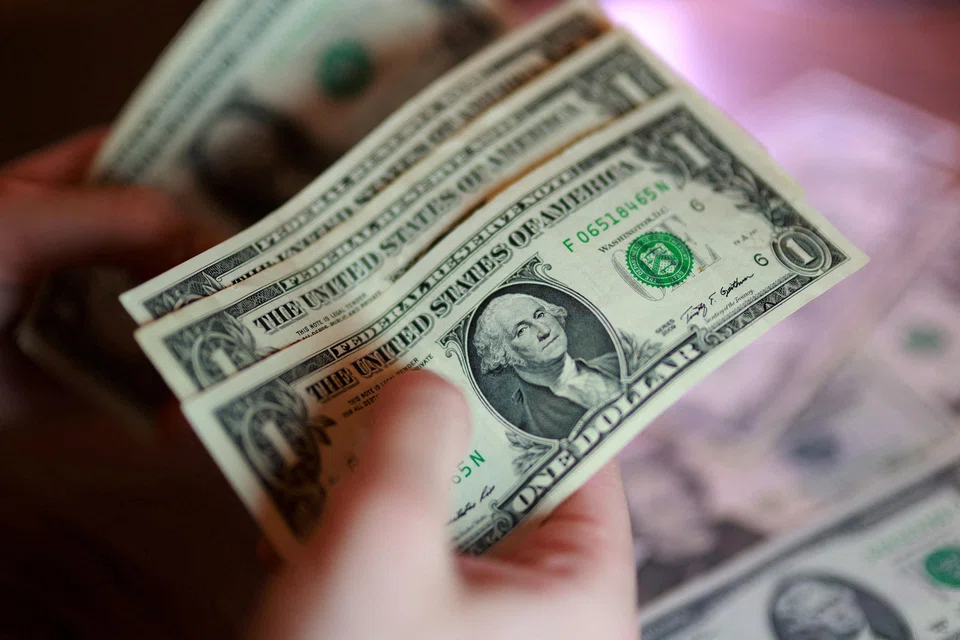
[LONDON] A sharp rise in the US dollar may emerge as one of the biggest “pain trades” in the second half of the year, according to HSBC Holdings.
The bank expects the US dollar to strengthen gradually through the first half of 2027, and warns the rally could become “explosive” if the Federal Reserve signals it’s prepared to tighten policy more than markets have priced in and if geopolitical tensions flare up again.
The risk has grown since the Fed’s June meeting, where policymakers kept the focus firmly on inflation and offered little forward guidance. This has pushed markets’ attention back to interest-rate differentials and helped the US dollar strengthen against every major currency over the past two weeks.
“A stronger US dollar would be painful, but we see the ‘pain trade’ in the FX market taking the form of a more explosive period of USD strength,” analysts including Paul Mackel said in a Jun 29 report.
Bloomberg’s US dollar gauge climbed to a seven-month high earlier in June, buoyed by Fed’s message and robust US economic data. Meanwhile, expectations for tighter policy elsewhere are fading.
Europe’s outlook has softened as oil prices retreat, while the yen has hit a 40-year low on concerns the government wants the Bank of Japan to go slow on further rate increases.
Hedge funds have boosted bullish bets on the greenback to a 16-month high, a sign investors are increasingly expecting further gains.
Another pain trade that HSBC flagged is a reversal in the US Treasury market. Investors started the year expecting the yield curve to steepen as the Fed looked set to keep cutting rates. But sticky inflation, a resilient labour market and a more hawkish Fed have flattened the curve instead.
Yields on two-year Treasuries, among those most sensitive to policy changes, have risen more than 60 basis points this year, compared with about 20 basis points for 10-year yields.
SEE ALSO



“While the US dollar’s supremacy against most of its Group of 10 peers this year can’t be denied,” said Kristine Aquino, managing editor of Bloomberg Markets Live. “Its path higher will be volatile.”
That has left many investors positioned for further flattening. But HSBC warns those bets could quickly unravel if the economy weakens enough to push the Fed towards easing, triggering a renewed steepening of the yield curve.
“Though positioning in flatteners may not be quite as crowded as steepeners were at the start of the year, we think curve steepening would now represent a pain trade for markets,” strategists including Dhiraj Narula wrote in the note. BLOOMBERG
Decoding Asia newsletter: your guide to navigating Asia in a new global order. Sign up here to get Decoding Asia newsletter. Delivered to your inbox. Free.
Share with us your feedback on BT's products and services