

Nasdaq seeks to extend trading hours, as Wall Street gears up for 24/7 move
Trading hours of stocks and exchange-traded products to be expanded from 16 hours to 23 hours, five days a week
 Add BT as a preferred source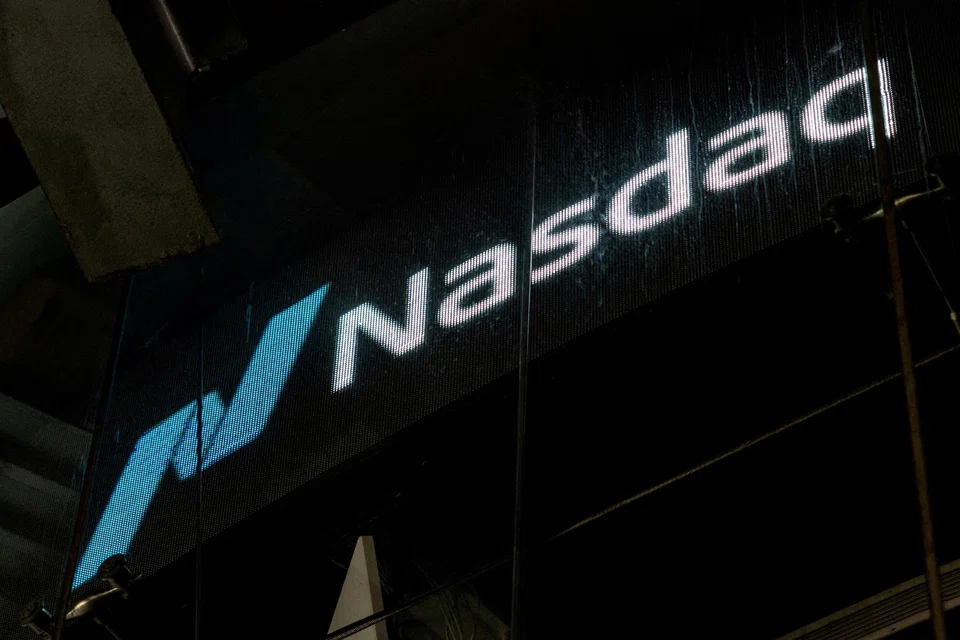
DeeperDive is a beta AI feature. Refer to full articles for the facts.
[NEW YORK] Nasdaq, one of the world’s largest exchanges that is home to tech companies Nvidia, Apple and Amazon, is planning to submit paperwork with the US Securities and Exchange Commission on Monday to roll out round-the-clock trading of stocks, as it looks to capitalise on a global demand for US equities.
Investor demand for nonstop trading in US stocks has surged in recent years, prompting regulators to introduce new rules and green-light proposals from major exchanges to enable trading beyond normal market hours.
The US stock market represents almost two-thirds of the market value of listed companies globally, while total foreign holdings of US equities reached US$17 trillion last year, according to data compiled by Nasdaq.
Nasdaq’s filing with the SEC will mark its first formal step towards rolling out round-the-clock trading, five days a week.
In March, Nasdaq President Tal Cohen said the exchange operator had started discussions with regulators and expected to launch nonstop five-day-a-week trading in the second half of 2026. The New York Stock Exchange and Cboe Global Markets also recently announced plans to move to round-the-clock trading for stocks.
“There’s been this trend towards globalization for some time and we’ve seen the US markets themselves become much more global,” Chuck Mack, senior vice-president of North American markets at Nasdaq, told Reuters.
Navigate Asia in
a new global order
Get the insights delivered to your inbox.
Two daily trading sessions
Nasdaq plans to expand trading hours of stocks and exchange-traded products from 16 hours to 23 hours, five days a week.
Currently, Nasdaq operates three daily sessions during weekdays: the pre-market session from 4 am. to 9.30 am Eastern US time, the regular market session from 9.30 am to 4 pm, and the post-market session from 4 pm to 8 pm.
When Nasdaq moves to 23/5, it plans to operate two trading sessions, with the day session starting at 4 am and ending at 8 pm, followed by a one-hour break for maintenance, testing, and clearing of trades.
The night session will kick off at 9 pm and end at 4 am the following calendar day.
The day session will continue to include pre-market, regular, and post-market trading hours, and will feature the opening bell at 9:30 am and the closing bell at 4 pm. In the night session, trades executed between 9 pm and 12 am will be considered trades for the following day.
Under the new plan, the trading week will start on Sunday at 9 pm and end on Friday at 8 pm after the day session. The successful rollout of round-the-clock trading hinges on upgrades to the securities information processor that displays the most accurate stock quotes on US exchanges.
The central clearing hub, the US Depository Trust and Clearing Corp., is scheduled to roll out nonstop clearing for stocks by the end of 2026.
Advocates of the broader move to round-the-clock trading have argued it will allow investors, especially those based outside the US, to react more quickly to developments that happen outside regular market hours.
Major Wall Street banks, however, are cautious about the push toward nonstop trading, citing concerns around lower liquidity, heightened volatility, and uncertainty over returns on investment.
‘Own terms, own time zones’
While volumes during extended hours are usually much lower than during regular hours, demand has been booming for trading during overnight US hours, Mack said.
Investors who want to trade 24/7 currently rely on off-exchange trading venues, or alternative trading systems, such as Blue Ocean, Bruce ATS, and OTC Moon.
“We see these things manifest themselves in the US equities market, through increasing demand for companies specifically listed on Nasdaq from geographies outside of the U.S., much more now than in the past,” Mack said. “If you think of those investors around the world, they want to access this huge market on their own terms and they want to do it in their own time zones.”
Trading hours on large stock exchanges such as the NYSE date back more than a century, to when trades were placed in person on trading floors by brokers who took orders on paper.
While most stock trading is now done electronically, trading hours on most US exchanges have largely remained the same over the decades.
Earlier this year, Nasdaq filed with US regulators to introduce trading of tokenized stocks, as it sought to double down on a boom in tokenisation amid an easing of crypto regulations under the Trump administration.
“When there’s market stress and volatility, the traffic in the market and the activity levels pick up significantly. We have built systems that are extremely resilient, have a lot of throughput, and have the ability to handle those types of situations,” Mack said. REUTERS
Decoding Asia newsletter: your guide to navigating Asia in a new global order. Sign up here to get Decoding Asia newsletter. Delivered to your inbox. Free.
Share with us your feedback on BT's products and services