

Scepticism towards Trump’s 20% Hormuz fee even as markets react to renewed inflation fears
Crude prices rise as much as 9% and sovereign bond yields spike; proposed charge is a ‘tax on global trade’, says one analyst
 Add BT as a preferred source
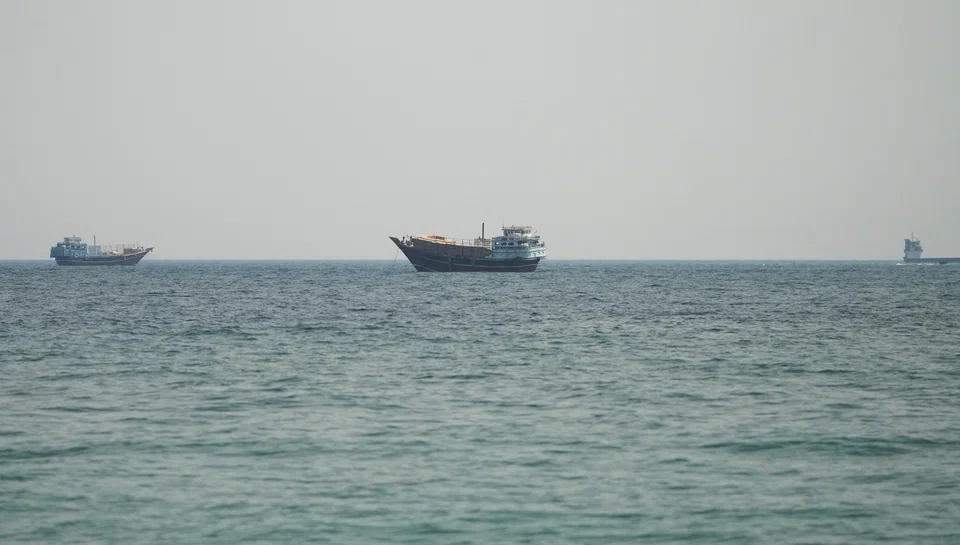
[SINGAPORE] Global markets mostly retreated on Tuesday (Jul 14) after the US announced a naval blockade of Iranian ships in the Strait of Hormuz and proposed a highly controversial 20 per cent toll on all commercial vessels traversing the lane.
The moves sent crude oil prices up as much as 9 per cent, spiked sovereign bond yields on renewed inflation fears, and triggered a sweeping tech-led equity sell-off across Asia and Europe.
But overall, Asia-Pacific markets reversed earlier declines to finish the day higher.
However, market watchers were also sceptical of the moves, saying they are illegal or that US President Donald Trump could be using the threats as a bargaining tool.
In Singapore, the benchmark Straits Times Index fell as much as 1 per cent in morning trade before recovering partially to close up 0.5 per cent.
Singapore’s energy counters also provided a cushion, with RH Petrogas , Rex International and Oiltek ending higher 7.2 per cent, 6.1 per cent and 11.9 per cent, respectively
If the US can implement its 20 per cent fee, a fully loaded oil tanker valued at US$150 million to US$170 million would face a toll of US$30 million to US$34 million per cargo, noted Swissquote senior analyst Ipek Ozkardeskaya.
That mirrored an estimate given in a Bloomberg report on Tuesday.
ANZ Research said the market was treating the proposed fee with a “fair degree of scepticism”, pointing out there is no legal basis for Washington to enforce such a toll.
SEE ALSO


Ozkardeskaya said the development has thrown global markets firmly back into a “stress zone”, but said that reports suggested such a move would likely be illegal under international law.
Norbert Rucker, head of economics and next generation research at Julius Baer, said the contentious toll proposal could simply be a geopolitical bargaining chip.
“Taking last year’s tariff dispute as a guide, the US demands for Hormuz transit fees may in fact signal a willingness to engage in deal-making,” he added, noting his firm’s baseline view that the conflict remains in a negotiation phase.
He also said the pragmatism built up in recent months “is unlikely to reverse on a lasting basis”.
Oil surge, impact on businesses
Still, the energy industry has borne the brunt of the immediate shock. The price of US West Texas Intermediate crude jumped 9 per cent at the start of the week, surging towards US$85 per barrel as hostilities intensified.
Overall, oil has already rallied 20 per cent since dipping below US$70 on Jul 2, noted Ozkardeskaya. Spot prices are rising faster than futures, a market structure known as backwardation that signals intense near-term supply anxiety.
“The Hormuz blockade and Trump’s proposed 20 per cent transit toll are broadly bearish for global equities, because they act as a tax on global trade and raise the risk of an energy-driven inflation shock,” said Carmen Lee, head of equity research at OCBC.
“With around 20 per cent of global oil and liquefied natural gas (LNG) flows passing through Hormuz, Brent’s surge above US$85 a barrel increases concerns over higher fuel, transport and manufacturing costs, potentially delaying interest rate cuts or even prompting further (US Federal Reserve) tightening,” she added.
Overall, markets are likely to rotate away from airlines, chemicals, consumer discretionary and rate-sensitive growth stocks and into energy, defence and commodity producers, according to Lee.
Asian importers, Europe and emerging markets would also be most vulnerable.
ANZ Research analysts Brian Martin and Daniel Hynes noted that vessel traffic in the Strait of Hormuz was declining prior to the latest escalation as renewed attacks ramped up safety concerns.
Compounding the global energy squeeze are ongoing Ukrainian drone strikes on Russian refining infrastructure, which pushed Russia’s crude output to an estimated 8.93 million barrels per day in June – a 2.5-year low.
Despite the disruption, Julius Baer’s Rucker remains cautious on oil, arguing that a prolonged disruption could be buffered by a recent “flush of oil and other goods” through Hormuz over the past few weeks.
Furthermore, he noted that it would take a serious spike well into the triple digits to significantly slow the global economy, making today’s price levels unlikely to do much macroeconomic harm.
The crisis is also spilling into natural gas markets. Following an attack on an LNG tanker, Qatar paused its efforts to revive production out of safety concerns.
With European natural gas storage sitting at just 52 per cent, the region faces steep hurdles in securing adequate winter supplies, ANZ added.
Decoding Asia newsletter: your guide to navigating Asia in a new global order. Sign up here to get Decoding Asia newsletter. Delivered to your inbox. Free.
Copyright SPH Media. All rights reserved.
TRENDING NOW

ComfortDelGro’s Zig to buy S$10 million worth of BYD cars for private-hire fleet

From sales executive to DBS chairman: A look at banking veteran Peter Seah’s career

Japan Home licenses Singapore retail stores to Valu$ owner Radha Exports

Japan Home closing outlets; staff say Valu$ taking over operations

