

Singapore tech stocks plunge as Nasdaq bloodbath spills into region
STI sinks 2.2%; Nikkei dives over 5.9% into bear market; AEM ends 2.7% lower after the previous day’s 20% loss
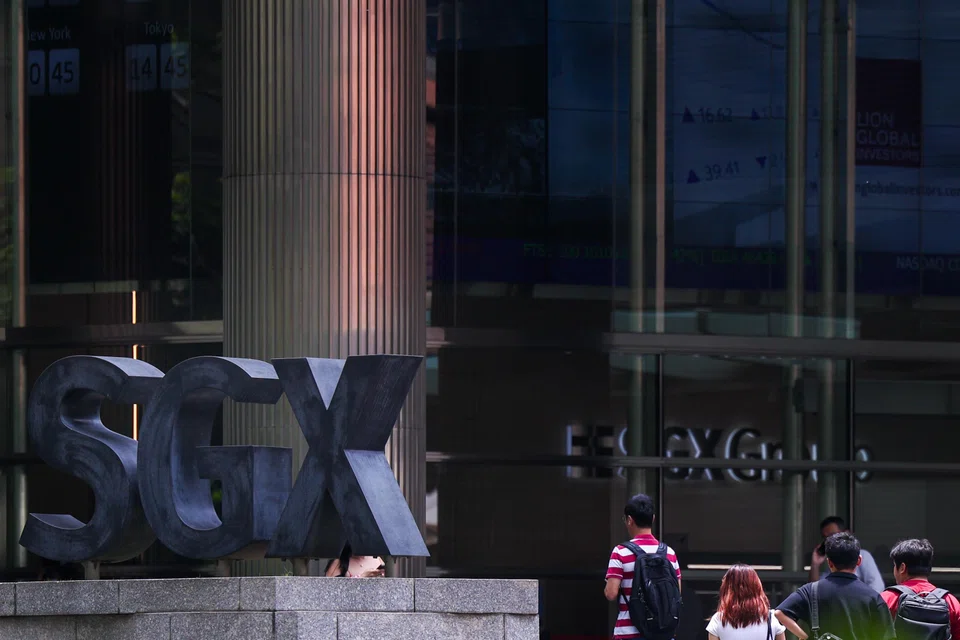
[SINGAPORE] Singapore-listed technology stocks extended their losses on Friday (Nov 6), ending a turbulent week for semiconductor-related counters as the US midterm election results heightened concerns over artificial intelligence spending and regulation.
The sell-off followed the Democrats’ victory in the US midterm elections on Tuesday, which raised fears of tighter scrutiny of AI infrastructure development and triggered a sharp decline in US technology stocks overnight.
The benchmark Straits Times Index (STI) ended Friday down 2.2 per cent or 117.08 points at 5,179.17, tracking regional declines.
Nearly all STI counters ended lower, with Yangzijiang Shipbuilding leading the declines. Its counter closed S$0.30 or 6.5 per cent lower to S$4.35.
The index was also weighed down by banks, which came under pressure following the release of their Q3 results this week.
Only Sats closed higher, ending up 0.5 per cent or S$0.02 at S$3.73.

OCBC , which was the last bank to post its third quarter results on Friday, closed down 0.7 per cent. DBS and UOB ended 2.1 per cent and 2.5 per cent lower, respectively.
Singapore Exchange, Asia tech stocks sink
Across the broader Singapore market, technology stocks posted some of the steepest declines.
AEM ended 2.7 per cent or S$0.17 lower, capping a 20 per cent drop over the week.



UMS Integration and Frencken faced a weekly decline of 18.9 per cent and 16.2 per cent, respectively.
CSE Global , whose key customer includes Amazon, closed S$0.08 or 8.9 per cent lower to S$0.82, despite reporting a near-trebling of Q3 new orders to S$434.9 million earlier this week.
The losses capped a tough week for Singapore’s semiconductor-related counters, adding to a difficult October in which technology stocks were already the worst-performing sector.
The FTSE ST All-Share Technology Index, which tracks the performance of tech companies on the Singapore Exchange’s mainboard, plunged 17.3 per cent in October, marking the steepest sectoral decline in Singapore.
Meanwhile, the tech sell-off extended across the region, led by South Korea’s tech-heavy Kospi, which fell more than 6 per cent on Friday.
The index’s semiconductor giants were among the hardest hit, with South Korea’s SK Hynix falling around 10 per cent and Samsung Electronics shedding about 6 per cent at market close.
Japan’s Nikkei 225 dropped more than 5.9 per cent, entering bear market territory.
Chipmaker Taiwan Semiconductor Manufacturing Corporation, listed on the Taiwan Stock Exchange, also closed around 10 per cent lower.
Why investors are selling
The regional rout was triggered after the tech-heavy Nasdaq Composite plunged 5.52 per cent on Thursday, its biggest one-day decline in 19 months. The index has fallen more than 10 per cent from its record closing high on Oct 6, placing it in correction territory.
The sell-off was particularly pronounced on chipmakers, with the Philadelphia Semiconductor Index, a key US benchmark tracking semiconductor stocks, plunging 12.3 per cent overnight.
Chipmakers Broadcom and Nvidia fell 10 per cent and 9 per cent, respectively. Other major tech casualties included AMD, Qualcomm and Sandisk.
Adding to the pressure are concerns over the outlook for AI infrastructure spending after the Democrats’ took control of the US Senate following its midterm elections.
The election result has added uncertainty over approvals for new AI data centres and connections to electricity grids, compounding concerns over the returns on heavy infrastructure spending.
Beyond regulatory uncertainty, investors are also questioning whether the heavy investments in AI infrastructure will generate sufficient returns.
Major technology companies have continued to report revenue growth, but substantial capital expenditure has weighed on cash generation.
Gerald Wong, founder of investment platform Beansprout, said that investors are concerned about whether the scale of investment will produce enough free cash flow and how companies will fund that spending.
For example, Nvidia is particularly exposed to any slowdown in AI infrastructure investment because it depends on major cloud providers continuing to spend heavily on chips, he added.
Within Singapore, sentiment towards AI trade could remain subdued, said DBS Research Group in a note on Friday.
Its analysts warned that Singapore semiconductor companies’ medium-term earnings are skewed towards the downside.
Globally, delays to future facilities could push out chip and equipment purchases. However, the wafer fab equipment sector should be more insulated as what they deliver over the next two years is for wafer production in 2030 or beyond.
DBS Research Group analysts noted that Venture and Frencken may prove more resilient than more AI-exposed proxies such as UMS, supported by their diversified end markets.
Despite the near-term uncertainty, analysts remain constructive on AI’s longer-term prospects.
Justin Jimenez, head of macro and investment research at StashAway, said: “AI usage continues to grow as the cost per token falls, and those lower costs could lead to more viable use cases – from drug discovery to robotics.
“As businesses across the economy adopt these tools, they could see greater productivity gains, supporting growth beyond the tech sector.”
Decoding Asia newsletter: your guide to navigating Asia in a new global order. Sign up here to get Decoding Asia newsletter. Delivered to your inbox. Free.
Copyright SPH Media. All rights reserved.
TRENDING NOW

Analysts cut DBS target price on lower 2027 earnings, but see buying opportunity after share price slide
China Investment Corp, PGIM’s 50% stake in Nex mall up for sale; asking about S$1.2 billion

Nvidia CEO Jensen Huang drops from world’s top 10 richest after chips sell-off

OCBC wealth clients turn defensive amid market volatility as Q3 profit rises 3%

