Case calls for law on prepayments as True Group’s consumer losses soar to S$3.78 million
Total year-to-date prepaid package losses jump 147% to S$6.7 million from S$2.7 million in 2025

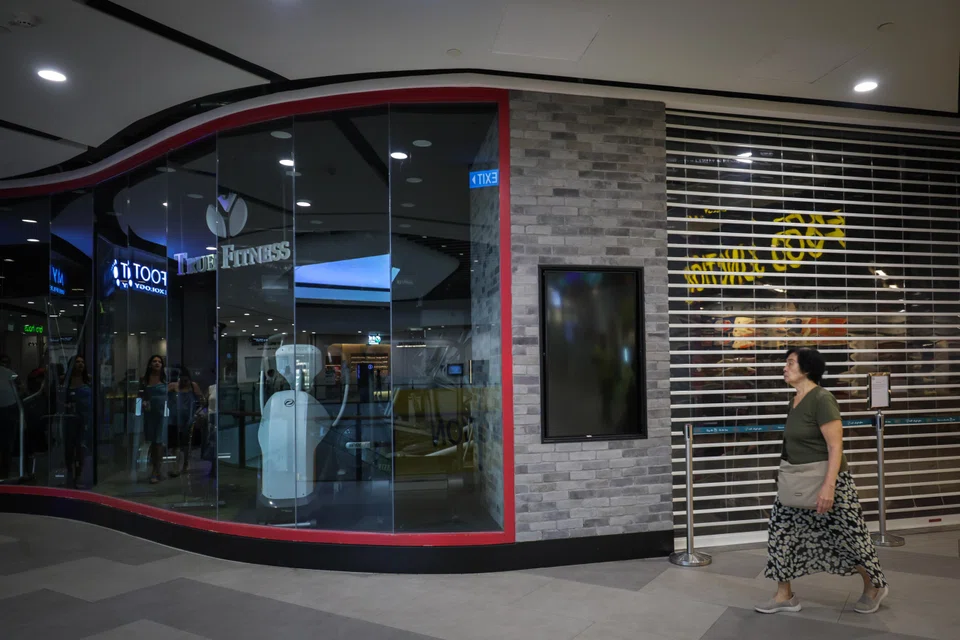
[SINGAPORE] Amid a wave of abrupt business closures in the fitness and wellness sectors, the Consumers Association of Singapore (Case) is urging the government to introduce mandatory safeguards to protect consumers against prepayment losses.
The consumer watchdog issued a media statement on Monday (Oct 5) which said that from Jan 1 to Sep 30, 2026, total consumer prepayment losses reached nearly S$6.7 million. This is 147 per cent higher than the S$2.7 million recorded for the whole of 2025.
The bulk of the recent losses stems from the sudden shuttering of fitness chains. Between Sep 10 and 30, Case received 1,610 complaints involving about S$3.8 million in unfulfilled prepaid packages following fitness business closures.
True Fitness and True Yoga accounted for the lion’s share of the fallout, with 1,518 complaints amounting to S$3.78 million in reported losses. This figure has ballooned drastically from earlier preliminary reports of S$609,000 in the days immediately following the gym operator’s sudden closure in mid-September.
Another local studio, Yoga Inc, drew 92 complaints involving nearly S$32,827.
The True Group’s collapse is the latest in a string of high-profile casualties in the local fitness and wellness scene that have left customers out of pocket.
Case previously reported in August that consumer complaints involving the beauty industry topped its list for the first half of 2026, with reported prepayment losses of more than S$1.9 million.
In February 2026, the sudden closure of beauty salon and spa Royal Secrets Wellness resulted in more than S$1 million in prepayment losses alone, with one customer reporting an individual loss of about S$50,000.
Case has been assisting affected consumers in filing proofs of debt with liquidators.


However, as consumers are typically treated as unsecured creditors during liquidation, the watchdog stressed that the sheer scale of the losses highlights the need for stronger consumer protection.
Proposed mandatory safeguards
Case has proposed three complementary measures.
Cooling-off periods: The consumer watchdog proposed mandating a cooling-off period for high-value prepaid packages. This would allow consumers sufficient time to reconsider commitments involving substantial upfront payments and cancel without penalty.
Mandatory CaseTrust accreditation: Case suggested requiring businesses in sectors involving substantial or long-term prepayments, such as beauty and fitness, to hold accreditation. This would enforce safeguards including prepayment protection, transparent pricing, proper disclosure, clear contractual terms, and reasonable refund arrangements.
Targeted enforcement: The watchdog urged the authorities to investigate potential wrongful trading under Section 239(6) of the Insolvency, Restructuring and Dissolution Act 2018. This closer examination may apply if businesses collect substantial prepayments shortly before entering liquidation.
Melvin Yong, president of Case, emphasised that consumers should not have to bear substantial financial losses when a business ceases operations.
“The recent fitness closures and sharp rise in reported prepayment losses highlight the limitations of relying solely on voluntary measures,” he said, adding that mandatory safeguards should be introduced promptly to “protect consumers’ hard-earned money and establish clear, responsible standards for businesses”.
Case noted that similar protections have already been introduced or proposed overseas.
For instance, Taiwan requires fitness centres to protect at least 50 per cent of collected prepaid fees through trust accounts or performance guarantees. In the US, New York caps health club contracts at 36 months, mandates cancellation windows, and requires businesses to provide financial security such as a bond.
The UK has also introduced targeted protections for savings schemes, while Hong Kong is currently proposing mandatory cooling-off periods and contract limits for prepaid beauty and fitness packages.
“The time has come to introduce mandatory safeguards in sectors involving substantial or long-term consumer prepayments. Case calls on the government to mandate cooling-off periods, robust protection of consumers’ prepayments, and effective investigation and enforcement where the evidence warrants it,” Yong said.
Decoding Asia newsletter: your guide to navigating Asia in a new global order. Sign up here to get Decoding Asia newsletter. Delivered to your inbox. Free.
Copyright SPH Media. All rights reserved.