

Dubai hedge fund numbers hold steady in 2026 amid Middle East conflict, rivalry with Singapore and Hong Kong
Firms are increasingly bringing in senior hires, decision-makers and traders

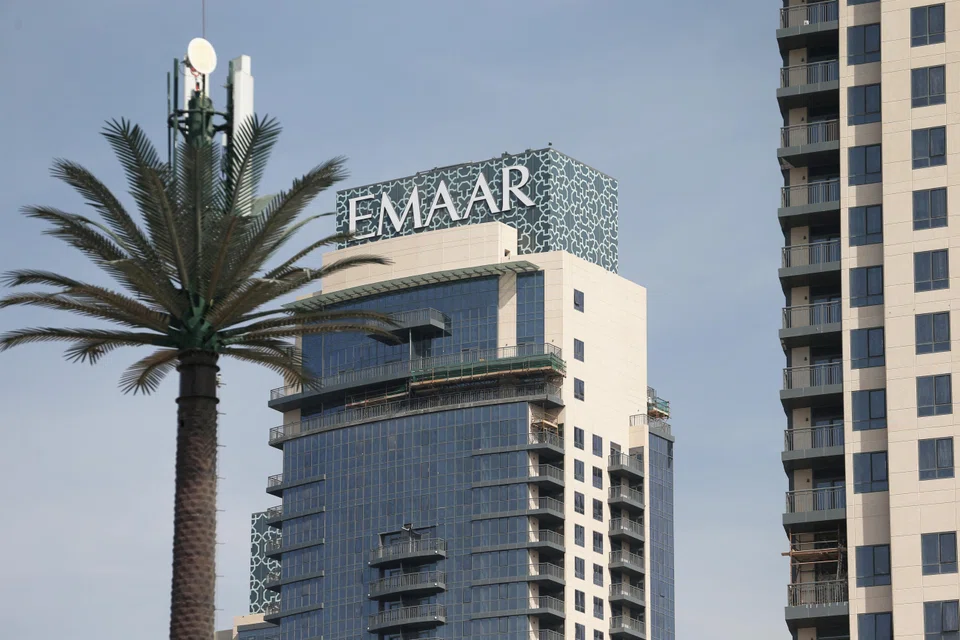
[SINGAPORE] The number of hedge funds in the Dubai International Financial Centre (DIFC) held steady in the first 10 months of 2026, following two years of rapid expansion, as the emirate navigates geopolitical tensions and growing competition from Asian financial hubs for global investment talent.
The DIFC had already established itself as a top-five global hub by the end of 2025, with more than 100 registered funds.
DIFC housed 102 hedge fund managers as at end-October 2026, relatively unchanged from end-2025, with more than 80 per cent of them managing over US$1 billion in assets, according to figures presented by DIFC at a media briefing in Dubai.
The figure represents a doubling from 50 managers at the start of 2024. Two-thirds of these hedge fund managers hail from the US and the UK, while others come from markets including Hong Kong and Singapore.
This comes amid the ongoing Middle East conflict that erupted in February, raising concerns over potential capital flight and uncertainty about the region’s attractiveness to global financial firms.
Chris Cameron, senior director for conduct supervision at the Dubai Financial Services Authority (DFSA), likened the anxiety on Feb 28 to the onset of the pandemic.

“We were worried that firms’ viability would be in question, and it has been the complete opposite,” Cameron said.
He added that DFSA engaged with every firm at least once to establish operational resilience frameworks and assess any material shifts in their business activities.
He noted that DIFC – a special financial free-zone in Dubai to attract financial institutions – reported a higher population in September than before the crisis in January and February.
SEE ALSO
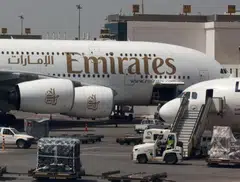
According to the Dubai Data and Statistics Establishment, Dubai lost about 61,000 residents at the height of the war in March, a 1.3 per cent dip. After that, it grew to about 4.8 million residents on Sep 28 this year, 226,885 more than at the start of the year.
That said, while the figures suggest that Dubai has continued to attract businesses and professionals, it is unclear if hedge fund employment or activity went up during the period.
Cameron said the centre has evolved from “one or two small hedge fund managers”, compared with over 100 today.
The nature of their presence has also changed, with firms increasingly bringing in senior hires, decision-makers and traders, rather than just relocating their middle and back office functions.
“It is now about global senior management coming in. It’s about risk takers. It’s people that can run the business,” he said.
He identified access to talent as a draw in Dubai’s appeal to hedge funds, as well as its legal and regulatory framework and ability to serve global investors.
Michael Slater, managing director for the Middle East at fund services provider IQ-EQ, said the United Arab Emirates’ investment in DIFC’s regulatory framework and infrastructure has made the financial centre increasingly attractive to hedge funds and private-equity managers.
Setting up a fund in DIFC can take as little as 12 weeks, compared with potentially three times the cost and time required in other jurisdictions, he said.
“Market timing of opportunity and getting deals done is critical, and being able to do it quickly is kind of where the Middle East has really thrived,” said Slater.
Global hedge funds deepen Dubai presence
Major hedge funds have continued to expand their presence in Dubai despite the Middle East crisis, as activity started to pick up in the second half of the year.
Citadel has secured approval to operate in Dubai in April and Symmetry Investments has received a DFSA licence to operate from DIFC in July.
In October, Jain Global, an American investment firm, was reportedly planning a Dubai office.
Industry participants observed that investors in the Middle East show a growing appetite for hedge fund strategies, particularly those designed to navigate market volatility.
Sebastian Goeres, CEO of LGT Private Banking Middle East, said: “Lately, we have seen a lot of interest in the hedge fund space, like market neutral strategies, given a certain volatility on the geopolitical side.”
However, the expansion of hedge funds in Dubai does not necessarily mean that investment activities are being relocated from established financial centres.
Pete Unwin, head of private wealth and family office for the Middle East at IQ-EQ, said decisions on where to establish investment structures ultimately depend on the location and nature of the underlying assets.
Singapore, Hong Kong step up competition
As Dubai continues its push to attract fund managers and talent, Asian financial hubs Hong Kong and Singapore are also not staying still.
Hong Kong gazetted a Bill on Jun 12 that would expand tax concessions for funds, family offices and carried interest. Only “genuine carried interest” would qualify, with fixed pay and discretionary bonuses staying taxable, said Hong Kong’s finance bureau.
Meanwhile, the Monetary Authority of Singapore (MAS) announced a package of measures in 2026 to strengthen its competitiveness as an asset management hub, including a tax exemption for qualifying profit-related returns from fund management, with the exemption expected to take effect next year.
It also unveiled a hedge fund investment programme to invest with managers committed to establishing or deepening their presence in Singapore, as well as a framework to attract senior investment professionals.
Direct comparisons of hedge fund numbers across the financial centres are challenging as regulators publish broader fund management industry data and not hedge fund numbers exclusively.
The Hong Kong Securities and Futures Commission’s Asset and Wealth Management Activities Survey 2025 noted that there are 2,358 firms holding a Type 9 licence, which covers asset management more broadly.
Similarly, MAS reports 1,320 licensed fund management companies.
According to third-party platform HedgeLists, Singapore has more than 120 hedge funds while Hong Kong has over 250, as at end-October.
What’s next for Dubai
Dubai’s financial regulator is also preparing for its most significant fund framework overhaul since 2010, as it seeks to reduce regulatory burdens and align with global standards.
One of the more consequential proposals is the abolition of the External Fund Manager (EFM) regime, said Clyde & Co, a global law firm, in an article.
The DFSA is looking to remove the EFM framework which currently allows qualifying managers outside DIFC, including those based in other wealth hubs such as Singapore or Hong Kong, to manage domestic DIFC funds without obtaining full DFSA authorisation.
The new framework could require these managers seeking to manage such funds to obtain DFSA authorisation and establish a substantive physical and regulatory presence in DIFC.
The changes are targeted to take effect in the first quarter of 2027.
Charlotte Robbins, managing director, policy and legal of DFSA, said the reforms reflect the growing maturity of Dubai’s fund management industry and the emergence of different business models.
“We are doing away with the specialist class labelling,” she said, adding that existing safeguards would be maintained, with risk management requirements applied to activities rather than fund classifications.
“Our rulebook needed to evolve to cater for the different business models that we started to see over the years, the different risks that were arising, and essentially enhance the framework, but at the same time maintaining appropriate safeguards.”
Decoding Asia newsletter: your guide to navigating Asia in a new global order. Sign up here to get Decoding Asia newsletter. Delivered to your inbox. Free.
Copyright SPH Media. All rights reserved.
TRENDING NOW

Ex-Nvidia CEO Jensen Huang carried a secret for more than a year. It led to his downfall

Higher rates, weaker spending: Is the Philippines entering stagflation?
As Indonesia picks new vice-president to succeed Gibran, investors see risks and opportunities
Singapore to inherit South China Sea code talks with key issues unresolved

