

Oil heads higher as US-Iran peace talks in stalemate
Trump says he expects US negotiators to engage in more talks this week
[NEW DELHI] Brent crude oil rebounded more than 3 per cent on Monday (Sep 28) after US President Donald Trump rejected a peace deal from Iran to resolve their conflict and reopen the Strait of Hormuz, keeping tensions in the Middle East elevated.
Brent crude futures rose US$3.43, or 3.29 per cent, to US$107.75 a barrel at 0540 GMT, while US West Texas Intermediate crude was at US$94.55 a barrel, up US$2.14, or 2.32 per cent.
Iran announced a peace proposal last week at the UN General Assembly in New York, saying it had been transmitted to the Americans via Qatari mediators. Trump said on Saturday he rejected the plan, but told Axios in a phone interview on Sunday that he expected US negotiators to engage in more talks this week.
“The rejection has reduced hopes of an immediate breakthrough, although diplomatic efforts have not ended,” said Sugandha Sachdeva, the founder of SS WealthStreet, a New Delhi-based research firm.
“For Brent futures, US$120 a barrel remains the crucial resistance. As long as prices fail to sustain above it, a pullback remains possible, particularly if shipping improves or talks make progress.”
Yemen’s Saudi-led coalition said early on Saturday it had intercepted two ballistic missiles and two drones launched by the Iran-backed Houthis towards the kingdom.
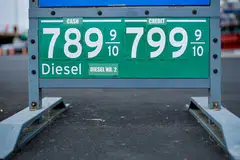
Brent edged up 0.4 per cent last week but WTI lost 7.9 per cent on concerns that the US may ban diesel exports to ease record prices which could curb US refining output.
“Refined oil products remain a pressure point, with record US diesel prices intensifying inflation risks and prompting renewed debate over potential export curbs,” ANZ analysts said.
Any restriction on US diesel exports would tighten supply outside the US, with European prices reacting to the prospect of reduced American supply, they added.


Meanwhile, crude oil exports from key Middle East producers rebounded in September to 12.8 million barrels per day, the highest since the war started in February, preliminary data from Kpler showed on Monday, as Saudi Arabia and the United Arab Emirates boosted exports.
The rebound came following a recovery in shipments via the Strait of Hormuz, which were set to hit about 7.4 million bpd in September, the data showed, as Saudi Arabia diverted exports from the Red Sea port of Yanbu to its eastern Ras Tanura port following attacks that damaged its East-West pipeline. REUTERS
Decoding Asia newsletter: your guide to navigating Asia in a new global order. Sign up here to get Decoding Asia newsletter. Delivered to your inbox. Free.
Share with us your feedback on BT's products and services
TRENDING NOW

Genting Singapore trails MBS, but helps anchor Malaysian parent group’s finances

Siti Hasmah Mohamad Ali, wife of former Malaysian PM Mahathir Mohamad, dies aged 100

He built the Vingroup empire. Now South-east Asia’s richest man is handing some key roles to his sons

Why US midterm elections could power the next stock market rally

