

Oil hits over 1-week low on hopes of boost to diplomacy in Iran war
Brent crude futures stood at US$101.71 a barrel by 0213 GMT, down US$2.16, or 2.07%
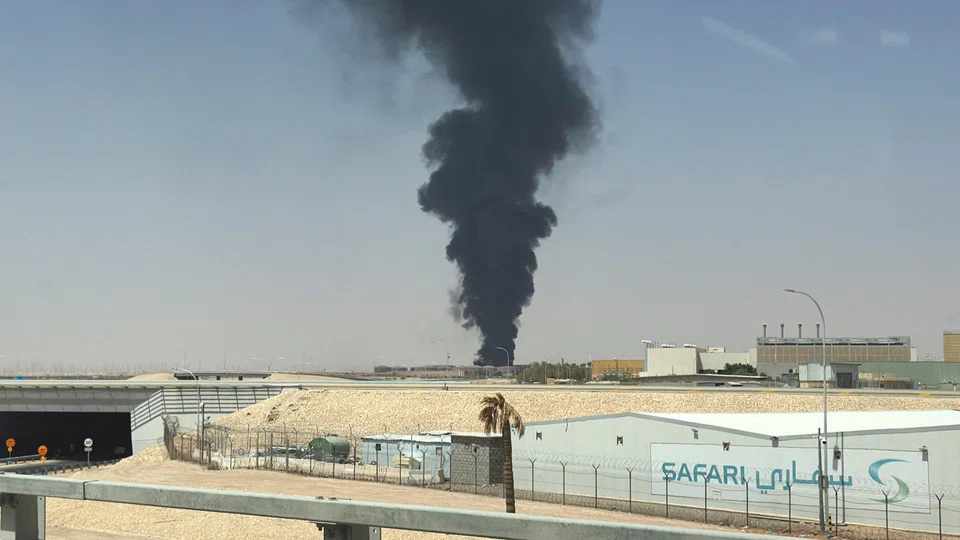
[SINGAPORE] Oil prices slid to their lowest in more than a week on Monday (Sep 21) on hopes diplomacy in the Iran war will get a chance this week amid a UN meet and as investors eyed a partial recovery in shipments from Saudi Arabia despite ongoing attacks by Yemen’s Houthis.
Brent crude futures and US West Texas Intermediate crude touched their lowest since Sep 10 earlier on Monday, with Brent at US$101.71 a barrel by 0213 GMT, down US$2.16, or 2.08 per cent, after settling 0.91 per cent lower on Friday.
US West Texas Intermediate crude lost US$2.15, or 2.14 per cent, to US$98.15 a barrel following a 1.58 per cent drop in the previous session.
“It seems that a degree of risk premium is being removed from oil prices on hopes that a diplomatic path to de-escalate the US-Iran war may arrive this week,” Tim Waterer, chief market analyst at KCM Trade, said.
“Whether that hope proves to be warranted or not is another question. Time will tell.”
The WTI broke a key psychological support at US$100 a barrel while some investors may have rolled over their positions in the October contract a day ahead of expiry to November, a Singapore-based broker said.
Iran and the US exchanged new threats on Sunday amid the stalemate, although President Donald Trump said he would be open to meeting Iranian President Masoud Pezeshkian, who is expected to be in New York this week for the United Nations General Assembly.
Iran has conveyed its conditions to mediators for re-engaging in negotiations aimed at ending the war with the US, Al Jazeera cited Iran’s security chief, Mohsen Rezaei, as saying in an interview on Saturday.
However, tensions in the Middle East remained elevated as Yemen’s Iran-backed Houthis said they attacked “sensitive” sites in the Saudi capital of Riyadh on Saturday with missiles and drones, as well as an Aramco facility in the Red Sea city of Yanbu, a key oil export hub.

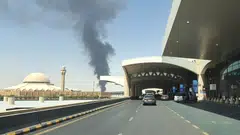

China has asked Iran to help rein in the Houthis after an appeal to Beijing by Saudi Arabia following the attacks, according to three Iranian sources familiar with the matter.
The attacks by the Houthis on Saudi Aramco’s East-West pipeline have prompted the state energy firm to increase exports through the Strait of Hormuz this month and next after halting some shipments via Yanbu.
That enabled exports from the Opec kingpin to recover to over 4 million barrels per day (bpd) so far in September after slumping to 2.4 million bpd in August, the lowest since at least 2013, according to provisional data from analytics firm Kpler.
“Middle East oil flows remain surprisingly strong despite the disruption to Saudi Arabia’s East-West pipeline,” JPMorgan analysts said in a Sep 18 note, adding that the total oil flows averaged 17.1 million bpd in the past 10 days, just 6.1 million bpd below the 2025 average.
“The most notable pivot has come from Saudi Arabia,” the analysts said, as satellite data indicated Saudi oil moving through the Strait of Hormuz averaged 2.9 million bpd over the past six days, up from just 700,000 bpd in August. REUTERS
Decoding Asia newsletter: your guide to navigating Asia in a new global order. Sign up here to get Decoding Asia newsletter. Delivered to your inbox. Free.
Share with us your feedback on BT's products and services
TRENDING NOW

He built the Vingroup empire. Now South-east Asia’s richest man is handing some key roles to his sons
China’s Pinglu Canal likely to benefit Singapore, other South-east Asia ports in the long term
Suntec Reit to increase Singapore focus, sell three Australia properties

Despite the de-dollarisation debate, demand for dollar liquidity in Asia is growing

