

Sembcorp Utilities to import 1.3 GW of low-carbon electricity from Vietnam and Malaysia
The initiative supports broader efforts to unlock South-east Asia’s renewable energy potential

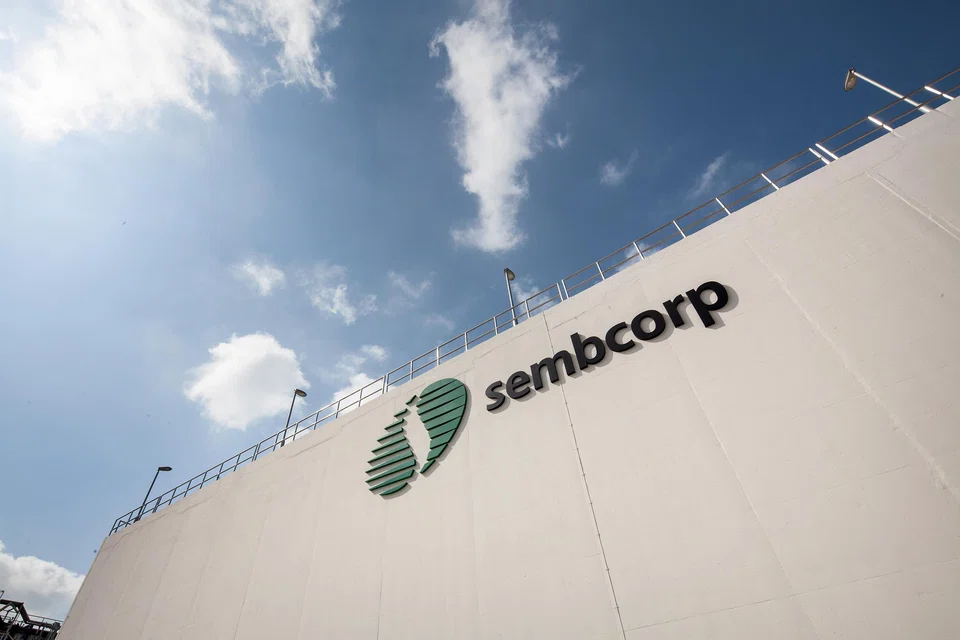
[SINGAPORE] The Energy Market Authority (EMA) has awarded a subsidiary of Sembcorp Industries a conditional approval to import 1.3 gigawatts (GW) of low-carbon electricity from Vietnam and Malaysia, said the city-state’s energy regulator on Monday (Oct 26).
The project, which is led by Sembcorp Utilities and its consortium partner MY Energy Consortium, aims to commence operations in 2035. MY Energy Consortium comprises Malaysia’s national oil company Petronas, Malaysia’s state utility Tenaga Nasional and Vietnam’s national oil company Petrovietnam Technical Services Corporation.
Known as the Vietnam-Malaysia-Singapore (VMS) initiative, it proposes to harness Vietnam’s offshore wind resources alongside solar and battery energy storage infrastructure in Malaysia, and transport the energy generated through a regional power corridor linking the three countries, said the consortium partners in a separate media statement.
“Under the proposed arrangement, renewable electricity generated in Vietnam would be transmitted through Malaysia and supplied to both Malaysia and Singapore, with Malaysia serving as both a recipient and transit country for the regional power flow,” said the consortium’s statement.
It added that the VMS initiative supports broader efforts to unlock South-east Asia’s renewable energy potential, strengthen cross-border energy connectivity and contribute to the advancement of the Asean Power Grid, a multi-decade regionwide effort to link up all 11 member countries of the economic bloc for cross-border electricity trade.
Announcing EMA’s approval at the Singapore International Energy Week on Monday, Minister for Energy, Trade and Industry (Energy and Industry) Tan See Leng said this expands the range of options and potential pathways for Singapore to import low-carbon electricity from Malaysia.

This 1.3 GW project will be the fourth cross-border low-carbon electricity import project Singapore has with Malaysia.
Sembcorp Utilities had previously been granted approval for two other Malaysian projects. One is to import 300 megawatts (MW) from Johor, while another was to import 1 GW of low-carbon electricity from Sarawak. Another was awarded to Southern Solar Alliance to import 600 MW from peninsular Malaysia.
In a related development, plans to conduct feasibility studies to build a new 2 GW interconnection between Singapore and peninsular Malaysia have reached an important milestone, said Dr Tan, as marine subsea surveys along the proposed route would begin this month.
SEE ALSO







If successful, the 2 GW interconnection would be the second such power link between both countries. The existing link allows up to 1 GW of bi-directional electricity flows.
To ensure that corporate offtakers would have access to these low-carbon electrons if the projects with Malaysia do start commercial operations, Dr Tan said EMA has established a working group with Malaysia’s Energy Commission to harmonise the use of renewable energy certificates for cross-border electricity trade.
“Even as we make progress on these fronts, it does not mean that we are pursuing imports at all costs. Import projects will ultimately need to offer a viable and competitive price relative to other decarbonisation pathways, including the use of offsetting international carbon credits. We will therefore continue to calibrate our imports ambition according to the pace of regional collaboration and market conditions,” said Dr Tan.
Decoding Asia newsletter: your guide to navigating Asia in a new global order. Sign up here to get Decoding Asia newsletter. Delivered to your inbox. Free.
Copyright SPH Media. All rights reserved.
TRENDING NOW

Government to bring forward raising of retirement age, give employers more financial support to create flexi-load jobs

If Europe goes to war, the fallout will be felt in East Asia

Indonesia stocks suffer worst plunge in nearly 30 years as MSCI proposes standalone status

Vietnam’s northern provinces, not Hanoi or Ho Chi Minh City, are powering near 10% GDP growth

