

Floating rates are back on the radar, but fixed mortgages still rule Singapore’s home loans
After several years of rate volatility, many borrowers are placing greater emphasis on certainty

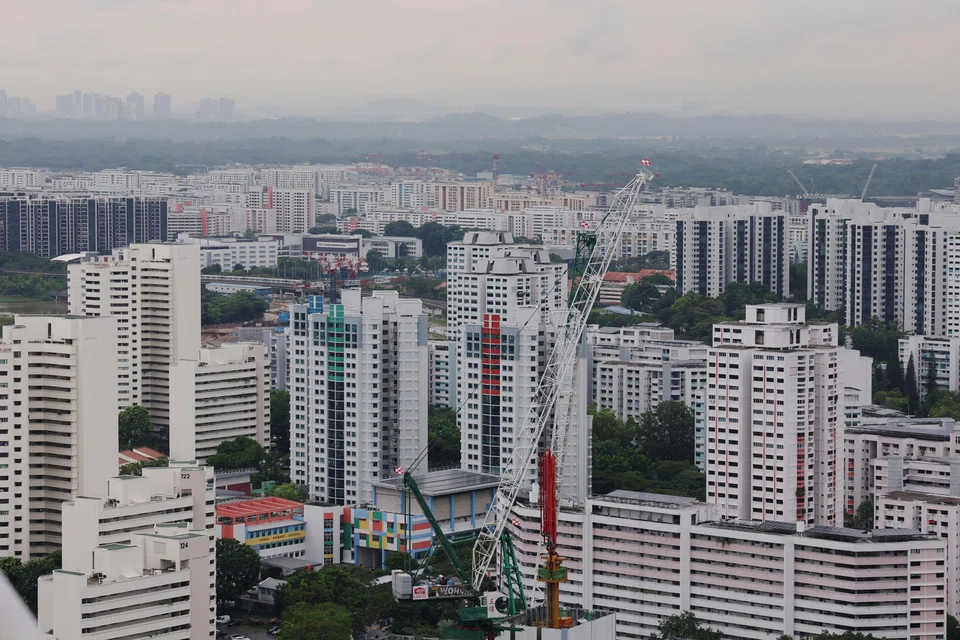
[SINGAPORE] Interest in floating-rate home loans is picking up in Singapore as borrowing costs fall and expectations build for further rate cuts, but fixed-rate mortgages remain the preferred choice for most homeowners amid lingering uncertainty over where rates will settle.
Market observers pointed out that years of rate swings have left borrowers cautious, with many prioritising predictable monthly repayments even as floating rate packages get more attractive.
“Today, after several years of rate volatility, a large segment of borrowers is placing greater emphasis on certainty,” said Clive Chng, head of relations at Redbrick Mortgage Advisory.
Demand for fixed-rate packages has been strongest among risk-averse borrowers, first-time buyers and those intending to hold their properties over the medium term, he added.
“For these clients, the ability to lock in monthly repayments provides valuable peace of mind,” he added.
Darren Goh, executive director, MortgageWise.sg, also noted more interest for fixed-rate loans, given that fixed and floating rate loans are almost at parity at the moment.
According to data on MortgageWise.sg retrieved on Jan 23, the three-year average interest for floating-rate loans ranged between 1.47 per cent and 1.67 per cent, while that of fixed-rate loans stood between 1.48 and 1.75 per cent.
These were among the top 10 packages offered by banks in Singapore, for a S$750,000 loan over 25 years for a private residential property.
For public housing, the interest on the Housing & Development Board’s direct loan is fixed at 2.6 per cent.
The Singapore overnight rate average (Sora) – to which floating rate loans in Singapore are pegged – has been range-bound at 1.1 per cent to 1.2 per cent for some time now, he said.
Goh also expects not many believe that Sora can go much lower from here.
Sora will likely bottom out near 1 per cent in the second quarter of this year, before recovering modestly to 1.4 per cent by end-2026, said UOB’s senior foreign exchange strategist Peter Chia.
“Much of the transmission from the expected Fed rate cuts in 2025 and 2026 may have been front-loaded, and have occurred,” he said.
OCBC’s head of foreign exchange and rates strategy Frances Cheung also expects short-end Singdollar rates to settle into the 1.45-1.6 per cent range after dips, if there are even any.
Lower interest rates
With “very few borrowers” opting for floating rates a year ago, there has been an increase in interest in these packages as spreads remain “very attractive” at around 0.25 per cent even though Sora has fallen, said Wayne Quek, senior mortgage adviser at Home Loan Whiz.
Redbrick’s Chng said those open to floating or semi-fixed interest rates are typically more sophisticated borrowers who expect further rate moderation.
He added: “These borrowers are prepared to accept some degree of rate fluctuation in exchange for potentially lower long-term borrowing costs, especially as banks introduce competitive spreads and flexible features that allow borrowers to manage downside risks.”
At the banks, those polled by The Business Times also noted a rise in enquiries and selective take-up of floating rate packages.
Chelsea Ling, head of deposits and secured lending at DBS, said demand for floating-rate loans grew tenfold in 2025 compared with the previous year, albeit from a low base, and she expects this to continue as floating rates remain compelling.
But Maryanne Phua, OCBC’s head of home loans, said fixed rate packages continue to be more popular at the bank.
Some four in five of its borrowers have fixed-rate packages, and seven in 10 homeowners who refinanced still opted for a fixed-rate package as well.
“After three US Federal Reserve rate cuts in 2025, some homeowners may think that the rate-easing cycle is nearing its end and are therefore refinancing their home loans to lock in the rates,” Phua said.
Package add-ons
Mortgage brokers expect further pressure on bank margins as competition heats up in a lower-rate environment.
Home Loan Whiz’s Quek noted that borrowers are more proactive and less loyal than before, which should keep the mortgage market highly competitive even if rates stabilise.
As a result, many banks have turned to “creative” features in their home loan packages to attract consumers.
In particular, banks are increasingly linking mortgage products with broader ecosystem offerings such as wealth management to deepen customer relationships, said Redbrick’s Chng.
At Standard Chartered, clients look out for other elements such as offsetting their home loan interest directly with interest earned on their deposits when selecting a home loan pricing package, said Usman Khalid, the bank’s global and Singapore head for deposits, mortgages and payments.
Meanwhile, Citi said it integrates mortgage expertise into its advisory by collaborating with client advisers for its wealth clients to provide “optimal mortgage pricing”, said Ang Yue Shien, head of Citigold Singapore, client advisory, Citibank Singapore.
As for DBS, Ling said features such as waivers of penalties upon property sale, free partial prepayments and the ability to switch loan packages without additional cost have become increasingly important.
She added: “Our experience suggests that customer preferences are shaped not only by the interest rate environment, but also by the flexibility embedded within home loan structures.”
With rates expected to stabilise at lower levels, this could tilt bargaining power towards borrowers, especially if refinancing and package switching pick up as more competitive offers emerge.
That, in turn, could influence how banks position home loans, given the sector’s exposure on their balance sheets.
As at the second quarter of 2025, home loans accounted for 19 per cent, 22 per cent and 24 per cent of total loans at DBS, OCBC and UOB, respectively, with the bulk of the loans in Singapore.
“It’s tough for banks as mortgages are like commodities, which boil down to price or rates ultimately,” noted MortgageWise.sg’s Goh.
TRENDING NOW
Can a first-time homebuyer couple earning S$18,000 a month afford a new EC unit?

He built the Vingroup empire. Now South-east Asia’s richest man is handing some key roles to his sons

Asia needs new energy security architecture

Chagee, Mixue and Luckin won the market. Sustaining their edge is the harder part

