

Singtel sees S$1.1 billion KKR deal bringing new customers, technologies to the table


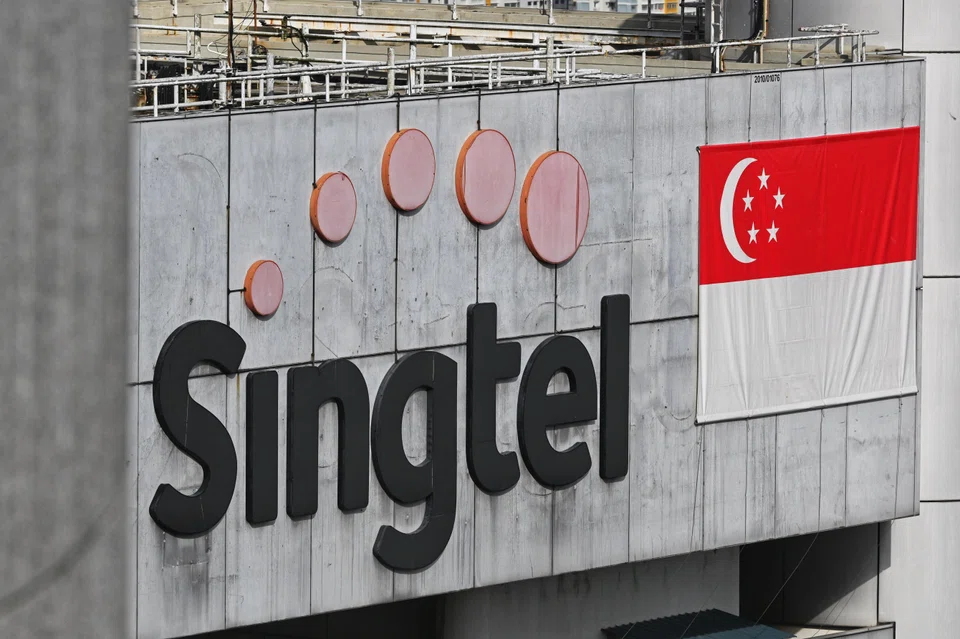
GLOBAL investment firm KKR will commit up to S$1.1 billion for a 20 per cent stake in Singtel’s regional data centre business.
In a media briefing on Monday (Sep 18), Singtel said the move will give the telco access to a wider network of global customers. It also hopes to tap KKR’s network of companies that develop new data centre cooling technologies.
Stellar Asia Holdings II, a fund managed by KKR, has entered into an agreement with Singtel for the investment in ST Dynamo Investment, the holding company for Singtel’s regional data centre (RDC) business.
This investment puts the enterprise value of Singtel’s overall RDC business at S$5.5 billion. KKR will also have the option to increase its stake to 25 per cent by 2027 at the pre-agreed valuation.
Bill Chang, chief executive officer of Singtel’s newly formed Digital InfraCo unit, said that the deal gives the company the opportunity to serve global clients through a concept similar to the Star Alliance in the aviation industry.
“It’s not just a financial investment. We obviously want partners that bring value, create value jointly with us and, very importantly, are aligned to our vision,” he said, noting that KKR has data centre assets in the US and Europe.
Aside from this “multiplier effect”, Chang said that the company will also be able to tap KKR’s stable of data centre cooling solutions providers.
For instance, KKR acquired CoolIT Systems, a liquid cooling solutions provider, in May this year. Its patented technologies aim to increase server density in data centres by providing more effective cooling, and with less energy and water consumed.
“With the advent and the acceleration of AI, it’s going to require new cooling technologies,” Chang said.
He also said that the company will not consider selling any more than the 25 per cent stake in the RDC business for now, as it believes in the long-term growth potential of the business.
Group chief financial officer Arthur Lang noted that the data centre business is capital intensive and that having this line of capital from KKR gives the company the ability to grow its portfolio fast.
He added that there could be options in the future where Singtel lists the Digital InfraCo business through an initial public offering, in which the company continues to hold a majority stake.
“I think this is something (that) is probably too early to talk about, but I think the key for us now is to keep our options open,” he said.
Singtel’s RDC business is part of the Digital InfraCo unit that was formed in June this year. It currently holds other businesses as well, such as its subsea cable and satellite carrier businesses, as well as its 5G multi-edge compute business.
In addition to 62 MW of existing capacity here, Singtel is building a new 58 MW data centre in Tuas in Singapore. It has also partnered Telkom and Medco Power in Indonesia, and Gulf and AIS in Thailand to develop data centres in Batam and Bangkok, respectively.
When all three projects are built, the portfolio will have a total capacity of 155 MW.
The transaction is expected to be completed by the fourth quarter of 2023, subject to regulatory approvals and customary closing conditions, said KKR and Singtel.
The deal gives Singtel the option to draw down capital up to S$1.1 billion from KKR, and KKR’s shareholding will rise proportionately to the draw-down in capital.
DBS Group Research analysts noted in a report that they had valued Singtel’s RDC business conservatively at S$3.4 billion, which is 20 times the estimated earnings before interest, tax, depreciation and amortisation (Ebitda) of the business.
KKR, on the other hand, appears to have valued the business on the higher end of the 20 to 30 times multiple for data centre players, they said.
Similarly, Dedi Iskandar, Asia-Pacific head of CBRE data centre solutions, advisory and transaction, said that the valuation of the RDC business is “considered as high but justifiable in Asia-Pacific context considering the prime location of the current and future assets in the portfolio”.
He noted that recent data centre transactions between both Malaysia’s Time and Hong Kong’s PCCW with digital infrastructure investment firm DigitalBridge in 2022 and 2021, respectively, were completed at valuations of over 30 times Ebitda.
While global mergers and acquisitions (M&A) activity hit its lowest point in a decade in the first quarter of this year due to market uncertainties, Iskandar said demand for data centre capacity is still increasing as the market for cloud services grows.
“Building and operating data centres to meet this demand requires significant amounts of capital. Investors will continue to show interest in the data centre sector through M&A and capital markets transactions this year, seeking exposure to this growth opportunity.”
DBS further expects that the company’s stock price could rise 4 to 5 per cent based on the news.
“Singtel current market cap is S$39.6 billion versus our fair valuation of S$53 billion. This transaction has a potential to add S$2 billion or 4 per cent to its fair value.”
The market is also likely to expect a higher total annual dividend per share of 14.9 Singapore cents, at about 6.4 per cent yield, said DBS.
Singtel’s shares traded flat at S$2.40 as at 2.46 pm on Monday.






