After a blockbuster IPO, can China’s memory chipmaker CXMT compete globally in the AI era?
Firm’s realistic near-term target remains below the performance of today’s leading AI memory
 Add BT as a preferred source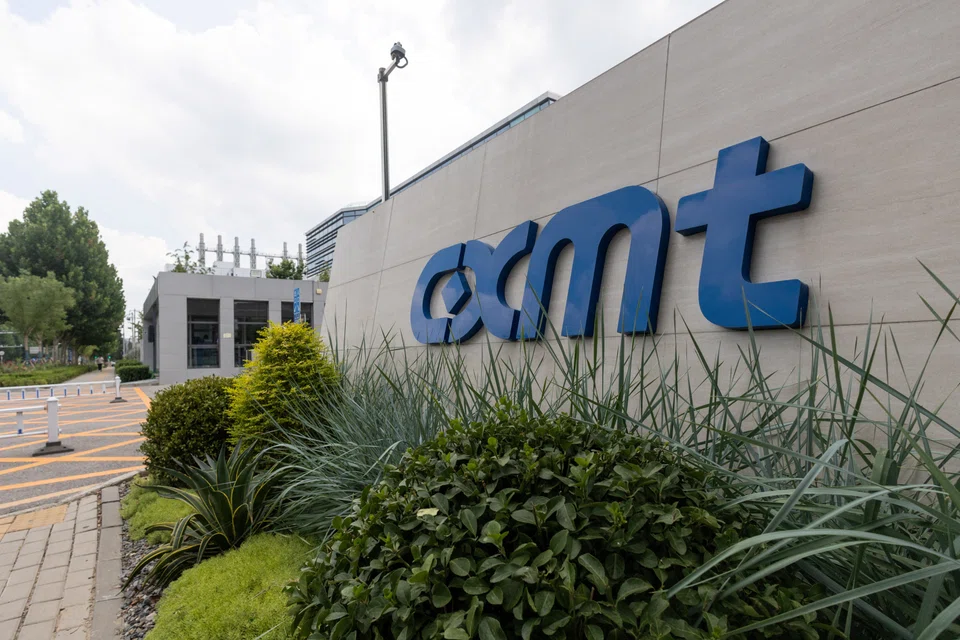
[BEIJING] A blockbuster initial public offering (IPO) can generate buzz and signal investor confidence, but the far harder test of becoming a globally competitive company only begins after the opening bell.
That is the challenge now facing China’s top memory chipmaker ChangXin Memory Technologies (CXMT).
Its landmark stock market debut in Shanghai on Jul 27 has become one of the strongest signals yet that investors believe Beijing’s years-long drive for semiconductor self-sufficiency is beginning to yield results.
Whether that optimism proves justified, however, will depend on whether CXMT can overcome technological barriers that still separate it from the industry’s dominant memory chipmakers and translate domestic growth into sustained global competitiveness, analysts said.
On Jul 27, CXMT raised 57.92 billion yuan (S$11 billion) in what many say is Asia’s largest IPO in 2026, boosting its market valuation to 3.65 trillion yuan and instantly catapulting it to China’s most valuable listed company.
The IPO comes as Beijing races to build a more self-reliant artificial intelligence supply chain amid US-led export controls, with memory chips representing one of China’s most realistic opportunities to narrow the semiconductor gap with its technological rivals.
The high-profile debut has cemented the Hefei-based company’s status as Beijing’s strongest contender to challenge the global dynamic random-access memory (DRAM) market long dominated by South Korean companies Samsung Electronics and SK Hynix and US-based Micron Technology. Shares of the three competitors took a tumble the day after CXMT’s listing.
DRAM chips temporarily store data during data processing and are used in AI systems, smartphones, computers and servers.
As AI models require vast amounts of memory alongside computing power, the boom has fuelled soaring demand for memory chips, causing a global shortage and pushing up prices.
SEE ALSO



Breaking into the ‘Big Three’ club
Marina Zhang, an associate professor at the University of Technology Sydney, told The Straits Times that while CXMT is already the world’s fourth-largest DRAM maker by capacity, shipments and revenue, there remains a big gap between being fourth and challenging the industry’s Big Three.
Market share, technology generation and the absence of advanced high-bandwidth memory (HBM) – the faster and more sophisticated memory used in today’s most advanced AI systems – are the three hurdles CXMT still has to overcome, said Zhang, who researches the intersection of technology and geopolitics.
“A genuine fourth pole is a hopeful scenario for the medium-to-long term; it’s not yet a done deal,” said Zhang.
CXMT held about 7.7 per cent of the global DRAM market in 2025, according to the company’s IPO prospectus. The rest is held by the three dominant players.
Analysts expect CXMT’s market share to continue growing over the next few years, with Nomura projecting it could reach about 18 per cent by 2028, while Counterpoint Research forecasts a more conservative 11 per cent.
MS Hwang, research director at Counterpoint Research, told ST that CXMT currently trails the big players in HBM but is positioned to begin catching up from late 2026.
He believes the company’s realistic near-term target remains below the performance of today’s leading AI memory, but said that even reaching that milestone would allow CXMT to enter the HBM market and strengthen its position as a sustainable fourth DRAM player.
Hwang said that scale will be crucial. A larger market share would generate the operating cash flow needed to finance expensive research and manufacturing upgrades, helping CXMT avoid the fate of some earlier challengers.
“If you look at what happened in Taiwan in 2008, its DRAM makers slipped under 15 per cent, couldn’t fund the next fab and collapsed to around 3 per cent share into a niche status,” said Hwang in a Counterpoint Research note sent on Jul 16.
“That’s the line CXMT has to cross and everything they are building now is a race to get there first,” he said.
Winning that market share will require CXMT to expand beyond its existing domestic customer base, which includes Lenovo, Huawei and Alibaba Group, while persuading more companies that its products can compete on both performance and price.
Currently, about 97 per cent of its sales as at 2025 are from the Greater China region, according to investment research firm Morningstar.
There are tentative signs that CXMT’s customer base could be broadening.
Amid soaring DRAM prices, Apple is reportedly in talks to buy memory chips from Chinese suppliers including CXMT as it looks to lower component costs for some of its consumer devices, despite having previously avoided the company.
Even Chinese state media struck a note of caution.
In a Jul 27 editorial, Global Times said the company’s phenomenal debut sent a clear and strong signal to the world that hard tech is taking centre stage in China and credited CXMT with breaking the foreign dominance in large-scale DRAM production.
But it also warned that the “enthusiasm should be tempered with realism” and that the IPO marked “the beginning of a new stress test” as CXMT still trails its foreign rivals by roughly two to three technology generations and faces continued export restrictions.
Founded in 2016 in Hefei, the capital city of eastern China’s Anhui province, after acquiring technology and intellectual property from the bankrupt German memory maker Qimonda, CXMT has grown into China’s flagship memory chipmaker.
Its rapid ascent has become the defining example of the so-called “Hefei model”, under which local governments invest public capital in industries deemed central to China’s technological ambitions while allowing management teams to retain operational control. About half of CXMT is owned by shareholders affiliated with the Chinese state.
Charlie Dai, principal analyst at Forrester Research, said CXMT is “one of the strongest examples that China’s industrial policy can work in capital-intensive sectors when funding, local government support and long-term execution align”.
“However, semiconductors remain a highly selective and difficult industry,” he added.
Biggest chokepoint
Analysts said the main bottleneck is China’s limited access to advanced chipmaking equipment.
The United States has barred China from purchasing the world’s most advanced extreme ultraviolet (EUV) lithography system from Dutch company ASML.
But reports on Jul 28 that a Chinese state-owned company has begun mass-producing domestically developed immersion deep ultraviolet (DUV) lithography systems have raised hopes that local chipmakers such as CXMT could gradually reduce their reliance on foreign equipment, although analysts caution that the technology remains well short of the most advanced EUV systems.
Counterpoint’s Hwang said that if the domestically developed DUV systems can be successfully deployed in mass production, it could “buy China at least a few more years without EUV”.
But rather than replicating the advanced manufacturing techniques, Hwang said Chinese chipmakers are increasingly pursuing alternative engineering approaches to work around the absence of EUV.
For Beijing, its most immediate objective may not be to match the world’s most advanced memory chips but to ensure it has a reliable domestic supply capable of supporting its AI ambitions.
UTS’ Zhang said the strategic value of domestic DRAM for Chinese AI lies mainly in supply-chain security and scale, not the performance frontier.
Domestic AI chips developed by Huawei, Cambricon and Biren still depend on imported HBM or have to accept a generational lag, she said.
The broader strategic goal is to ensure China can produce “good enough” memory chips in an extreme geopolitical scenario, said Zhang.
“Even if CXMT’s HBM trails those of the Big Three, domestic production at scale ensures that China’s AI servers don’t grind to a complete halt under US sanctions,” she said. THE STRAITS TIMES
Decoding Asia newsletter: your guide to navigating Asia in a new global order. Sign up here to get Decoding Asia newsletter. Delivered to your inbox. Free.
Share with us your feedback on BT's products and services