Amazon has big hopes for wearable AI – starting with this US$50 gadget
Bee’s device can be worn on the wrist or clipped to a shirt
 Add BT as a preferred source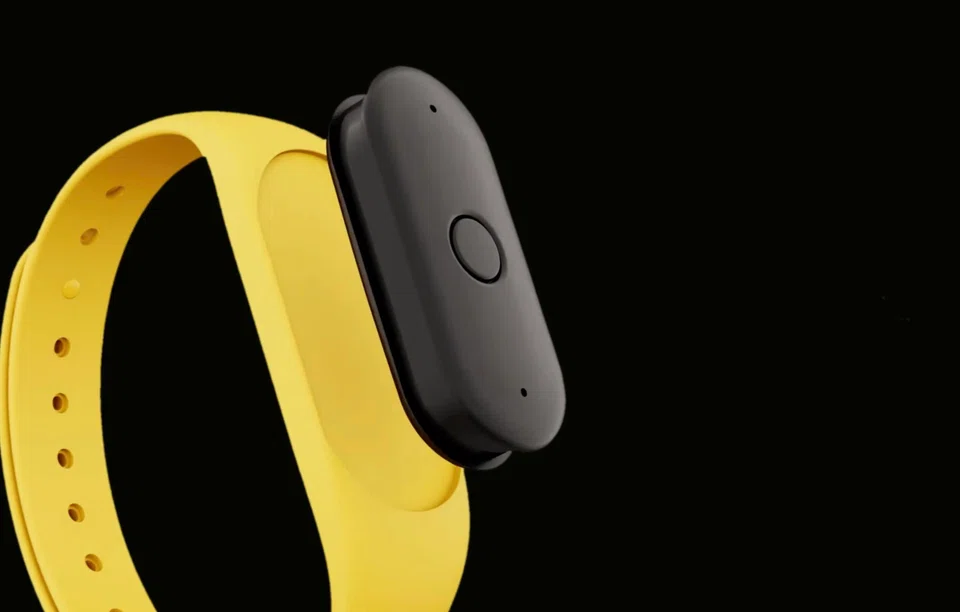
DeeperDive is a beta AI feature. Refer to full articles for the facts.
[NEW YORK] Several months after Amazon.com bought artificial intelligence (AI) hardware startup Bee, the company said that it’s working to make its US$50 always-listening wearable more proactive, and indicated a larger revamp is in store.
Bee’s device, which can be worn on the wrist or clipped to a shirt, records and transcribes its owner’s activities, using that information to recap conversations and automatically create to-do lists in a companion app throughout the day.
It does not have a display or built-in camera, and is designed to be “ambient AI” hardware that fades into the background without the user needing to constantly interact with it. The small gadget’s battery can last as long as a week before needing a recharge, according to the company.
Early AI-powered devices such as the Humane AI Pin and Rabbit R1 have landed with a thud, owing to issues such as bugs, poor battery life and the lack of any standout features that would make them preferable to smartphones.
Amazon has a spotty history with wearables and has shown less dedication to the category compared with its tentpole Fire TV, Kindle and Echo hardware. The company discontinued its Halo health tracker wristband in 2023 and has not released a new pair of wireless earbuds in almost three years. The Halo device offered some features that have carried forward with Bee, like the ability to detect a speaker’s mood.
Bee is trying to chart a different path from those gadgets by acting as a comprehensive daily journal that requires no prompting or manual input. Startups such as Plaud have released competing gadgets with a similar purpose.
Navigate Asia in
a new global order
Get the insights delivered to your inbox.
The notion of Amazon taking ownership of an always-listening accessory has made some people wary, but the startup said it maintains stringent privacy practices.
“We have never stored audio recordings, and this hasn’t changed,” the company wrote on its website after announcing the Amazon deal. “All audio recordings are processed in real-time, deleted after processing” and never saved or stored, it said.
Since officially joining Amazon in September as an eight-person team, Bee has added features including voice notes, which let users capture ideas and quick thoughts with a quick button press, and daily insights that pick up on trends in “how you are feeling” and “shifts in your relationships”, the company said on Monday.




Co-founder Maria de Lourdes Zollo and her colleagues are also trying to make Bee more proactive. A recent “actions” feature links the assistant to your calendar and e-mail, letting Bee draft e-mails or create a meeting invite.
“So directly from the app, you can connect with your Gmail and your calendar and directly from there, we can take actions on your behalf, and basically follow up the conversations,” Zollo told Bloomberg in an interview at the CES consumer technology conference in Las Vegas this week.
Bee’s days as a standalone brand might be winding down, however. “It’s certainly an Amazon device and service at this point, and we’re proud to have Bee in the family,” said Daniel Rausch, Amazon’s vice-president of Alexa and Echo, when asked whether the product will get a makeover. “You can imagine what we imagine, I think is how I would put it, and I’d ask you to stay tuned for that.”
Asked about a recent string of headlines detailing how some consumers have formed overly close bonds with AI agents, Rausch said: “I think it’s just about being responsible,” referring to the company’s obligation to users.
“We have had a responsible AI team, a trust and privacy team for the entire decade that we have been doing this,” he said. “I think some of these topics are newer to others, but frankly, people have been forming close bonds, sharing details, communicating things to Alexa, looking for support from Alexa, looking for humour from Alexa for literally as long as it’s been out.”
Rausch said that the rise of generative AI and the launch of its more conversational Alexa+ assistant presented ideal timing for taking another swing. And rather than start from scratch, Amazon was impressed by what Zollo and her startup had produced. “We want to invent for customers, and Maria and her team are incredible inventors,” Rausch said. “The passion is there, the purpose and focus is there and this is a team on a mission to do something special.”
Unlike the AI Pin and several new concepts shown at CES this week, the Bee hardware lacks a camera to help analyse and understand a customer’s environment. “When we started Bee, our first prototype was actually with vision, with a camera, but as a startup, it was too expensive,” Zollo said. “In the future, I believe there will be an opportunity for other devices that have a camera on them.”
Similar to others in the industry, Zollo does not view AI wearables as a winner-takes-all game. “It won’t be one device and that’s it,” she said. “When I think about Bee, I don’t think about the next wearable and that’s all. What I’m more thinking about holistically is, what is the constellation of devices that you wear during the day?”
Adaptability to a consumer’s individual style is critical to remaining on that list of everyday accessories, she said.
“I believe that there will be an escalation of accessories that we have Bee on,” Zollo said. “We want to be with you, and we understand you have your own sense of fashion, so we want to understand what is good for you.” BLOOMBERG
Decoding Asia newsletter: your guide to navigating Asia in a new global order. Sign up here to get Decoding Asia newsletter. Delivered to your inbox. Free.
Share with us your feedback on BT's products and services