How a few AI chip giants warped Asia’s stock picking game
TSMC, Samsung and SK Hynix make up a third of MSCI Asia-ex-Japan, raising concentration risks
 Add BT as a preferred source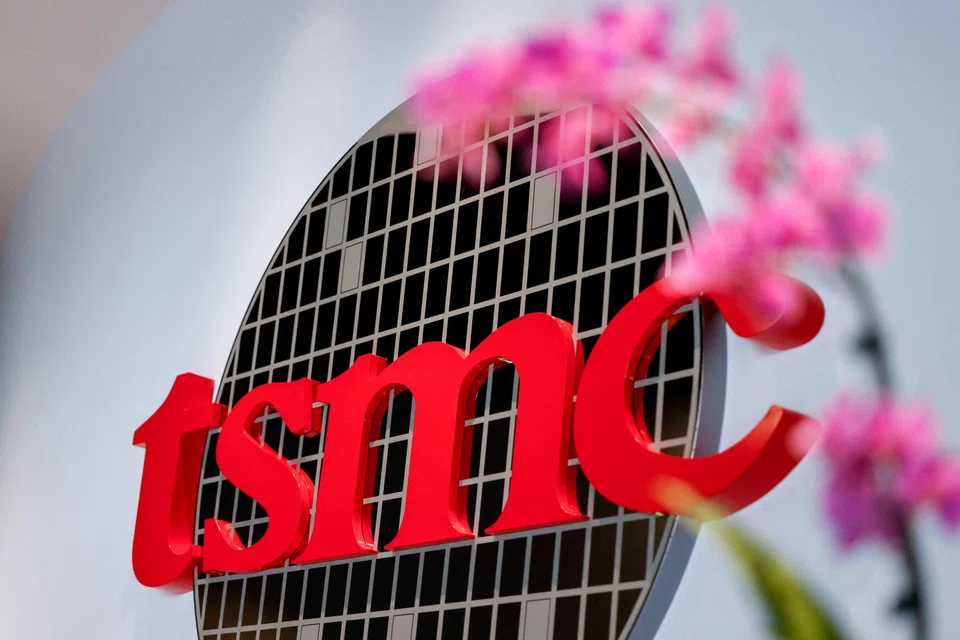
[SINGAPORE] Sam Konrad’s stocks are having a fantastic year, thanks to AI-fuelled rallies in Taiwan and South Korea, but his fund is so top heavy with winners, he now needs to ditch his best performers.
“We have been forced sellers of TSMC, Samsung and MediaTek,” said Konrad, investment manager for Asia Equity Income at Jupiter Asset Management, of the chip-making stocks, which have respectively gained 52 per cent, 159 per cent and 184 per cent so far this year.
Just three large Asian tech firms – TSMC, Samsung and Korean chipmaker SK Hynix – now account for almost a third of MSCI’s Asia-Pacific ex-Japan Index, creating concentration risks that many active portfolio rules deem too high.
Forced selling across active funds like Konrad’s is one of several side-effects of a rally that is riding mainly on the explosion of a handful of companies.
That in turn has created distortions across the market while the forced selling has added to pressures on the battered Korean won.
According to HSBC, TSMC is the biggest portfolio underweight among Asian and global emerging-market funds, as the region’s record-breaking rally distorts its equity benchmarks and portfolio managers struggle to keep up.
The double-edged nature of concentration risks has also been seen during recent steep sell-offs, with South Korean stocks sliding 12 per cent and Taiwan down 6 per cent in the last three session from their record highs as investors fret about AI valuations.
Cycle of forced selling
Expectations of runaway growth in profits have led to TSMC occupying 41.5 per cent of Taiwan’s TAIEX, and Samsung and Hynix comprising 55 per cent of South Korea’s Kospi, meaning these indexes are largely bets on one or two stocks – defeating the purpose of tracking a benchmark to represent a diversified portfolio.
That makes beating these benchmarks even more difficult for active managers.


The degree of concentration “creates structural challenges,” said Herald Van der Linde, head of equity strategy for Asia-Pacific at HSBC in Hong Kong, in a research note.
“As equities continue to outperform, funds will find it increasingly difficult to add exposure, reinforcing a cycle of forced selling and enlarging underweight positions even amid strong fundamentals.”
What’s more, many of the best-performing alternatives to these three stocks are still tied to the AI theme, meaning sector diversification hasn’t helped returns. Information technology stocks have led the region with explosive gains, but other sectors like consumer staples and healthcare have lagged, according to Goldman Sachs.
The same is true at a country level, the bank says: While the MSCI Asia-Pacific ex-Japan index is up 27 per cent year-to-date, excluding Korea and Taiwan, it is down 4 per cent.
Lopsided markets
This dynamic is not new, having unfolded in the US where the so-called Magnificent Seven technology stocks comprise about a third of the S&P 500 index and have lured investor cash from active funds into passive, market or theme tracking funds.
In Asia, the concentration is more extreme, has unfolded more quickly and turbocharged the trend towards passive funds.
Over the last five years, Asia’s active funds have seen US$269 billion of cumulative outflows, while passive funds have drawn in US$510 billion, with a quarter of that coming in just the last six months, according to BNP Paribas’ analysis of EPFR data.
“The size of recent inflows into the region’s passive funds ... has no precedent across the last 10 years,” said William Bratton, head of cash equity research for Asia-Pacific at BNP Paribas Securities.
Concentration risk drives stock picking shifts
In response, stock pickers have headed further down the AI supply chain, buying smaller-cap companies while emphasising the benefits of investing strategies that do not passively follow lopsided market indexes.
Isaac Thong, senior investment director for Asian equities at Aberdeen Investments, has for example recently added ASMPT and Grand Process Technology, both mid-sized suppliers to chipmaking firms.
Jupiter’s Konrad prefers larger stocks and has nearly half of his fund allocated to Taiwan and South Korea. He owns shares in electronics-makers Hon Hai and Quanta, as well as SK Hynix, with his largest position in chip designer MediaTek.
“Our funds are very different to the benchmark, and the way we invest very different to our peers, which we think has helped us to outperform,” he said.
In Asia, concentration risk has become more pronounced than it was when Baidu, Alibaba and Tencent were market darlings and made up 37.14 per cent of the narrower MSCI China benchmark at their peak in October 2020.
The turbulence that is driving in fund flows is also unprecedented in scale. Rebalancing in foreigners’ portfolios drove a record US$27.9 billion outflow from South Korean equities in May, exchange data showed, while at the same time Nomura has tracked an unprecedented US$20.4 billion year-to-date inflow from US-domiciled funds into South Korea and Taiwan.
“The relentless rally since April has increased concentration risk in Asian equities that we have never seen before,” said Rupal Agarwal, Asia quant strategist at Bernstein. REUTERS
Decoding Asia newsletter: your guide to navigating Asia in a new global order. Sign up here to get Decoding Asia newsletter. Delivered to your inbox. Free.
Share with us your feedback on BT's products and services