Asia-Pacific airline leaders see continued high fuel costs and disruption, but sustained strong demand
They point to travellers still flying despite higher ticket prices, and air-cargo market benefiting from AI boom

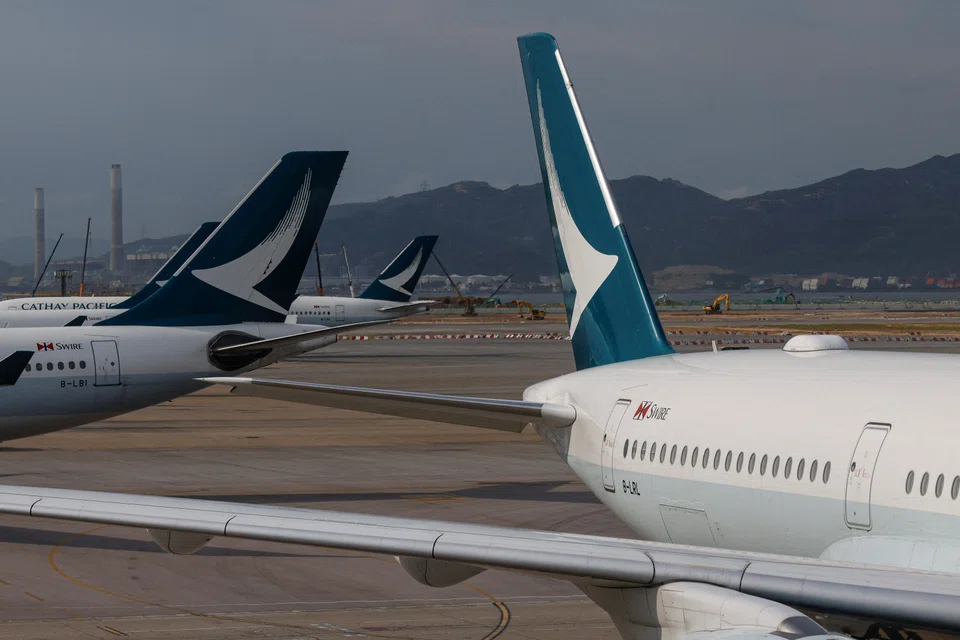
[KUALA LUMPUR] Airline business leaders expect difficult conditions, including high energy prices and supply chain issues, for the aviation industry in 2026 to continue.
However, they are also confident that passenger and air-cargo demand will remain strong.
Executives of regional airlines were speaking at a leadership panel at the Association of Asia Pacific Airlines Assembly of Presidents in Kuala Lumpur on Friday (Nov 13).
The regional airline trade association, which has 17 members including Singapore Airlines, Cathay Pacific and Thai Airways, marked the 70th iteration of its leaders’ assembly.
Ronald Lam, CEO of Cathay Pacific, said: “Maybe after the pandemic, everyone thought the world will be in a better place. But I think that’s an illusion, and we just honestly need to accept that crisis disruptions of the external environment will be forever with us.”
High prices to continue

Lam and other airline executives were responding to a question on whether high oil prices and disruptions to air travel seen in 2026 constitute a “new normal”.

Mike Williams, chief operations officer of technical operations for Air New Zealand, said: “I think it is (the new normal) – fuel prices, pandemics, geopolitical situations, politics, inflation and supply chain uncertainties.” Ibrahim Canliel, CEO of Kazakhstan’s flag carrier Air Astana, said the world is unlikely to go back to the conditions prior to the outbreak of hostilities in the Middle East, which blocked airspace and caused crude oil and aviation fuel prices to spike.
“The uncertainty (means) that we just need to have the agility and the resilience to be able to anticipate, to react and take mitigating actions,” he added.
Skyrocketing oil and fuel prices have forced airlines to adapt, in some cases handing on costs to consumers, but the leaders remained positive about demand for air travel and cargo despite this.
Cathay Pacific’s Lam said he was “generally upbeat” about passenger demand holding up in the near term.
Air New Zealand’s Williams said consumers realised that the Iran conflict and high fuel prices “were not going to change in a hurry”.
“(Consumers) couldn’t wait for lower fares because it was not happening, so they chose to travel. And we keep seeing the same thing happen: people want to get out there, travel and connect. So we should plan on more of this, than demand going down,” he said.
AI-led cargo boom
Cathay Pacific’s Lam said that he expects both passenger and cargo demand to remain strong – in particular the latter, as it has been supported by e-commerce shipments and the artificial intelligence boom.
“Another wave which has helped our air cargo industry is AI-related demand. People are building data centres… and then they’re shipping equipment mostly by air cargo. From my perspective, I am optimistic about the air-cargo market in general,” he said, adding that demand will be “sustained” in the next few years.
But the executives also said aviation’s supply chain remains disrupted, with the delivery of new aircraft and spare parts still below expectations.
Air Astana’s Canliel said: “It is getting better compared to where we were 12 months ago, but we still see delays on airframe deliveries… We’re forced to anticipate and to mitigate on the airline side for something that’s not our fault, and we also have to absorb the costs.
“I think that is something that as an industry we need to address to make sure that it does change, because it’s simply unacceptable and unsustainable.”
Decoding Asia newsletter: your guide to navigating Asia in a new global order. Sign up here to get Decoding Asia newsletter. Delivered to your inbox. Free.
Copyright SPH Media. All rights reserved.