
Boeing says 777X delays add costs for airlines like SIA to keep older jets
SIA might have chosen Airbus for its freighter fleet due to the delays, says Boeing VP of commercial marketing

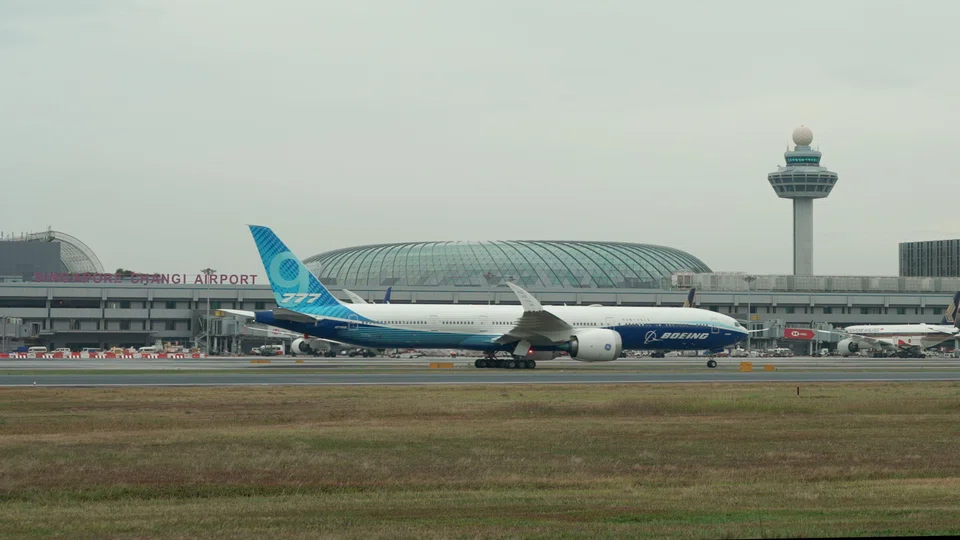
[SINGAPORE] Boeing on Wednesday (Feb 4) acknowledged that delays to its flagship 777X programme are compelling major customers, which include Singapore’s national carrier Singapore Airlines (SIA) , to incur unplanned costs to keep older jets in their fleets.
This comes even as the American aerospace giant projects that the number of aircraft in South-east Asia will triple over the next two decades.
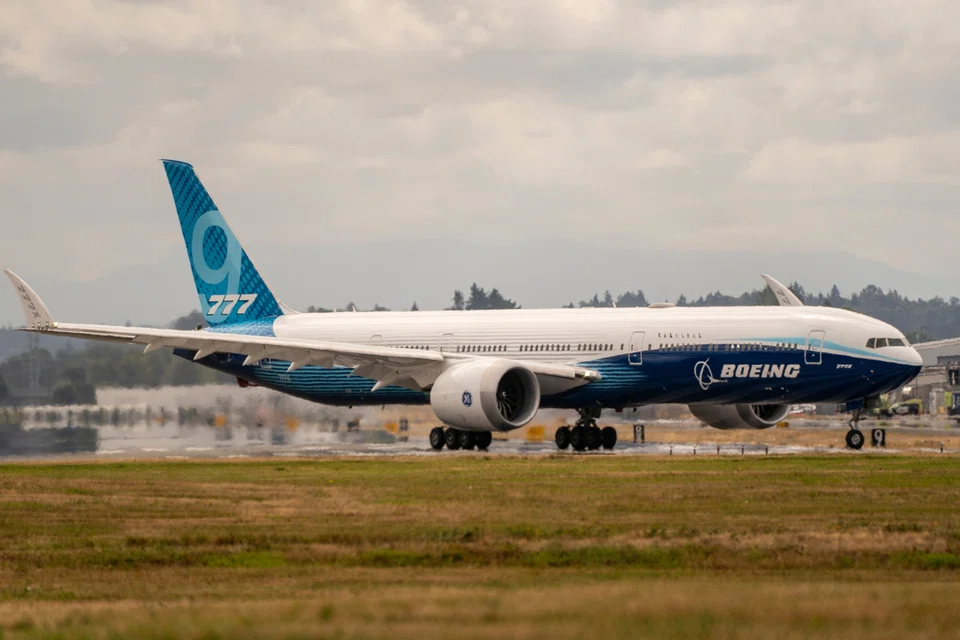
Deliveries for Boeing’s 777X airliner range, its upcoming flagship, have been delayed from 2020 to 2027 due to numerous development challenges and prolonged regulatory certification. The jet is set to launch with Germany’s Lufthansa, while Hong Kong’s Cathay Pacific and UAE’s Emirates are also key customers.
These delays are forcing airlines to adjust retirement dates for older aircraft or even invest in “near-term” modifications to the interiors of these older jets, said Darren Hulst, Boeing’s vice-president of commercial marketing, in comments to the media at the Singapore Airshow 2026.
The airshow is being held from Feb 3 to 8 at the Changi Exhibition Centre, with over 1,000 companies involved.
When asked if Boeing would compensate SIA – which has ordered 31 of the new 777-9 planes – for the delays, Hulst declined to comment citing confidentiality, but stated broadly that Boeing’s goal is “to make sure we make it right with (our customers)”.
Navigate Asia in
a new global order
Get the insights delivered to your inbox.
At least three 777-9s meant for SIA have already been built. However, Hulst cautioned that there could be some additional time until delivery even after certification, due to reworks needed to bring the airframes up to a final production standard.
SIA chief executive Goh Choon Phong said in November that any compensation details were between the airline and Boeing, and that he did not expect the delays to have “any major impact” on the national carrier.
Boeing’s Hulst also admitted that its production timelines could have played a part in SIA’s choice of its future freighter fleet.
SEE ALSO
SIA, a long-time operator of Boeing 747 freighters for decades, switched to rival Airbus in 2022 by finalising a purchase agreement for the A350F instead of Boeing’s 777-8F. It will also be the launch customer of the Airbus freighter.
“Timelines probably could have had a role in it,” Hulst said regarding the loss. However, he maintained that Boeing still sees “an opportunity for the 777-8F to be the long-term solution for Singapore Airlines” in the future.
The Business Times has reached out to SIA for comment.
CEO Goh had told FlightGlobal in 2022 that the carrier had been looking at the renewal of its 747 freighters, but had – until then – lacked an available and effective alternative. He also said the flag carrier had worked with Airbus on the A350F’s development.
Despite these supply chain struggles, Boeing remains bullish on the region’s macro outlook. It projects South-east Asia’s fleet will grow from about 1,500 aircraft today to 5,000 by 2044 – of which about 19 per cent of planes will be widebodies like the 777X.
The growth will be driven by a doubling of the middle class and 7 per cent annual traffic growth – the fastest in the world.
Decoding Asia newsletter: your guide to navigating Asia in a new global order. Sign up here to get Decoding Asia newsletter. Delivered to your inbox. Free.
Copyright SPH Media. All rights reserved.

