

Temasek’s Wan Chee Foong to helm PIL, Lars Kastrup to be board adviser
The port and logistics veteran will be appointed as deputy CEO on Oct 5, before taking the top job in April 2027

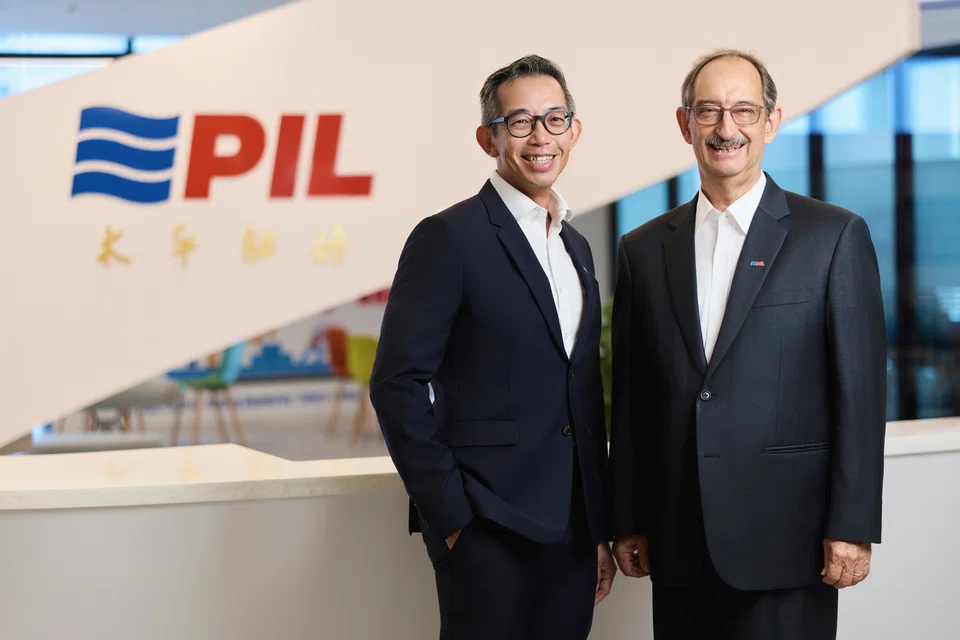
[SINGAPORE] Pacific International Lines (PIL) has unveiled its next captain – Temasek International managing director Wan Chee Foong – after an internal and external headhunt.
He will succeed Lars Kastrup as CEO next year, with the 67-year-old Dane assuming the role of adviser to the board thereafter.
In an announcement on Tuesday (Sep 22) night, the home-grown shipping company said that Wan, a 53-year-old port and logistics veteran, will be appointed as deputy CEO on Oct 5, before taking the top job in April 2027.
Currently serving as managing director for corporate strategy at Temasek, Wan’s career has evolved around the Singapore investment company and its portfolio companies – across air, sea and land transportation, and spanning operations, investment and strategy.
Commencing at flag carrier Singapore Airlines , he then moved on to Temasek where he held roles in transportation and logistics, including supporting the establishment of alternative investment firm SeaTown.
Wan’s various roles at global port operator PSA International included regional CEO for the Middle East and South Asia, head of group business and commercial development, as well as CEO at PSA BDP, the port operator’s global supply chain solutions business.
Currently, he is also an independent director of Bahri, the national shipping company of Saudi Arabia.
Temasek acknowledged the “significant” contributions that Wan has made at the investment company and its portfolio companies.
In an interview with The Business Times, Kastrup said the investee company of Temasek’s wholly owned Heliconia Capital Management need not leverage Wan’s stint at PSA to deepen its relationship with the port operator, when asked whether the connection might help.
SEE ALSO
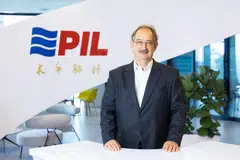


“I wouldn’t say that because… PIL has a very strong and solid relationship with PSA at all levels even before PIL became part of the same family as PSA,” said Kastrup.
However, what Wan would be able to do is to deepen PIL’s partnership and relationship with ports around the world so that it always has access to competitive and efficient ports, which Kastrup sees as critical amid increasing disruptions to the supply chain and port congestion.
Citing an experience that Wan and he had spent months negotiating a joint venture not related to PIL in 2015, Kastrup said: “It gave me the confidence that he will also be able to negotiate well and represent PIL well in the future.”
Kastrup also said the company’s strategy of having a very “agile” fleet – which can be adjusted in response to market volatility – as well as the markets it will develop in will not change under a different helmsman.
A veteran in the shipping industry with over four decades of experience, Kastrup was tasked by Heliconia to advise PIL on its financial restructuring in 2020 when the shipping line founded by the Teo family sailed into a financial crisis and was on the brink of liquidation.
Heliconia bailed out PIL – acquiring a majority stake in the company with a US$600 million lifeline – and transformed it from a family-owned outfit to a professionally run company.
Kastrup then became PIL’s co-president and executive director in March 2021, and CEO in July 2022 after the once heavily indebted shipping line made a spectacular turnaround.
Under his leadership, PIL has posted sustained profitability with its financial performance for FY2026 expected to exceed FY2025’s net profit of about US$1 billion and revenue of around US$4.3 billion.
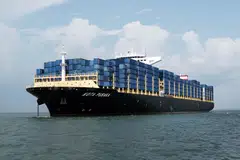
Capacity has reached about 500,000 20-foot equivalent units, up over 50 per cent or to the level before PIL had to divest a substantial number of vessels to raise funds to tide over the financial crisis.
Describing his time at PIL, Kastrup said: “I have had a fantastic journey.”
Decoding Asia newsletter: your guide to navigating Asia in a new global order. Sign up here to get Decoding Asia newsletter. Delivered to your inbox. Free.
Copyright SPH Media. All rights reserved.
TRENDING NOW
One-third of Singapore-listed firms at risk in severe AI downturn: MAS
‘We don’t want to stay as we are’: CEO Patrick Ng builds a more resilient Huationg

He built the Vingroup empire. Now South-east Asia’s richest man is handing some key roles to his sons

Radiant World table shows six lenders with US$870 million exposure

