

Primed for the next leap: The growing promise of Singapore’s fintechs
The question is which of these firms will make it onto the local bourse, and how long they will take

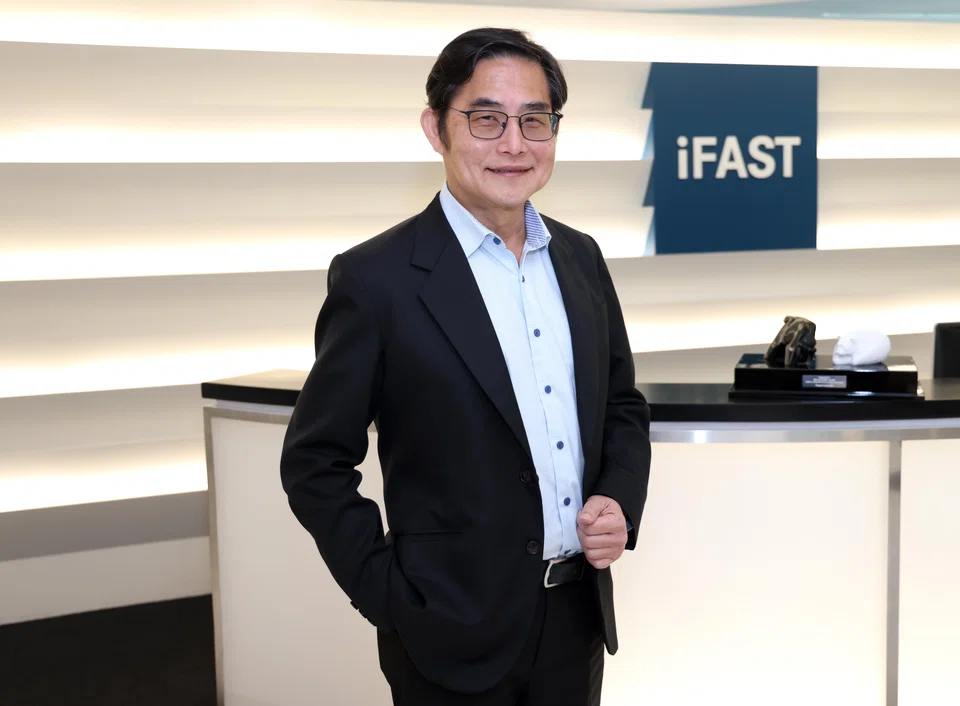
[SINGAPORE] When iFast listed on the Singapore Exchange (SGX) mainboard in December 2014, few people would have called it a fintech.
It was an online fund platform with about S$5.6 billion in assets under administration (AUA) a year later, at a time when “fintech” was still a word heard mostly at conferences.
Today, its AUA stands at S$36.76 billion, up 20 per cent from a year ago, and the company runs a licensed bank in Britain. Since Oct 22, it also issues its own exchange-traded funds on the same bourse where its shares trade.
That makes iFast something of a veteran in a crowd of newcomers.
Singapore now has five digital banks, a pack of robo-advisers, lenders and payments firms that have spent years raising private money, and a government that has put money and rule changes behind getting growth companies to list at home.
The question for investors is which of these firms will make it onto the local bourse, and how long they will take.

The way iFast group CEO Lim Chung Chun sees it, the money is the least of what a listing brings. “Being a publicly listed company has brought us benefits beyond access to capital,” he said.
In finance, where trust and regulatory oversight count for so much, the governance and disclosure demanded of a listed company have helped iFast win regulators’ confidence as it applied for licences in new markets and new lines of business.
Lim also counts the visibility with customers and partners as part of the payoff, adding that the duty to keep shareholders informed sits well with how he believes a company should be run.
SEE ALSO





The anchors are already on the board
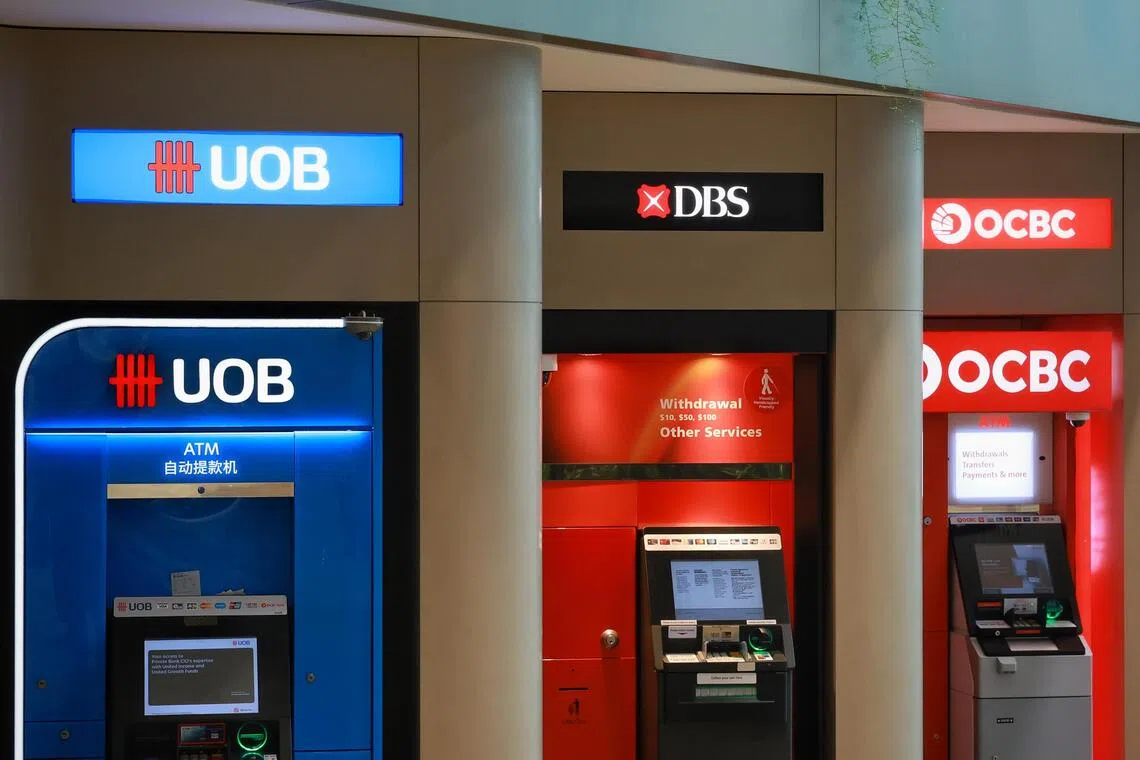
For investors who want financial exposure on SGX today, the three local banks are the obvious place to start, and the latest quarter showed why they still anchor the market even when things go a little wrong.
At DBS , third-quarter net profit fell 5 per cent to S$2.81 billion as trading income slumped, yet its nine-month profit was a record S$8.82 billion and its return on equity (ROE) held at 17 per cent. UOB booked record fee income in the quarter, and OCBC beat analysts’ forecasts.
Margins are being squeezed as interest rates fall, and shares of all three slipped after the results. But a bank that loses nearly two-thirds of its trading income in a quarter and still reports a 17 per cent ROE for the year so far is hardly in trouble.
Local shareholders have been paid well for sticking around, with DBS alone declaring S$2.43 a share in dividends for the first nine months. Much of that staying power comes from wealth management, where DBS now oversees a record S$544 billion, and from years of spending to move customers onto their phones.
Further along the value chain, UOB Kay Hian gives investors the broking end of the business. Its net profit rose 7 per cent to S$239.4 million in FY2025 on the back of revenue jumping 13.9 per cent to S$763.5 million, as busier markets lifted commissions and trading income.
The newest door opened in July, when SGX began listing Singapore depository receipts (SDRs) for Grab and Sea.
Think of an SDR as a local wrapper: The shares sit in New York, but investors buy and sell them in Singapore dollars, during Singapore hours, in lots of 10 units that cost less than S$30.
Both companies are headquartered in Singapore and carry sizeable fintech businesses inside them. Grab owns 60 per cent of GXS Bank, while Sea runs MariBank and Monee, its financial services arm.
Leading the maturity curve
Of the private names, Green Link Digital Bank (GLDB) may be standing nearest to the front. The wholesale digital bank lends to small businesses and has no retail customers at all, an approach that has so far served it well: It made a net profit of S$16.1 million in FY2025, the only one of Singapore’s five digital banks to post a full-year profit.
CEO Melvin Teo said the bank has been profitable every month since September 2024 and is on track to earn more in FY2026.
A listing is on the table. GLDB told SGX’s “10 in 10” series in April that it was evaluating a future initial public offering, and Teo said a listing remains one of the bank’s strategic options, though he would not be drawn on when or where.
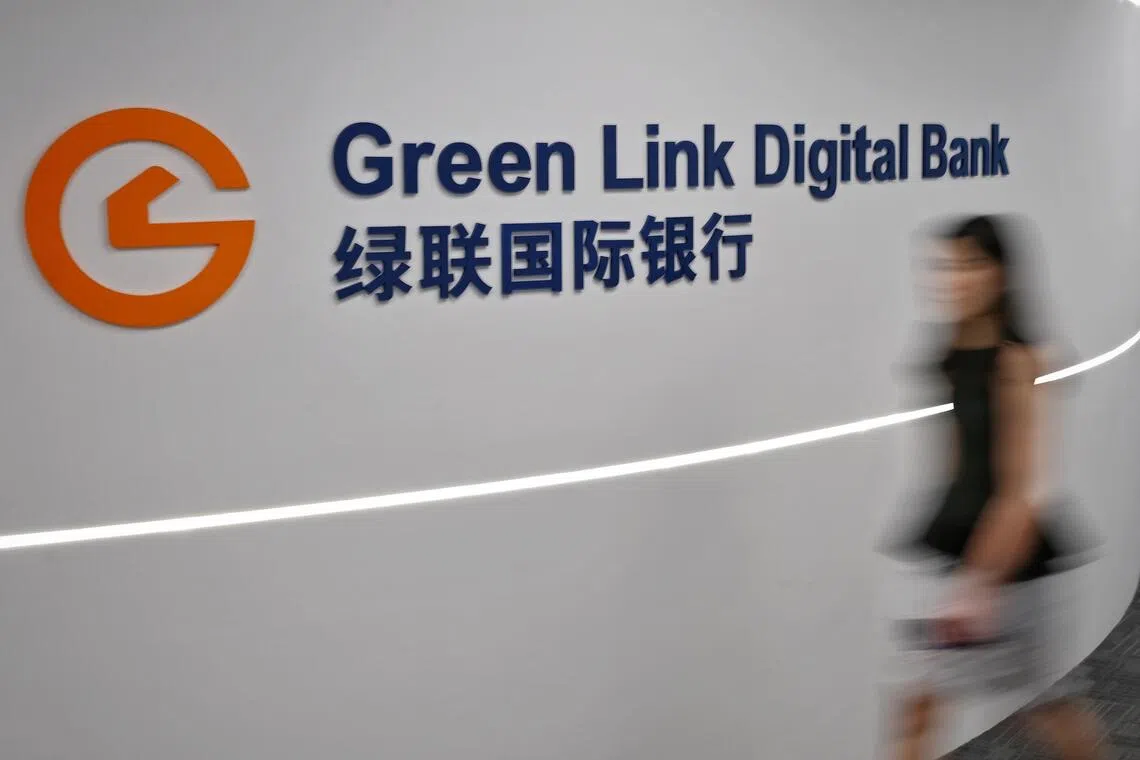
The focus for now is to keep scaling, so that when GLDB does come to market, it arrives with enough size and momentum to hold investors’ attention well after the opening bell.
“Our immediate priority is scaling the business and further strengthening the bank’s foundations,” Teo told The Business Times. “We are continuously evaluating the most appropriate timing and venue to ensure that when we do move forward, it is at a stage that maximises value for our shareholders and aligns with our growth trajectory.”
Investors are bound to ask about Greenland, the Chinese property developer that is the bank’s major shareholder, given what that industry has been through.
Teo’s answer is that Greenland remains a supportive shareholder and partner, and that the bank now pays its own way, funding its growth from its own earnings and customer networks.
The other candidate with something like a timetable is Financial Alliance, one of Singapore’s larger independent financial advisory (FA) firms, with more than 450 representatives.
In January, iFast agreed to buy 30 per cent of its holding company for S$19.6 million in cash, or about 16 times FY2025 earnings, and said the firm could list within two to three years.
Lim has gone further, saying he wants it to become the first listed FA firm on SGX. The deal has received approval from the Monetary Authority of Singapore, and is waiting on the remaining regulatory approval before it is completed.
The iFast chief said that Financial Alliance has already reached a meaningful scale in revenue and profit, and he reckons it could be worth around S$100 million or more when it lists.
That is small by IPO standards, and iFast’s own price tag values the whole firm at roughly S$65 million today. But it would give investors something the bourse does not yet offer, which is a listed way to back the advisers who sell insurance and investment products to Singapore households.
Private equity has been reading the same tea leaves.
KKR launched Ascend Asia in July 2025 to buy up FA firms, starting with finexis and its 1,100-odd consultants, and in May it agreed to add Infinity Financial Advisory, SG Alliance and PromiseLand Financial Advisory, taking the group to four firms and more than 2,000 consultants. Private equity firms rarely build a roll-up without an exit in mind, and a listing is one of the usual ones.
Building long-term momentum
Behind them stands a longer line of firms that are growing quickly.
Wealth platforms such as Endowus, Syfe and StashAway, small and medium-sized enterprise lender Funding Societies, and payments players such as Liquid Group, MatchMove and YouTrip have spent years building their customer bases, and most can still raise private money when they need it.
Endowus, for one, raised more than US$70 million in its latest round and has crossed US$10 billion in client assets across Singapore and Hong Kong.

Pranav Rao, head of research at Smartkarma, said the fintechs closest to IPO readiness already behave like listed companies. They are profitable or have a clear path there, have strong governance, and their revenue is something investors can model with confidence.
Among the nearly 150 private companies his team tracks, he sees a small number of payments infrastructure players working to that standard.
The four digital banks other than GLDB sit further back, partly because their owners have deep pockets and no obvious reason to sell shares while the banks are still finding their feet.
Trust Bank, owned by Standard Chartered and FairPrice Group, recorded its first profitable month in March, after narrowing its FY2025 loss by about 42 per cent to S$53.5 million.
GXS, MariBank and Anext are still in the red, though GXS has narrowed its loss for two years running and Anext’s CEO Qiu Kai has said it remains on track to break even by 2027.
The most interesting name in this group may not be a bank at all.
On Oct 20, Sea founder Forrest Li told staff in a memo that the group plans to list Monee, its financial services arm, which runs payments, lending and banking across eight markets including Singapore. Li gave no timeline or venue, and DBS analysts reckon 2027 is the earliest it could happen.
Rao points to Monee as what IPO readiness looks like at scale, and where it lists will be watched closely here, not least because SGX finalised the rules in April for its Global Listing Board, a dual-listing route with Nasdaq meant for large companies that want to tap both markets.
Aligning market expectations
For the firms in the middle of the pack, the biggest obstacle to a listing is often the price tag.
The way Rao describes it, the trouble starts with the anchor: Founders tend to value their company on its last private round, often struck during the 2021-to-2022 boom and padded with protections for early investors, while fund managers price it against listed peers trading at lower multiples, with none of those protections.
Think of it as a flat bought at the top of the market, whose owner still quotes the price he paid while every buyer who walks in has already checked what the unit next door went for last month.
The encouraging part, he said, is that companies willing to reset their expectations while still private are emerging as the best placed to list, which suggests the gap can close well before an IPO.
Lim of iFast has a blunter message for founders who think the hard part ends with the listing. Being public brings far more responsibility to shareholders, regulators and everyone else watching, he said, and founders should consider it only if they have the ambition and the ability to deliver double-digit annual growth for years afterwards.
“If a founder’s main objective is simply to raise capital and then take things easy, my advice would be not to go public,” he added. The compliance work and shareholder expectations can be demanding and, at times, stressful. He sees a listing as the start of a new phase of responsibility, not the end goal.
That leaves the question of why a fintech would list here and not in New York or Hong Kong.
Smartkarma, a fintech itself, makes a useful test case. Rao said the company weighs all its options, looking for the best match between cost of capital and strategic merit, and that SGX would certainly be on the list. It would rank higher, he added, if the bourse can widen its listed fintech peer group beyond today’s names and keep pushing ahead with capital market reform.
That is the chicken-and-egg problem every smaller market faces. Founders want a crowd of listed peers to be measured against before they take the plunge and that crowd is made up of other founders waiting for the same thing.
Catalysing the next chapter
Someone has to go first – and the queue now has a few plausible volunteers. GLDB is profitable and openly weighing an IPO, Financial Alliance has a partner that wants it listed within two to three years, and Monee’s choice of venue will tell the region a great deal about where large fintechs think their investors are.
If even one or two of them come to market here and trade well, other founders will have the listed peers they keep asking for.
The banks, UOB Kay Hian and the SDRs give investors plenty to own while they wait, and iFast is a reminder of how the story can go. Twelve years ago, it was a modest online fund platform that few people thought of as a fintech, and today it looks after almost S$37 billion for its clients, runs a bank and lists its own funds on the bourse.
The next batch of listings does not have to be that big to be worth the wait. It just has to show up.
Decoding Asia newsletter: your guide to navigating Asia in a new global order. Sign up here to get Decoding Asia newsletter. Delivered to your inbox. Free.
Copyright SPH Media. All rights reserved.
TRENDING NOW

Ex-Nvidia CEO Jensen Huang carried a secret for more than a year. It led to his downfall

Higher rates, weaker spending: Is the Philippines entering stagflation?

As Indonesia picks new vice-president to succeed Gibran, investors see risks and opportunities
Singapore to inherit South China Sea code talks with key issues unresolved

