



Asean has capital but too few investable projects: Maharlika’s outgoing CEO
Rafael Consing Jr, who stepped down after three years at the helm, says sovereign funds must take early risks
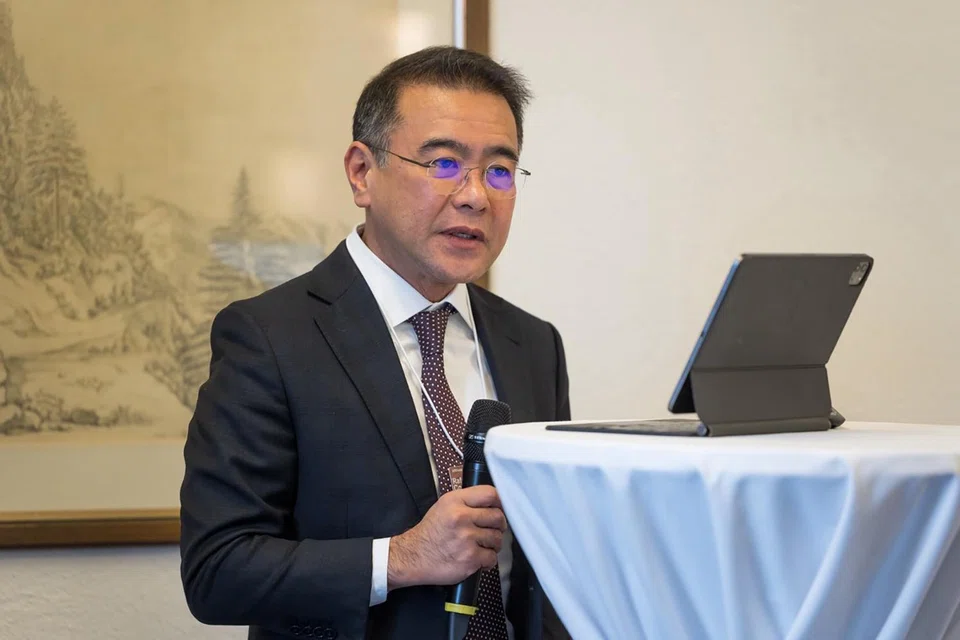

[MANILA] When Rafael Consing Jr stepped down this week as the first CEO of the Philippines’ sovereign wealth fund, Maharlika Investment Corp was still short of its year-end investment target, with nearly 53.7 billion pesos (US$842 million) in cash and equivalents at its latest reporting date.
Consing said the fund’s first three years exposed a problem across South-east Asia: Capital is available, but too few projects have the reliable revenues, governance and clear exit routes that institutional investors require.
“Investment-ready is not necessarily investable,” he told regional policymakers and financiers at a forum in Manila earlier in November. “The surprise for us was that capital was not a scarce thing. In fact, investable assets were.”
Maharlika was created in late 2023 to invest national capital into the country’s development while earning commercial returns. Since then, however, it has deployed less than it planned and retains a large pool of unspent cash.
The sovereign fund is set to fall short of its cumulative deployment target of 35 billion pesos by the end of 2026. In addition to the nearly 53.7 billion pesos in cash and equivalents it held at the close of September, a further 50 billion pesos of government-subscribed capital remained unreleased.
Capital waiting for assets
Consing acknowledged that Maharlika’s first year may have looked uneventful from the outside. Work went into establishing investment policies, risk controls and governance processes before deploying capital at scale.

Investment accelerated only after those guardrails were in place. In the first nine months of 2026, Maharlika deployed nearly 19 billion pesos, lifting cumulative investments to almost 25 billion pesos.
But the composition of that portfolio illustrates the difficulty of finding assets that meet the fund’s investment standards.
Maharlika’s largest single commitment was a 15 billion-peso revolving credit facility to Petron, while it invested about eight billion pesos in port operator Asian Terminals.
SEE ALSO


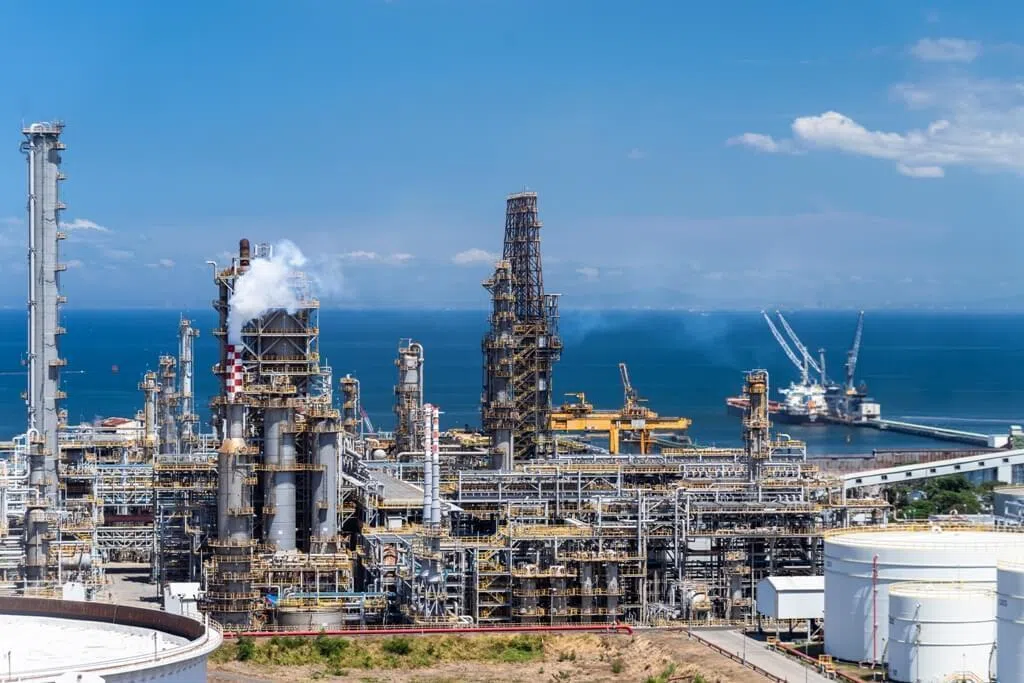
Other investments include bridge financing for the Makilala Mining copper-gold project in 2025; the initial US$10 million tranche of the loan was sold to Indian investor Equinaire Holdings in April 2026.
While Maharlika has relatively few Philippine projects that offer the contractual revenues, credible counterparties, governance and exit routes it requires, Consing argued that the sovereign fund exists precisely to help close that gap.
“We have patience. We know our governments. We can afford to go first.”
The task of a sovereign fund, in his view, is to absorb early-stage risk, establish investable structures and bring other capital in, not simply to wait for fully de-risked projects to appear.
Maharlika’s active investments contributed 756.5 million pesos or 31 per cent of its revenue in 9M 2026, compared with 3 per cent for the whole of 2025.
Net income for 9M 2026 rose 24 per cent year on year to nearly 2.2 billion pesos, while total comprehensive income rose 32 per cent to almost 2.9 billion pesos.
“Who else is in?”
To put that dry powder to work, Consing laid out a prescription for developers and governments: Projects must be structured to be owned, not just “ready to be built”; they must also be backed by bankable offtake agreements, sponsors with their own equity at risk and clearly defined exit paths.
A credible investor should be prepared to commit alongside the sovereign fund.
“Who else is in?” he said. A project becomes investable, he argued, when an investor with local knowledge and a long investment horizon is willing to “stand right where we are”.
Consing’s model is for sovereign capital to be recycled rather than trapped. A fund should “anchor” a transaction, bring in other investors, then sell down and reinvest.
“Our exit is their entry,” he said. “Because capital that is not paid for… does not last.”
The argument has regional resonance. Asean attracted a record US$243.9 billion in foreign direct investment in 2025, capturing about 15 per cent of global inflows.
Consing said only one out of every six dollars came from within Asean itself. Much of the region’s long-term savings continue to flow into Western markets because local projects often lack the scale, tenor, governance and revenue certainty required by institutional investors.
Shombi Sharp, deputy executive secretary of the United Nations Economic and Social Commission for Asia and the Pacific, said the regional architecture is gaining traction.
He noted that 10 green projects under the Asean Regional Investment Promotion Action Plan have mobilised more than US$1.3 billion.
Sharp cited cross-border electricity sales from Lao hydropower – through Thailand and Malaysia – to Singapore as evidence that regional integration is starting to deliver.
Even so, he acknowledged that the Asia-Pacific faces a US$1.5 trillion annual financing gap to meet its 2030 sustainable development goals.
Global capital markets hold upwards of US$300 trillion. “It’s a question of how that financing is deployed,” he said.
For Ceferino Rodolfo, the Philippines’ trade undersecretary and head of the Board of Investments, the next phase of Maharlika’s evolution and Asean’s industrial strategy depends on turning national funds into cross-border partners.
South-east Asian economies, he said, can no longer afford to compete against one another for standalone factories.
Unified regional value chains should instead link Malaysia’s critical minerals, Singapore’s financial markets, Vietnam’s electronics base and the Philippines’ engineering and semiconductor talent.
“Let’s start investing as partners,” Consing said. “The next time we meet, we can count the assets which we own together.”
Decoding Asia newsletter: your guide to navigating Asia in a new global order. Sign up here to get Decoding Asia newsletter. Delivered to your inbox. Free.
Share with us your feedback on BT's products and services
TRENDING NOW
‘Very disappointed’: Singapore disagrees with US tariff rationale, to seek lower levies

US proposes new tariffs on 14 trading partners, including rate of up to 20% for Singapore

Should Keppel swoop in to snare Mapletree Investments?

OCBC opens 100-tonne gold vaulting facility to meet growing institutional demand

