



Can ‘affordable luxury’ survive – and thrive – in Vietnam?
Foreign brands see emerging premiumisation; local operators see mass-market reality
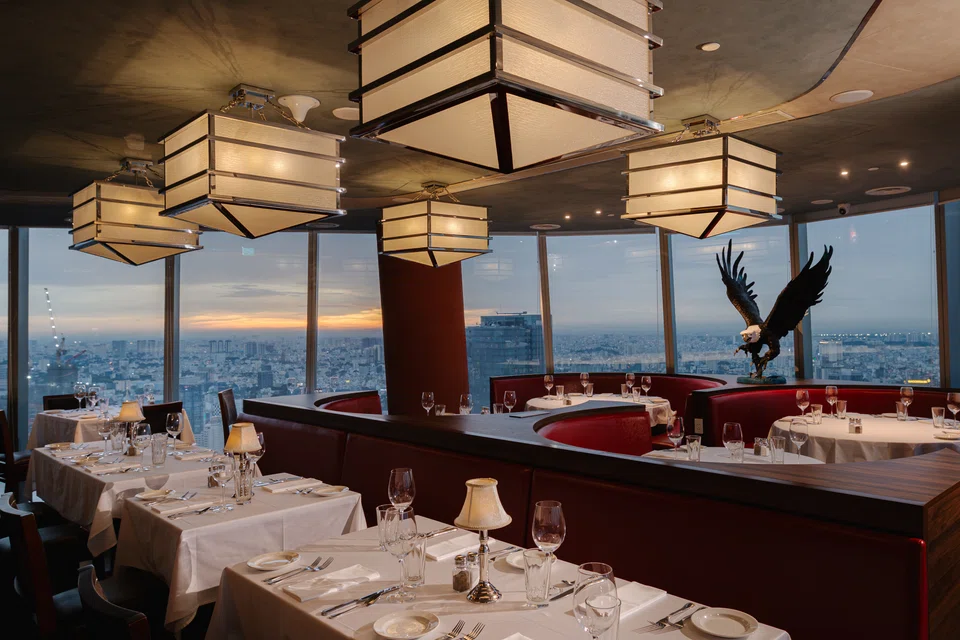
WHEN Stanley Ko had to decide where to locate The Capital Grille’s first restaurant in Asia, Vietnam was one of the options. This was in 2023, and he was attracted by the country’s strong growth fundamentals.
And when the Michelin Guide made its debut in Vietnam in June that year, it gave him another encouraging touch point that the country’s premium dining market was entering a new phase.
“It took three years for us to find this location,” said Ko, president of Ko Hospitality Group, which in September opened the US steakhouse chain at Ho Chi Minh City’s Bitexco Financial Tower – one of the most prime locations in the city’s Central Business District.
“Within South-east Asia, this is the window right now for Vietnam,” Ko added, noting that Vietnam’s economy expanded 8 per cent in 2025, among the fastest growth rates globally.
Choosing The Capital Grille from the group’s portfolio of international restaurant brands – including names such as Ruth’s Chris Steak House, Chili’s Grill & Bar and Ramen Nagi – is also a test of whether Vietnam’s growing middle class is increasingly embracing the kind of indulgence the establishment offers: expensive enough to feel special, but also accessible enough for those other than the ultra-rich.
Ko calls that proposition “affordable luxury”. The restaurant will not be cheap, he said, but nor is it intended to be “a rich man’s club”.
Instead, the aim is to make a premium dining experience attainable for younger professionals celebrating a graduation, a promotion or another special occasion. Ko expects about 90 per cent of customers to be local Vietnamese, rather than tourists.
Meanwhile, in an interview with The Business Times at the inauguration of Pandora’s Vietnam factory, CEO Berta de Pablos-Barbier said the brand – which has long positioned itself around “accessible luxury” jewellery – sees room for further growth in Vietnam.
The country is not yet among Pandora’s largest Asian consumer markets, ranking seventh in the region.
SEE ALSO





“We have great expectations that growth will continue to place Vietnam higher up in the ranks,” she said, pointing to its growing economy and young consumer base.
Keppel is making much the same calculation in housing, where purchases are far larger. The Singapore group has identified what it calls “affordable luxury” as a target segment for residential development in Vietnam.
It means thoughtfully designed homes, good-quality finishes and well-planned amenities, all at a pricing level that is accessible to the growing middle class.
Vietnamese consumers are becoming more discerning about quality, while “affordability remains very important”, said Joseph Low, Keppel’s chief representative in Vietnam and president of Vietnam real estate, at a meeting with media in Ho Chi Minh City.
At the current high interest rate level, liquidity in the property market has also become more selective, he added. “Projects that address buyers’ affordability considerations and offer genuine long-term value are likely to perform relatively well.”
The sweet spot is narrower than it looks
Damien Yeo, a senior analyst covering consumer retail and food and drink at Fitch Solutions, believes Vietnam and much of South-east Asia have reached a point where affordable-luxury concepts can scale.
When compared with consumers in more mature markets such as South Korea, Japan and Singapore, those in Vietnam and much of Asean “are increasingly willing to pay a modest premium for better quality, stronger branding, superior store environments and social currency, while still remaining highly value conscious”, he noted.
Premium bubble tea, speciality coffee, beauty products, apparel and experiential dining are among the categories where the trend is most visible. Yet Yeo also cautions that “the addressable market remains narrower than headline population figures suggest”.
BMI income data estimates just 116,134 Vietnamese households will have net household incomes above US$50,000 in 2026, compared with 1.6 million in Singapore. Vietnam has a much larger pool further down the income ladder: about 4.9 million households with net incomes above US$10,000, versus 1.8 million in Singapore.
However, the city-state is a much easier market for luxury brands to target, Yeo pointed out, as affluent households are concentrated in a relatively compact area rather than dispersed across multiple cities, as they are in Vietnam.
“Overall, consumer spending power has improved considerably (in Vietnam and other developing Asean countries),” Yeo said. “But large segments of the population still prioritise affordability over premiumisation.”
The brands with the best chance, he added, are those priced only slightly above mainstream rivals while providing a clearly better experience that resonates with local middle and upper-middle-income households that visit regularly rather than occasionally.
The limits of trading up
Zumwhere offers an early case study of how difficult that balance can be.
Vietnamese founder and chief executive Le Tran Anh Vinh built the restaurant and bar chain in Ho Chi Minh City in 2018 around what he calls “premium-mass drinking”.
The concept already thrived in more developed Asian cities such as Singapore and Bangkok, he said, noting that office workers there commonly stop for a few craft beers or glasses of wine and something to eat after work without having to think too much about the cost.
Zumwhere’s concept is based on “Vietnamese-style social drinking, but with more emphasis on lifestyle, special occasions and events”, he told BT, as he shared more about the chain’s growth – especially after the Covid-19 pandemic.
At the time, when typical domestic draft beer in Vietnam cost about 25,000 dong (US$1) for half a litre, Zumwhere offered its own craft beer for roughly 39,000 to 49,000 dong a glass – still at a premium to mainstream brews, but well below the 90,000 to 100,000 dong commonly charged for craft beer then.
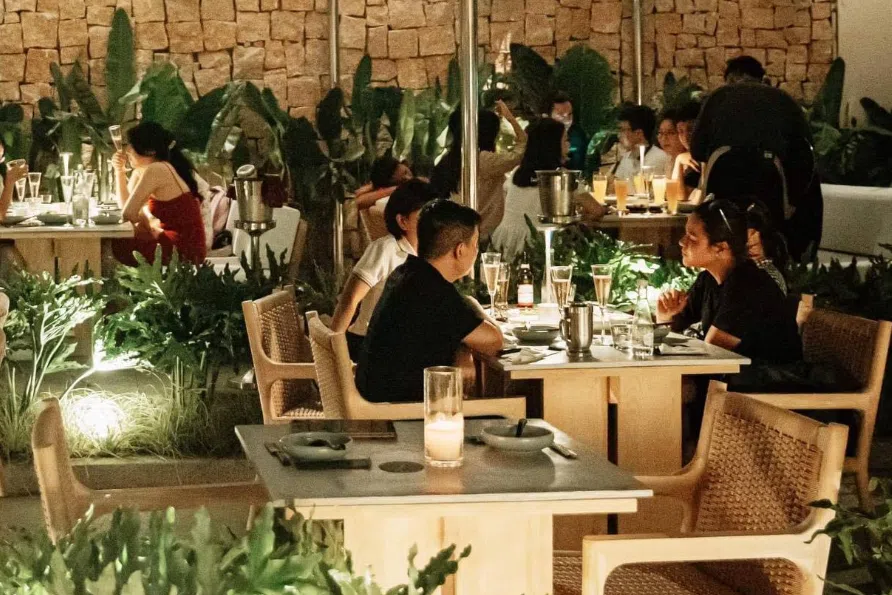
The formula appeared to work spectacularly. Its outlets were packed for roughly two years after the pandemic, Vinh said, while the timing also coincided with TikTok’s early surge in Vietnam – which helped generate traffic quickly through social media.
Vinh initially interpreted the crowds as evidence that Vietnamese consumers were becoming richer and more willing to spend on premium experiences.
However, the past two years have exposed how fragile that spending can be amid an arguably more challenging domestic economic environment.
He estimates that if Zumwhere once had 100 customers, perhaps half have since traded down towards mass-market options, while the remainder still visit but less frequently. Those who continue to come to its five outlets are also more cautious about how much they spend on each outing.
“Vietnam is still overwhelmingly a mass market,” Vinh said. “Some of the assumptions we were borrowing from Thailand or Singapore were still too early for Vietnam.”
The market is thin, but not vanishing
Vietnam’s growth story looks impressive from the outside, but the gains might not have filtered evenly through the economy.
Many affluent middle-class Vietnamese derive their wealth from small firms and household businesses – which make up the vast majority of the country’s enterprises. They have now come under particular pressure as they adjust to tighter regulations, an uncertain trade environment and a broader push to formalise taxation.
Business exits have outpaced new formations: About 172,000 firms withdrew from the market nationwide in the first nine months of 2026, versus 149,700 newly established businesses.
Nguyen Minh Khang, vice-chief executive and chief financial officer of Big Investment Group, argued that the shakeout should not be read simply as disappearing consumer demand.
“This should be viewed as a shift away from old operating models towards newer and more formal corporate structures, rather than simply a permanent disappearance of demand,” Khang said.
In fact, consumer spending has remained resilient in aggregate, with retail sales of goods and services up 13.4 per cent year on year in the first nine months of 2026. Accommodation and food-service revenue rose even faster, by 16.7 per cent.
Khang believes the situation has now accelerated consolidation among small and medium-sized businesses that entered the period with weaker finances.
Big Investment is pursuing an asset-light strategy in hospitality, targeting hotels whose owners face capital constraints, through long-term leases or business-cooperation contracts rather than outright acquisitions.
“We can introduce operating processes, a mixed-hotel concept and an experienced team to improve the property and increase its value,” he added.
The strategy comes as Big Investment is also attracting fresh capital: Dubai and Singapore-based private-capital firm Brookland Group & Partners recently agreed to invest up to US$10 million in the company, with the capital earmarked for Big Investment’s commercial property, nightlife and F&B projects in Ho Chi Minh City and the Mekong Delta.
Zumwhere’s Vinh also believes the premium-mass segment can grow over time, especially when household finances deepen enough to support repeat spending. “It ultimately comes down to people’s wallets,” he said.
Even as the company restructures its core restaurant business, it is still expanding in the higher-end segment through Wynnley Venue & Retreats, its premium conference and wedding venue operator that Vinh said is “performing really well, supported by strong corporate demand”.
“If Vietnamese consumers become wealthier and their pockets get deeper, premium concepts will become more sustainable,” he added. “The market will grow, and there will be a bigger slice of the pie for everyone.”
Decoding Asia newsletter: your guide to navigating Asia in a new global order. Sign up here to get Decoding Asia newsletter. Delivered to your inbox. Free.
Share with us your feedback on BT's products and services
TRENDING NOW

Stocks to watch: Clar, Seatrium, Sheng Siong, MPACT, NetLink NBN, Starhill Global Reit

Singapore government slaps loan curbs on individual private-hire car buyers

If Europe goes to war, the fallout will be felt in East Asia
DBS denies rumours of Indonesia unit merging with Bank Central Asia; analysts see sense in a deal

