



How Vietjet’s US$250 million global asset freeze complicates its 600-aircraft financing plans
This comes as Vietnamese airlines order new planes worth hundreds of billions to fuel growth
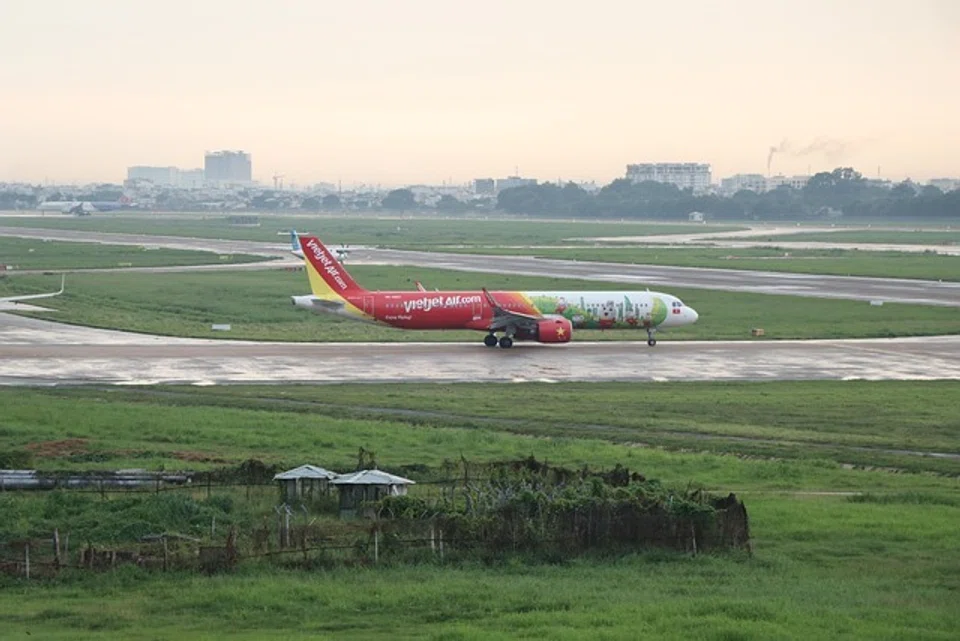
VIETNAM’S largest budget airline Vietjet Aviation faces mounting legal and financial pressure after a UK court imposed a worldwide freeze on its assets worth up to US$251.6 million, raising questions over its ambitious fleet expansion and the wider industry’s access to international financing.
The Oct 15 ruling comes as Vietjet and other Vietnamese carriers have ordered around 700 aircraft in total from European planemaker Airbus and US rival Boeing.
Legal experts say the dispute could lead to tighter financing terms and greater scrutiny of contractual structures, although recent regulatory reforms may help ease longstanding concerns over creditor rights and enforcement.
How did US$8 million become US$250 million?
The dispute stems from four Airbus A321 aircraft leased by Vietjet under Japanese Operating Lease with Call Option (JOLCO) arrangements, funded by equity from Japanese investors and loans from international banks.
Vietjet fell behind on lease payments totalling about US$8 million during the Covid-19 pandemic, as travel restrictions severely disrupted operations.
In October 2021, the security trustees issued notices terminating the leases, while FWC, an entity within London-based distressed-debt investor FitzWalter Capital, acquired the outstanding loans.
The loans and related security rights were subsequently assigned to its affiliate, FW Aviation (FWA), which then initiated legal proceedings against Vietjet in August 2022. The court later deemed it a “fair inference” that the termination notices were “coordinated behind the scenes by FWC”.
In its second-quarter 2026 filings, Vietjet noted that the change of creditor had derailed its debt-restructuring talks with the original lenders.
FWA recovered possession of the four aircraft in December 2022, after Vietjet had retained and operated them without paying rent for over a year following the lease terminations.
The situation drew scrutiny of Vietnam’s implementation of the Cape Town Convention, which provides a framework for creditors to recover aircraft following defaults.
In July 2024, the English High Court ruled that the leases had been validly terminated, ordering Vietjet in April 2025 to pay US$182 million in damages.
Further judgments, interest and costs have since pushed the total liability to around US$250 million.
How the dispute turned into a classic cross-border challenge
The English court criticised Vietjet’s refusal to settle its debt despite its clear financial capacity.
In an Oct 15 judgment, Justice Pushpinder Saini endorsed FWA’s characterisation of Vietjet as a “won’t pay” rather than a “can’t pay” debtor, highlighting that the airline had paid just US$2 million towards the judgment while continuing to place substantial new aircraft orders.
At home, Vietnamese courts rejected enforcement of the English judgments in December 2025 (and on appeal in April 2026), finding FWA’s dual recovery of the aircraft and full termination damages inconsistent with local principles of fairness.
Nguyen Minh Hoang, managing partner at Harley Miller Law Firm (HMLF), said the contrast between UK freezing orders and Vietnamese court resistance highlights a longstanding challenge in cross-border litigations, exacerbated by the absence of a bilateral civil enforcement treaty between the two countries.
Another legal source familiar with the case told The Business Times that without domestic recognition, “Vietjet essentially has no legal basis under Vietnamese law to comply with the UK judgment”.
However, that reality does not extend automatically to assets held overseas.
“I understand that Vietjet currently has no assets in the UK. Hence, the order has not had a significant immediate impact on the airline there,” said the source. “Going forward, the claimant may pursue additional legal measures in other countries to increase pressure on Vietjet.”
Meanwhile, Vietjet’s latest filing noted that its major shareholders are willing to “consider providing financial support” from third parties, subject to Vietnamese law, if liabilities arise.
Will Vietjet’s flights and order book be affected?
The latest Worldwide Freezing Order, known as WFO, prevents Vietjet from dissipating assets to evade judgment enforcement, but it does not suspend daily operations. “If the order effectively freezes a company’s entire business and prevents it from operating, that would defeat its purpose,” the lawyer who requested anonymity said.
However, operational risks escalate when assets enter jurisdictions with local enforcement orders.
In Singapore, FWA obtained a court order in May 2026 to seize nine aircraft owned or operated by Vietjet if they landed in the city-state, as part of its efforts to recover the outstanding judgment debt.
Though the English High Court found that Vietjet rerouted those jets to avoid seizure, the airline has continued flying its four Singapore routes – with a fifth launching in December – using other aircraft from its 135-plane fleet, even after the latest WFO order.
The broader concern centres on Vietjet’s massive order book of more than 600 Airbus and Boeing jets.
The court order restricts the airline’s ability to deal freely with offshore economic rights – specifically pre-delivery payments and sale-and-leaseback arrangements – without prior court approval.
The court also flagged Vietjet’s transfer of substantial purchase rights to Cayman-based Angelica Holding as evidence of asset dissipation risk, dismissing the airline’s claim that the deal was standard financing for delivery delays.
Will financing become more challenging for Vietnamese airlines?
Beyond Vietjet, the dispute could test the confidence of international financiers in Vietnam’s aviation market just as its airlines seek enormous amounts of capital for fleet expansion.
In February 2026, flag carrier Vietnam Airlines finalised an US$8 billion order for 50 Boeing 737 MAX 8s, while private airline Sun PhuQuoc Airways signed a US$22.5 billion deal for 40 Boeing 787-9s.

HMLF’s Hoang expects a nuanced impact on aircraft financing rather than a market pullback.
“Rather than triggering a blanket freeze on financing, this dynamic tends to manifest in more protracted lease negotiations, stricter covenants regarding intra-group asset or order-book transfers,” he said.
Hoang also warned that legal costs could rise while cautioning against viewing the dispute as a systemic risk for Vietnam’s aviation sector, pointing to local carriers’ ongoing ability to secure major aircraft orders and leasing arrangements through 2025 and 2026.
The lawyer who requested anonymity added that the dispute could make airlines more cautious about using JOLCO financing structures and encourage closer scrutiny of default provisions, termination payments and how risks are shared between financiers and aircraft operators.
Meanwhile, Oliver Massmann, general director of Duane Morris Vietnam, noted in a June commentary on the case that favourable judgments alone do not guarantee effective recovery. He recommended that aircraft financiers and lessors look beyond standard safeguards and prepare enforcement strategies long before defaults occur.
He also urged lessors to avoid overly restrictive assignment clauses, given the growing role of private-credit funds in aviation finance, while warning against underestimating local regulatory hurdles and parallel court proceedings in Vietnam.
Richard Williams, a partner at London-headquartered law firm Watson Farley & Williams, said in an interview with BT earlier this year that stronger creditor protections and predictable enforcement will improve financing conditions for local airlines.
“If you provide a helpful regime that international creditors can rely on, your domestic companies can get cheaper finance,” he said.
Nevertheless, Williams still expected Vietnam’s strong growth prospects and abundant global liquidity to insulate investor appetite from these leasing disputes.
Vietnam has also moved to strengthen protections for aircraft financiers following earlier repossession disputes, legal experts pointed out.
Hoang noted that Vietnam’s updated Civil Aviation Law and accompanying decrees, effective since July 2026, strengthen creditors’ rights to deregister and export aircraft following a default, requiring regulators to process qualifying applications within five working days.
While describing the reforms as “a substantial effort to address these procedural bottlenecks on paper”, Hoang cautioned that “whether these legislative updates completely close the gap remains to be tested in practice”. THE BUSINESS TIMES
TRENDING NOW

OCBC mobile, online banking services restored after Friday afternoon disruption

SGX CEO Loh Boon Chye to step down; succession planning under way

Waymo founder predicts ‘landslide’ robotaxi adoption in Singapore, driven by high car costs

Vietnam’s northern provinces, not Hanoi or Ho Chi Minh City, are powering near 10% GDP growth

