



Indonesia’s energy advantage tested by AI data-centre boom
Vast renewable potential gives the country an edge, but certain constraints threaten to blunt it

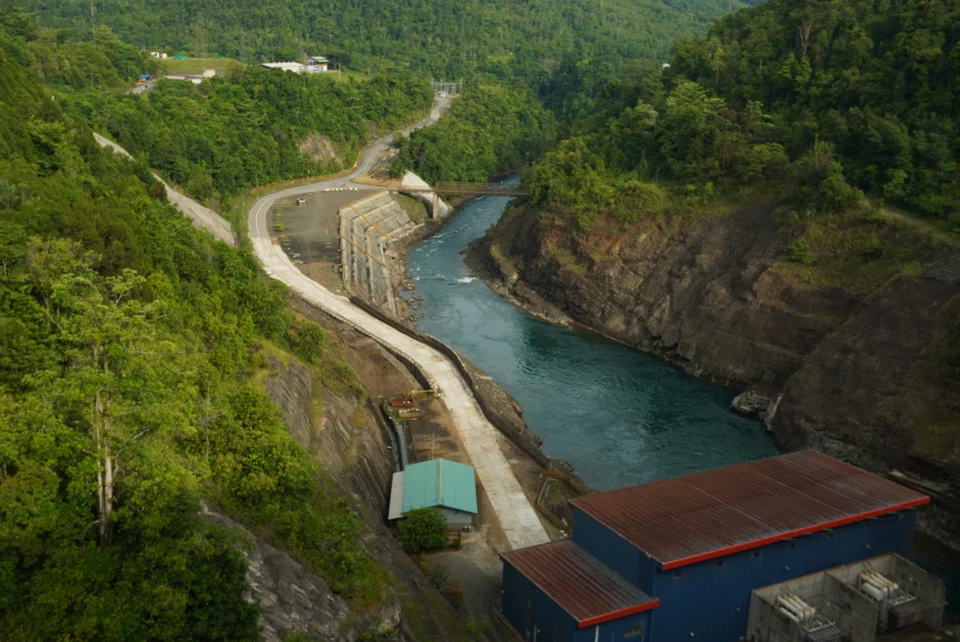
[JAKARTA] Indonesia’s vast land-mass and proximity to the equator give it nearly 4,000 gigawatts (GW) of renewable-energy potential, an advantage unmatched in South-east Asia.
Yet, gaps in grid infrastructure, questions over bankability of renewable-energy projects and the slow expansion of reliable energy supply could crimp its ability to capitalise on that advantage in the race for data-centre and artificial intelligence investment.
Johan Batubara, director of investment at Indonesia’s sovereign wealth fund, the Indonesia Investment Authority, told The Business Times that access to reliable power is becoming foundational for hyperscalers, particularly in an increasingly supply-constrained environment.
He said one of Indonesia’s biggest challenges is that its renewable-energy resources are often far from the locations considered suitable for data centres, which need reliable infrastructure, skilled workers and low exposure to natural disasters.
“Indonesia has an important window of opportunity. Other net energy-surplus countries are moving quickly, so continued progress will be important to maintain Indonesia’s competitiveness,” he added.
The sovereign wealth fund has invested in hyperscale data centres in Nongsa Digital Park, Batam, through its partnership with Singapore-headquartered hyperscale data-centre platform, DayOne.
AI investment boom
The global AI investment boom is spilling into Indonesia, a market of 280 million people, fuelling a rapid expansion in data-centre construction.
Government incentives are adding to the sector’s appeal.
Under its Special Economic Zone framework, Indonesia offers tax holidays of up to 20 years, value-added-tax and import-duty exemptions, regional tax reductions and, crucially, 100 per cent foreign ownership.
The trajectory seems encouraging. Indonesia has drawn some US$7.1 billion in data-centre investment in the first half of 2026, a 400 per cent increase from the year-ago period, said its ministry of investment.
In a research note in August, JPMorgan Chase said it expects Indonesia’s data-centre capacity to more than treble, rising from around 500 megawatts (MW) currently to about 1.8 GW by the end of 2027, as demand for digital infrastructure continues to build.
The surge in demand is also spilling over into the land market, driving up demand for sites suitable for data-centre development.
Farazia Basarah, country head and head of industrial and logistics at JLL Indonesia, said about 80 per cent of current industrial land demand in Indonesia comes from data-centre companies, with a single facility now typically requiring 10 to 30 hectares, two to six times more than two to three years ago.
The surge is already putting pressure on electricity demand.
JLL noted each data centre can require around 100 to 200 MW of power, up from about 50 MW previously, while securing additional capacity from state utility PLN can take about two years.
Data-centre operators can source up to 30 per cent of their electricity needs from independent renewable-energy producers, such as solar, geothermal, wind and hydropower, while the remaining 70 per cent is required to come from PLN.
JPMorgan noted PLN’s electricity tariff, at around US$0.06 a kilowatt-hour, is among the most competitive in the region, at roughly 45 to 70 per cent below rates in Asean markets such as Singapore, Thailand and Malaysia.
But rising data-centre demand will require PLN to deliver the 48 GW of new power capacity planned for 2026 to 2032.
JPMorgan said this could increase the risk of higher electricity tariffs in the medium term, with more than 70 per cent of new capacity expected to come from renewable sources.
Opportunities and challenges
Stability and predictability are equally important, he added, as they can lower the cost of capital and give investors more confidence to commit to future projects.
Power availability is becoming one of the biggest constraints on the global expansion of data centres, as AI workloads drive demand for electricity-intensive computing.
For Indonesia, this presents both an opportunity and a challenge, given its continued reliance on fossil fuels for power generation.
Coal still accounts for roughly 60 to 65 per cent of Indonesia’s power generation, creating a gap between the electricity available today and the increasingly low-carbon power sought by hyperscalers such as Amazon and Microsoft, as they work towards their net-zero commitments.
Jakarta is moving aggressively to expand renewable power. President Prabowo Subianto in August launched a plan to add 100 GW of solar capacity over the next three years.
The government said the solar programme will begin with 14 projects totalling 5.3 GW peak in six provinces.
PLN plans to invest around US$32.2 billion over the next decade to develop a 47,758 km green super grid, aimed at connecting renewable energy sources with major centres of electricity demand.
Johan noted that solar has an important role because it can be deployed relatively quickly, while geothermal and hydropower can provide the firm power needed for 24-hour data-centre operations.
“What matters more than picking a winner is integrated planning of generation and distribution, so that capacity can reach the right locations,” he said.
He also identified the bankability of renewable projects as another major bottleneck, saying the allocation of risk among the power purchaser, grid operator and project developer could be strengthened, so projects can be financed and built at the pace required by rising demand.
Geographically concentrated
Indonesia currently has around 240 data-centre facilities in the archipelago, although capacity remains concentrated in a few key locations. Jakarta accounts for more than 100 facilities, while Batam has about 20.
BMI, the research arm of Fitch Solutions, expects Jakarta to remain Indonesia’s dominant data-centre market, while Batam is set to benefit from its proximity to Singapore and Johor, as well as its access to submarine cables.
However, it noted the lack of transmission infrastructure to move renewable power to emerging data-centre hubs, such as Batam, remains a key constraint.
Indonesia has more than 3,686 GW of renewable energy potential.
Much of that potential, including significant geothermal resources in Sumatra, is located far from the country’s main centres of electricity demand, making transmission and grid infrastructure a key challenge in turning potential into reliable power.
“Until that gap is addressed, data-centre operators may have limited ability to secure large volumes of reliable, low-carbon power, leaving them more dependent on Indonesia’s coal-heavy electricity mix,” BMI wrote in a Sep 4 note.
The research company said cloud is the primary delivery layer for Indonesian AI demand, and it expects spending to remain among the fastest-growing in South-east Asia, building on a forecast US$7 billion in 2026.
TRENDING NOW
PSD reviewing paper that alleges civil servants disproportionately bought homes near unannounced MRT stations

CapitaLand Investment’s retrenchments: Mind the downsides of a profitable business laying off staff

In a business takeover, how can landlords in Singapore protect themselves?
How Asia’s next generation is rewriting legacy through entrepreneurship

