



Macquarie ranks Malaysia’s market as its top pick among 5 Asean countries
The Australian bank cites politics, currency strength and corporate capital expenditure
 Add BT as a preferred source
DeeperDive is a beta AI feature. Refer to full articles for the facts.
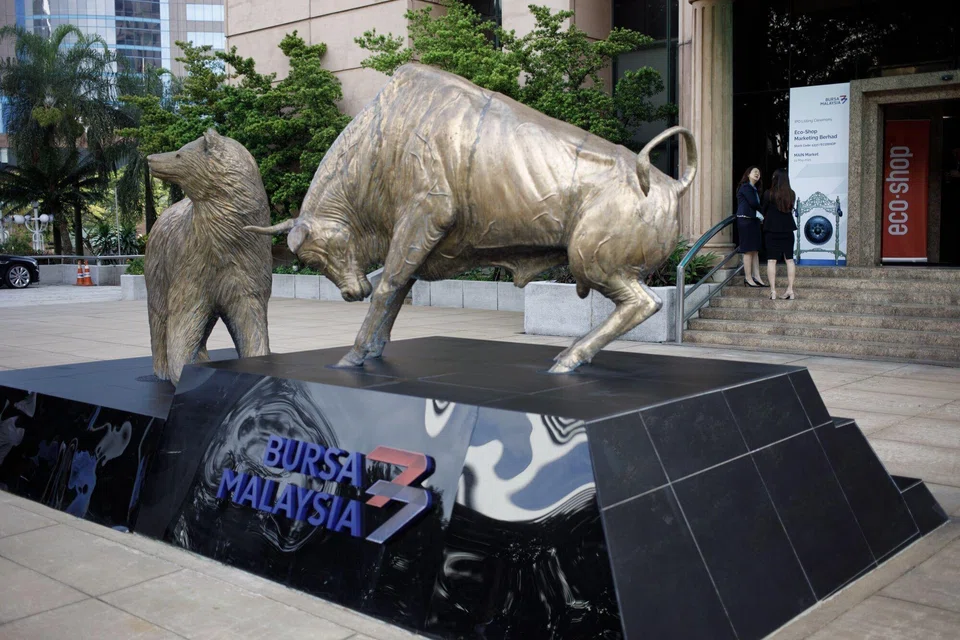
[SINGAPORE] Analysts from Macquarie’s equity research arm are bullish on the prospects for Malaysia’s market this year when compared with its Asean peers of Singapore, the Philippines, Thailand and Indonesia.
In a briefing to the media on Wednesday (Jan 21) at its Singapore office in the Marina Bay Financial Centre, Jayden Vantarakis, Macquarie Group’s head of Asean equity research, said strong earnings growth, an anticipated corporate capex cycle and strength in the ringgit were reasons the bank placed Malaysia top among the five Asean economies that it covered.
Vantarakis noted that the team of analysts at Macquarie also think that there could potentially be early polls in Malaysia this year, which could also be a positive.
Malaysia’s general election is due by early 2028. While Prime Minister Anwar Ibrahim has recently said that there would not be a snap election called this year, some analysts have speculated otherwise. The Malaysian economy has grown during Anwar’s time in office and the economy has also attracted investments, particularly in the tech sector.
The bank ranked the Philippines, Singapore, Indonesia and Thailand markets in that order behind Malaysia.
Vantarakis said the Philippines’ high ranking came from what he saw as a “value play” even as the market was a big underperformer last year.
Navigate Asia in
a new global order
Get the insights delivered to your inbox.
“It ranks the highest in terms of its valuation, price to earnings of nine times going into this year. And we have the most upside across our coverage of the names there,” Vantarakis said.
He added that domestic political “noise” from last year should also tone down this year, and that it could represent a more supportive environment for businesses moving ahead.
Thailand ranked lowly due to concerns about risks from its domestic political situation. Thailand is due to hold its election on Feb 8 that could lead to its fourth prime minister within a span of three years.



The three major Thai parties competing in the election – the Bhumjaithai Party, the People’s Party and the Pheu Thai Party, all offer differing economic proposals on resuscitating the Thai economy.
For Indonesia, currency pressures are a concern, but Vantarakis noted that the Prabowo administration has only been in office for about a year, and that analysts are still monitoring how the administration’s growth agenda plays out.
Indonesia’s rupiah hit an all-time low against the US dollar on Tuesday, even as the dollar index slid. The rupiah’s decline comes against the backdrop of the nomination of President Prabowo Subianto’s nephew Thomas Dijwandono as a member of Bank Indonesia’s board, raising concerns about the potential erosion of the central bank’s autonomy.
Singapore, which ranked in the middle of the five economies, is regarded as a “safe haven” market according to Vantarakis, who also noted that the Singapore stock market has done extremely well in the last couple of years.
Yet part of the growth of the Singapore market’s index has been driven by the three local banks, and Vantarakis said he expects to see a “broadening out of performance away from the large banks”.
Lower interest rates could put pressure on bank revenues; yet they could also make Singapore-listed real estate investment trusts (Reits) an attractive option.
Lower interest rates generally reduce profitability from lending for banks, but they also mean potentially lower cost of debt for Reits, which could in turn spur distribution growth.
Andrew Hill, head of institutional equity sales for Macquarie in Singapore, said he is excited by the potential of small caps in the city-state and noted opportunities in finance and tech.
His comments echoed a report released by the bank’s equity research arm on Jan 16 that looked at potential stock picks for the Singapore market.
Macquarie’s research covers 855 stocks across Asia of which 200 are in South-east Asia.
Decoding Asia newsletter: your guide to navigating Asia in a new global order. Sign up here to get Decoding Asia newsletter. Delivered to your inbox. Free.
Copyright SPH Media. All rights reserved.
TRENDING NOW

Air India asks Tata, Singapore Airlines for funds after US$2.4 billion loss

Beijing’s calculated silence on the Iran war

China pips the US if Asean is forced to choose, but analysts warn against reading it like a sports result

Richard Eu on how core values, customers keep Singapore’s TCM chain Eu Yan Sang relevant

