



Malaysia mulls commuter pass as Johor-Singapore Special Economic Zone blueprint takes shape
Details of this special pass will be set out in the blueprint, expected to be unveiled in early 2027

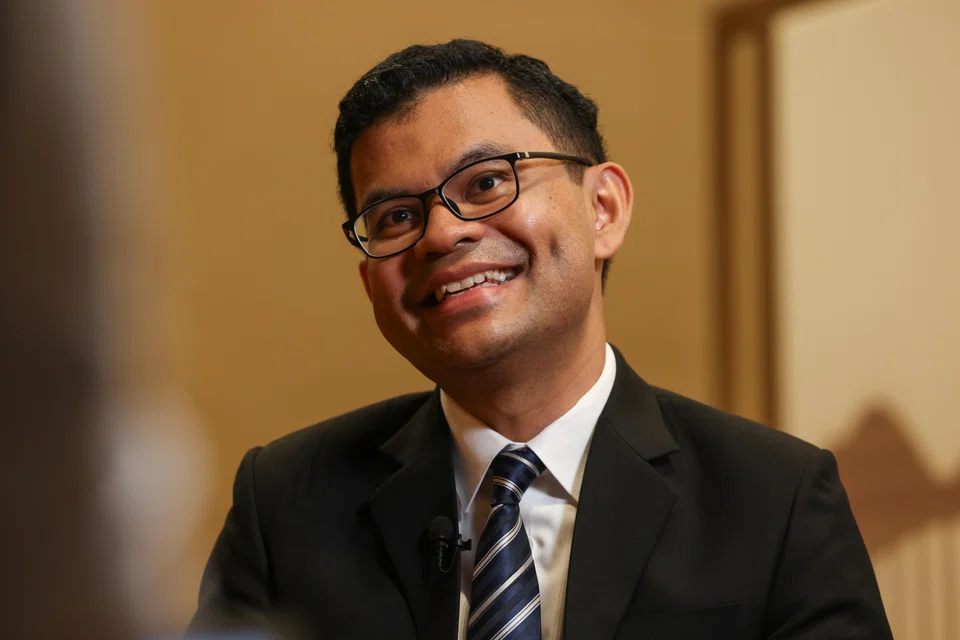
[SINGAPORE] Singapore residents working in the Johor-Singapore Special Economic Zone (JS-SEZ) could receive a special pass to ease their cross-border commutes, and details could come in a master blueprint in early 2027.
Malaysia’s Economy Minister Akmal Nasir said the pass is part of a broader push to smooth the cross-border movement of people and goods and to encourage long-term commitment from businesses and workers.
However, he neither specified the benefits of the pass nor said whether its holders would still need a separate work permit.
Asked how many people might qualify and whether eligibility would extend beyond senior executives, he replied: “I think I will let the document speak for itself.”
Originally slated for launch in early December, the unveiling has been postponed to early next year after Malaysia shared the draft with Singapore on the sidelines of a bilateral ministerial meeting two weeks ago.
Akmal said the delay gives time for Singapore’s feedback to be incorporated while both sides fix a date for their respective prime ministers to launch the document jointly, preferably in Johor or Kuala Lumpur.

He was speaking to The Business Times on Friday (Nov 27) on the sidelines of SPH Media’s Asia Future Summit 2026, jointly presented by The Straits Times, The Business Times, Lianhe Zaobao, Berita Harian and Tamil Murasu.
The annual event gathered policymakers, business leaders and industry specialists; OCBC was the presenting sponsor, Marina Bay Sands was the official venue partner and Amazon Web Services, the official cloud partner.
JS-SEZ pulled in RM88.83 billion (US$21.6 billion) in approved investments between January 2025 and June 2026, with RM40.3 billion of that sum realised.
SEE ALSO



Akmal said sustaining momentum depends on how quickly approved projects start operating, and that the priority in 2027 is to attract more “queen bee” investors.
Such investors are major, industry-leading anchor investors whose entry into a region or sector attracts a wider ecosystem of suppliers, technology partners and supporting businesses.
He said clustering projects simplifies the provision of utilities and builds business opportunities for suppliers as projects get under way.
He cited Sedenak, a sub-district in Kulai, Johor, as a beneficiary of clustering. It has grown from an agricultural settlement into one of South-east Asia’s fastest-growing data centre and industrial hubs.
Power, water and chips
Malaysia is also preparing legislation that will govern data centres, given that the boom in the industry would test the country’s power and water capacity – even as the US chip curbs create uncertainty over access to advanced processors.
Akmal said the proposed Digital Infrastructure (Data Centres) Bill will clarify investor rules and regulate security, operational resilience and continuity.
Noting that projects involve multiple authorities, including state governments handling the applications for approvals, he added that the government must ensure facilities secure the necessary utilities without disrupting supply to domestic consumers.
The Digital Ministry has told Parliament the Bill would be tabled in 2027.
Asked about the Megaspeed case and US trade restrictions, Akmal said there are still a lot of uncertainties and Malaysia’s Ministry of Investment, Trade and Industry would lead talks with its counterparts.
He cited Google’s investment in Malaysia as an example of the questions that could arise over how projects would proceed if chip supplies were constrained.
“Things can change within a month, or less than a month,” he said, adding that his ministry’s job was to set the long-term direction while trade officials handle the negotiations.
Increase minimum wage
Turning to the wider economy, Akmal said Malaysia’s third-quarter growth of 5.5 per cent had exceeded his expectations.
He pointed to consumer spending and manufacturing, and said businesses were putting some capital into machinery and other investments, and into funding day-to-day operations.
Asked why workers say they see little improvement in their salaries and living costs, he said productivity was rising faster than wages.
Akmal noted that the government had agreed to review the minimum wage in 2027, and is exploring ways to bring graduate pay to around RM2,500.
He raised wage compression as a concern, saying semi-skilled workers and graduates could see little benefit from a higher minimum wage.
“Growth will just be considered as a number if the population cannot feel it,” he said.
Akmal pointed to the 13th Malaysia Plan’s target of raising employees’ compensation to 40 per cent of gross domestic product.
He said higher-value work, such as advanced semiconductor packaging and integrated circuit design, could help translate demand for more specialised skills into higher pay.
Earlier, Bank Negara Malaysia revealed that employees’ compensation stood at 33.9 per cent of GDP, below the 40 per cent target under the 13th Malaysia Plan.
Keeping policy on track
Asked whether Malaysia’s economic agenda could survive a Cabinet reshuffle ahead of a possible 2027 general election, Akmal said he had built upon existing policies when taking over the ministry.
“It’s OK to carry forward the good progress that we make,” he said, noting that Forum Ekonomi Malaysia – the ministry’s first event next year, slated for January – will focus on the country’s economic issues.
Calling the five-year 13th Malaysia Plan a “guardrail” for economic direction, he cited the National Semiconductor Strategy, National Energy Transition Roadmap and New Industrial Master Plan as multi-term commitments.
He pointed to carbon capture as an example, noting Malaysia has set up a regulator and identified four projects under its carbon capture, utilisation and storage road map – the kind of initiatives he expects to endure across leadership changes.
Political activity will likely intensify ahead of next year’s expected general election, he said, but added that “the economic focus must remain there”.
Decoding Asia newsletter: your guide to navigating Asia in a new global order. Sign up here to get Decoding Asia newsletter. Delivered to your inbox. Free.
Copyright SPH Media. All rights reserved.
TRENDING NOW

JPMorgan, BlackRock among those making bid to manage CPF savings

GIC in talks to lease bulk of 88,000 sq ft CapitaSky space to be vacated by Allianz

BN-PN’s Melaka election landslide puts spotlight on jobs, investments and political divides
Why Singapore, Johor and Riau Islands should build a cross-border ecosystem for AI

