



Manila’s US$113.5 billion Budget battle becomes test of fiscal discipline
Supreme Court ruling compels the government to reassess congressional spending power
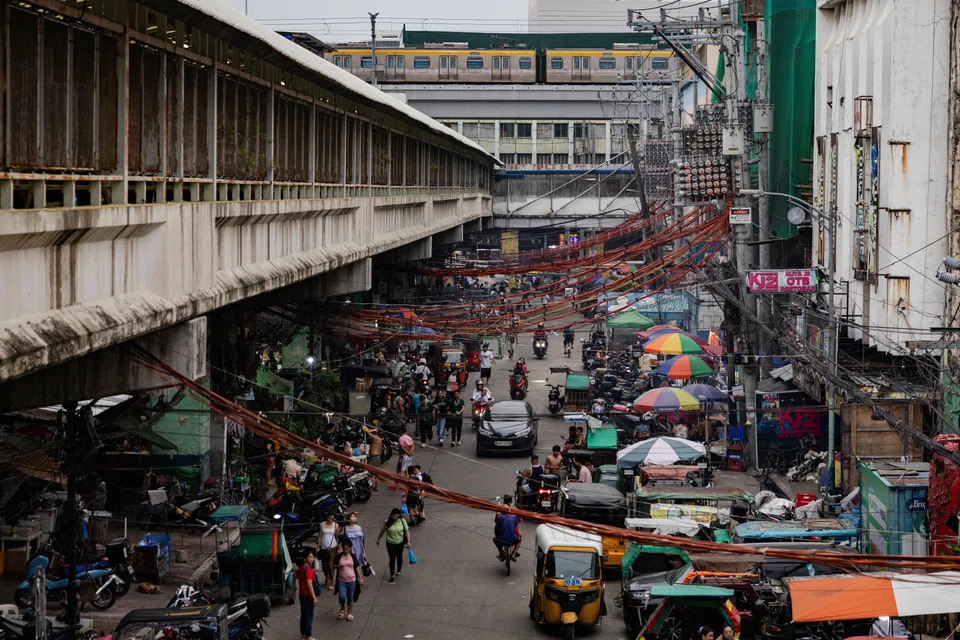

[MANILA] A Philippine Supreme Court ruling that limits Congress’ power to expand President Ferdinand Marcos Jr’s spending request has turned the proposed 7.2 trillion peso (US$113.5 billion) 2027 national Budget into a test of fiscal discipline amid longstanding criticisms of opaque legislative insertions.
The spending plan is now before the Senate after the House of Representatives approved its version on Oct 12.
Plenary debates are scheduled to begin on Nov 23, leaving a compressed window to revise provisions that could invite a fresh constitutional challenge.
On Tuesday (Oct 20), the Supreme Court ruled that Congress cannot raise the total appropriations recommended by the president, including both programmed spending and unprogrammed “standby” funds.
The decision declared the 2024 and 2025 General Appropriations Acts unconstitutional insofar as they exceeded that ceiling. It also invalidated key 2026 provisions governing the release of unprogrammed funds.
The ruling voided a 449.5 billion peso increase in unprogrammed appropriations in the 2024 budget and a 17.99 billion peso increase to the Department of Public Works and Highways’ Special Road Fund in the 2025 Budget.
While the court did not declare unprogrammed appropriations unconstitutional in themselves, it held that they must remain narrow contingent appropriations, avoid lump sums, contain clear priorities and safeguards, and remain consistent with the national fiscal programme.
With the ruling not yet final and executory, the government has said it will seek clarification and partial reconsideration.
The Office of the Solicitor General has until Nov 4 to file its motion.


Risks to foreign-financed projects
Lawmakers argue that the standby fund and realignment provisions of the 2027 proposal must be tested against the Supreme Court’s standards.
Senator JV Ejercito, chair of the Senate finance committee, has estimated that the House realigned about 206 billion pesos from Marcos’ proposed National Expenditure Programme.
He has also flagged a 130 billion peso reduction in foreign-assisted projects and a separate 40.4 billion peso reduction in transportation funding. The transport cuts include 19.7 billion pesos for the Metro Manila Subway and 15 billion pesos for the North-South Commuter Railway.
Ejercito has warned that reductions to flagship projects could delay implementation, increase borrowing costs, trigger commitment fees and expose the government to penalties under loan agreements.
The stakes extend beyond Manila.
Many Philippine transport, flood-control and energy projects rely on Japanese official development assistance, Asian Development Bank loans and other concessional or blended financing.
The country is seeking to sustain public investment while its sovereign outlook has weakened.
Fitch Ratings assigned the country a “BBB” rating with a “negative” outlook. In an Aug 20 assessment of the 2027 Budget before the House revisions and the Supreme Court ruling, Fitch said the Budget signalled “modestly slower fiscal consolidation” as weaker growth complicated deficit reduction.
Fitch cautioned that weaker public infrastructure spending could weigh on medium-term growth, but noted that governance reforms could improve spending efficiency and preserve some of the economic impulse from infrastructure investment.
The 2027 Budget targets a deficit equivalent to 5.1 per cent of gross domestic product, wider than the 4.8 per cent target under the government’s previous medium-term fiscal framework.
Moody’s, meanwhile, has retained an investment-grade rating for the Philippines but has flagged weakening debt affordability and institutional constraints.
Social spending under pressure
Economists are also questioning whether the realignments support long-term growth.
Jose Enrique Africa, executive director of research group Ibon Foundation, said the 2027 Budget is “inadequate for addressing the country’s most urgent social and economic needs”.
The Department of Budget and Management has maintained that the proposal prioritises education, health, social protection, food security, infrastructure and disaster resilience while remaining consistent with fiscal responsibility.
Africa, however, said a 164.3 billion peso increase in interest payments accounted for roughly 40 per cent of the Budget’s 407 billion peso year-on-year increase, leaving less room for investment and social services.
The political calendar sharpens those concerns. Cielo Magno, an economist and former finance undersecretary, described the proposed budget as “an election Budget”, even though the 2028 national elections are not yet under way, because campaigning would already be under way in 2027.
Constitutional lawyer Dan Gatmaytan noted that accountability for past unconstitutional provisions may prove difficult because the Supreme Court ruling’s practical effect will depend on enforcement.
“Technical malversation occurs when you use money appropriated for one purpose for something else. That is not what happened here. They are still in the process of appropriating the funds,” he said.
Representative Antonio Tinio, one of 13 lawmakers who voted against the 2027 Budget in its current form, has called for the House to recall the proposal, arguing that it contains provisions similar to those the court invalidated.
“The House must fix its own mess,” he said.
Solicitor General Darlene Berberabe, however, said the Marcos administration will ask the Supreme Court to review whether certain restrictions should be left to the discretion of the executive and legislative branches.
“The Constitution has given them the power of the purse; they should be allowed to self-correct,” she said.
Decoding Asia newsletter: your guide to navigating Asia in a new global order. Sign up here to get Decoding Asia newsletter. Delivered to your inbox. Free.
Share with us your feedback on BT's products and services
TRENDING NOW

OCBC mobile, online banking services restored after Friday afternoon disruption

SGX CEO Loh Boon Chye to step down; succession planning under way

Waymo founder predicts ‘landslide’ robotaxi adoption in Singapore, driven by high car costs

Vietnam’s northern provinces, not Hanoi or Ho Chi Minh City, are powering near 10% GDP growth

