



Melaka turns from tourist magnet to battleground as state polls test Putrajaya’s unity pact
Voter sentiments are centred on rising inflation, fuel subsidy uncertainties, pace of reforms

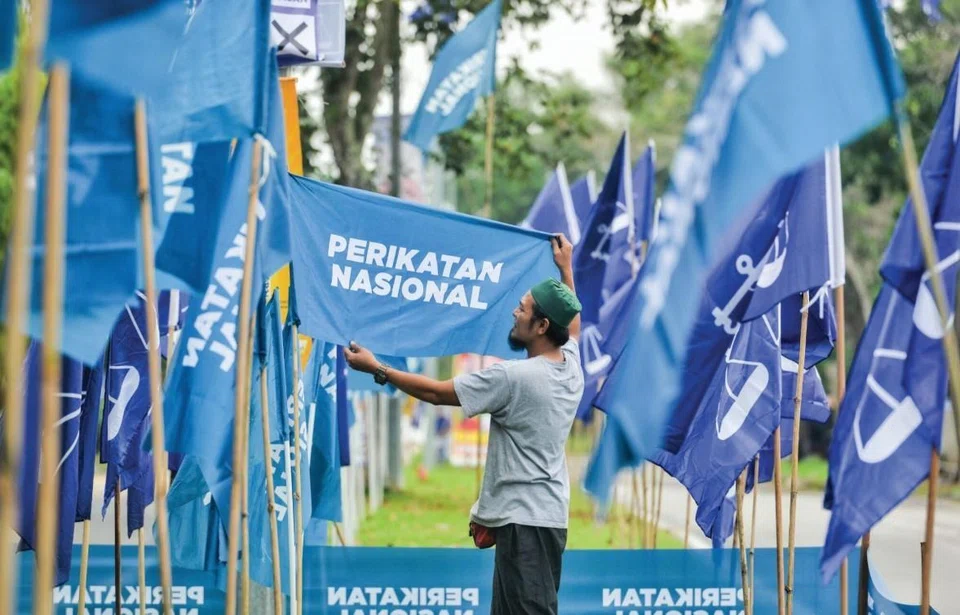
[KUALA LUMPUR] From its Unesco World Heritage legacy to a high-profile endorsement by Chinese superstar Fan Bingbing, Melaka’s cultural allure drew 15.9 million visitors and generated more than RM14.9 billion (US$3.7 billion) in 2025.
Yet this Saturday (Nov 14), the spotlight shifts from tourism receipts to the ballot box as voters head to the polls in a high-stakes state election that market observers view as a vital political barometer for Putrajaya.
At stake is whether Malaysia’s ruling coalition partners can sustain unity or will part ways before the next general election.
Despite the intense campaign trail, political analysts observed that the mood on the ground remains subdued.
Current affairs commentator Lum Chih Feng attributed this quiet atmosphere to voter fatigue and immediate economic realities.
“Voters are growing weary of political slogans,” he noted, emphasising that rising living costs, youth economic pressures and candidates’ local track records will outweigh coalition manoeuvring on polling day.
In Melaka, federal partners now become local rivals. Barisan Nasional (BN) is defending its stronghold via a seat-sharing deal with Parti Islam Se-Malaysia (PAS) to consolidate Malay-majority votes.
Meanwhile, Prime Minister Anwar Ibrahim’s Pakatan Harapan (PH) and Muhyiddin Yassin’s Bersatu have avoided direct clashes across four constituencies, though Muhyiddin noted Bersatu issued no official directive for members to vote outside the party.
The Election Commission confirmed 79 candidates for 28 seats. PH is fielding 24 candidates, BN 23, Parti Bersama Malaysia 16, Bersatu seven, and Perikatan Nasional (PN) five.
BN snagged 21 of 28 seats in Melaka’s 2021 election, against five by PH and two, PN. The BN coalition has entered this contest with strong momentum after expanding its majority in Johor in July – taking 48 of 56 seats, up from 40 in 2022.
It won another strong endorsement in August for the Negeri Sembilan state election, winning 18 of 36 seats and returned to power alongside PN, which secured seven.
The push for better-paying jobs

“Whether (voters) turn out will depend largely on how much they feel is at stake in their own lives,” Lum told The Business Times.
Dr Liew Wui Chern, a policy analyst and lecturer at Universiti Tunku Abdul Rahman, echoed this sentiment. Pointing to widespread expectations of policy continuity, Dr Liew noted that voter concerns centre primarily on inflation, fuel subsidy uncertainties and the pacing of federal reforms.
He also cited recent state election trends, such as PH’s performance in Negeri Sembilan, as a reflection of growing frustration among small and medium-sized businesses over quality of jobs, opportunities and livelihood.
That sentiment resonates with local business owners like Teh, who runs a pet shop in Ayer Keroh and requested to be identified by his surname. While acknowledging that daily life feels like “business as usual” ahead of the vote, he senses an underlying eagerness for economic progress.
Teh urged the incoming administration to diversify Melaka’s growth strategy beyond its traditional reliance on external tourism. “An overreliance on tourism leaves the economy dependent on external inflows,” he said.
“We need to boost domestic spending and create high-value, better-paying jobs so our youth can build long-term careers here instead of leaving the state,” added Teh.
Melaka’s dual dynamic economy
Melaka’s economy grew 3 per cent in 2025 to RM50.3 billion, according to the Department of Statistics Malaysia.
Services made up 52.4 per cent of output and grew 4.8 per cent, helped by trade, F&B, accommodation and government services. Manufacturing accounted for 35.4 per cent and grew 1.1 per cent, supported by electronics and food processing.
In Batu Berendam, Germany’s Infineon Technologies operates its largest site for assembling and testing semiconductors.
Honda Malaysia assembles cars in Alor Gajah, while Apex Healthcare’s Xepa-Soul Pattinson makes pharmaceuticals in Cheng Industrial Estate.
Melaka is also the birthplace of Mamee-Double Decker, the food manufacturer behind household favourites such as the iconic Mamee Monster noodle snack, Mister Potato and Double Decker crackers. Today, the company produces over 50 products and exports to more than 100 countries worldwide.
Tourism remains a major source of income.
The state is targeting 19 million visitors in 2026. Chief Minister Ab Rauf Yusoh said Melaka recorded 11.2 million visitors by August, with an estimated contribution of RM11.3 billion to the state economy.
Private hospitals have built a separate market for healthcare travellers, including from Indonesia. Invest Melaka recorded about 339,400 medical tourist arrivals in the first half of 2026.
Keeping investments on track
Driven by industrial momentum, Melaka’s approved investments nearly doubled to RM14.7 billion in 2025, up from RM8.2 billion in 2024, according to Invest Melaka.
To sustain this trajectory, the state announced plans for three new industrial zones, including the German Technology Park and an expansion of the Elkay hub, while establishing a single-window approval mechanism to streamline investor approvals.
Beyond macro figures, Dr Liew said local business owners’ top concerns are policy continuity, rising operating costs and sustainable tourism recovery.
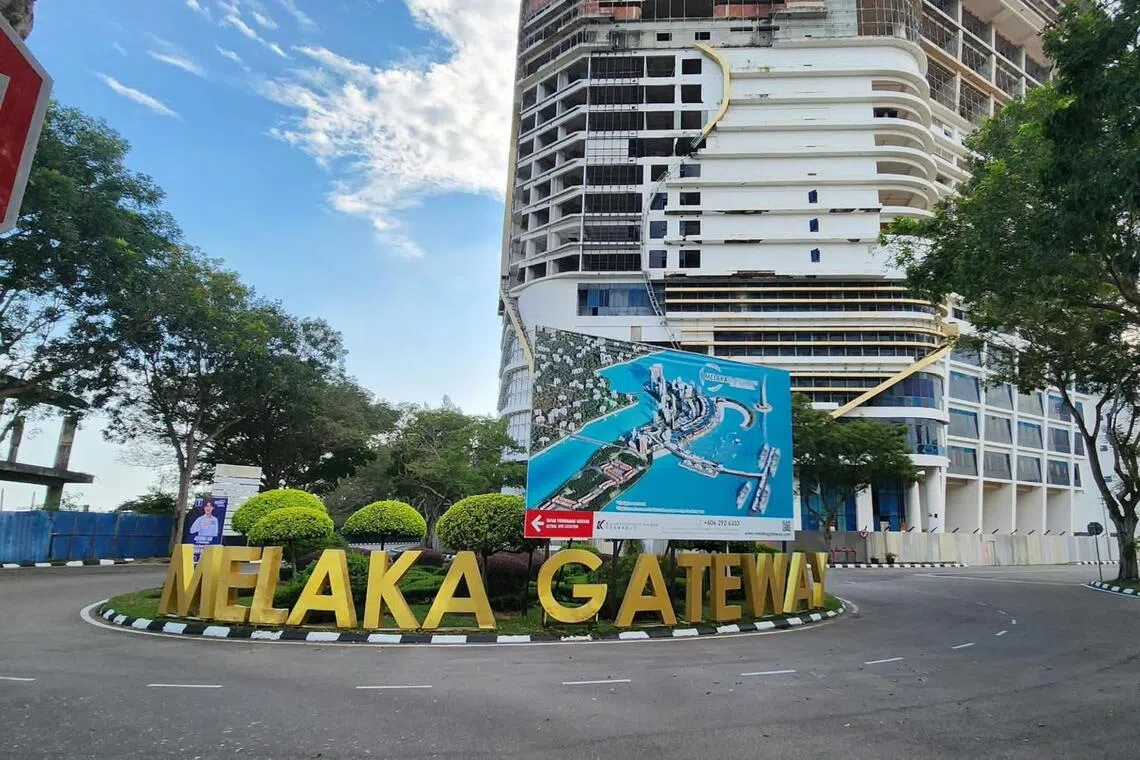
Lum noted that following delays and setbacks in mega-projects such as Melaka Gateway, enterprises broadly favour a stable, efficient state government that minimises bureaucratic friction.
“They want the next administration to prioritise supporting infrastructure and ease labour shortages,” he added.
Looking ahead, Lum highlighted that residents and small and medium-sized enterprises alike want the state to leverage Melaka’s unique heritage alongside key maritime infrastructure, such as the upcoming cruise terminal.
A political friendship test
On the political front, Dr Liew expects BN to retain power in its traditional stronghold of Melaka, where PH briefly governed after 2018.
“The more revealing question is whether parties can persuade supporters to vote for one another’s candidates,” he said, noting that these dynamics could foreshadow national pacts for the next general election.
“The arrangements have already caused friction,” he added, citing Malaysian Chinese Association president Wee Ka Siong’s walkout from BN’s Oct 24 candidate launch. The protest over an initial two-seat allocation (down from seven in 2021) was later resolved through renegotiations that secured four seats for the party.
Meanwhile, Lum warned that while another defeat would dent PH’s morale ahead of the general election, a decisive BN victory would boost its bargaining leverage and deepen doubts over the coalition’s long-term survival.
TRENDING NOW

Singapore commits S$143 million to fund R&D for industrial decarbonisation

Sheng Siong has fallen from its highs. Can its defensive appeal endure?
DBS, OCBC or UOB? Investors urged to be selective as Q3 reveals widening performance gap

Nvidia, CEO Jensen Huang sued over disclosures related to suspected Chinese spy

