



Singapore’s lawyers, accountants follow businesses abroad, with Jakarta the latest stop
A new Professional Services Centre aims to connect businesses with trusted lawyers, accountants, tax specialists and other advisers
 Add BT as a preferred source
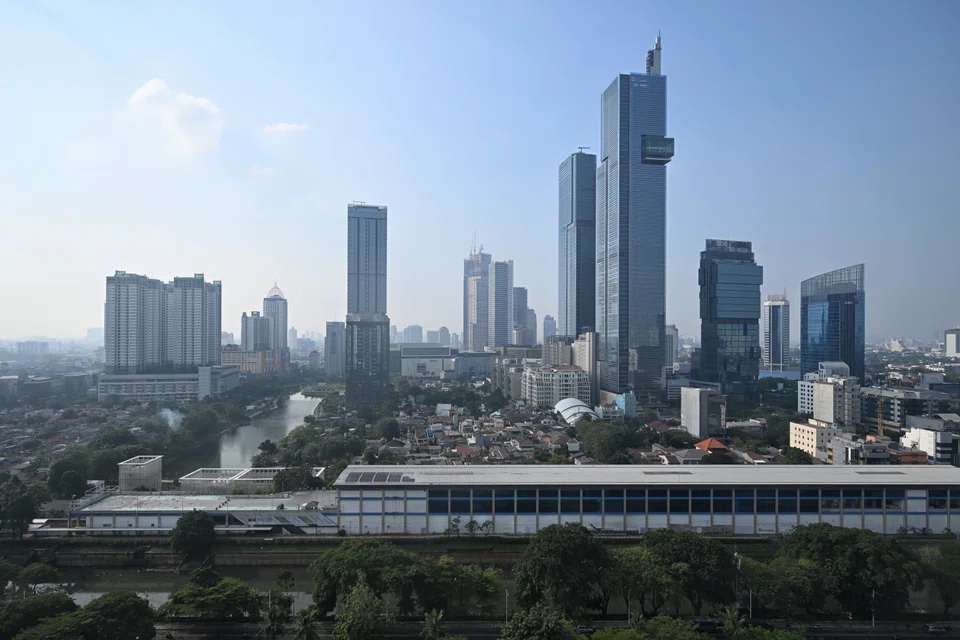
[JAKARTA] As more Singapore businesses venture abroad, the country’s lawyers, accountants and tax specialists are following them – with Jakarta being the latest stop in a growing network positioned to help companies navigate unfamiliar markets.
A new Professional Services Centre (PSC) in Jakarta aims to become the first port of call for businesses grappling with questions over tax, law, regulation and local partners.
Launched on Friday (Sep 4) before about 150 attendees at Cyber 2 Tower, where the centre is located, the initiative brings together Singapore and Indonesian business and professional groups to help companies navigate expansion between the two markets.
“Bring us your problems. Let (the PSC) make this conversation begin,” Institute of Singapore Chartered Accountants council member Alan Chang told attendees.
Law Society of Singapore treasurer and council member Peggy Yee said that the increasingly cross border nature of business meant no single profession – or country – could provide everything a company needed.
“Collaboration of this kind is not a convenience, but is a force multiplier,” she said.
The Jakarta centre joins an existing network spanning Singapore, Ho Chi Minh City, Nanjing and Hongqiao in Shanghai. Johor, Shenzhen and Bangkok are among the next locations being developed.
In its existing locations, the network has facilitated more than 90 business connections, supported 100 companies and engaged more than 700 businesses and professionals.
The alliance comprises eight Singapore organisations spanning business, accountancy, law, tax, valuation and manufacturing.



On the Indonesian side, partners include Apindo, or the Indonesian Employers Association; the Singapore Chamber of Commerce Indonesia; The Indonesia Capital Market Institute (TICMI); and Kongres Advokat Indonesia (KAI), a lawyers’ organisation.
Navigating a new market
For businesses entering a market as large and complex as Indonesia, access to local expertise can be particularly important. Pheo Hutabarat, chairman of KAI, told The Business Times that legal uncertainty remained one of the issues weighing on investors considering the Indonesian market.
Drawing on 35 years of experience as a lawyer, he said that different parties could sometimes view the same legal issue differently, leaving “grey areas” that could cause investors to hesitate.
Some were prepared to take the risk, while others were not, he added.
KAI has thousands of lawyers spread across Indonesia, and Hutabarat sees the new network as a bridge connecting them with foreign businesses and lawyers looking to enter the country.
Tax adds another layer of complexity.
Dennis Lui, CEO of the Tax Academy of Singapore, said that tax, customs, tariffs and trade could determine how an investment was structured, and whether a business model ultimately worked.
Indonesia’s tax system inevitably comes with a degree of complexity, given the size and sophistication of its economy, he noted. “(But) the more important question is whether businesses can operate within that complexity with sufficient certainty and confidence.”
For companies, that meant clearer interpretations of rules, more consistent administration and more predictable outcomes, he added.
And the need for advice does not disappear once a company has successfully entered a market.
Singapore Chinese Chamber of Commerce and Industry council member Ernie Koh said his furniture manufacturing business, Koda, had tapped the professional services network in Vietnam over transfer pricing questions, and later changes involving tariffs and rules of origin.
“It’s not only for those people that want to land in a foreign country, but (also for) those people that (have) already landed in a foreign country,” he said. Koda has operated in Vietnam since 1993.
From market entry to capital raising
For some companies entering Indonesia, the opportunity could eventually extend beyond setting up shop to tapping its capital markets.
TICMI president director Johanes Abimanyu told BT that demand for capital market advice was growing as companies searched for new sources of funding, while many remained unsure about how to prepare for an initial public offering.
TICMI sits within Indonesia’s capital market ecosystem and provides education and professional certification, market data, research and consulting. It also helps private companies assess their readiness to become publicly listed.
Abimanyu said one objective of joining the professional services network was to build connections with more businesses, including foreign companies that could eventually consider raising capital or listing in Indonesia.
Asked whether attracting more such listings was one of the end goals, he replied: “Yes, that’s what I mean.”
He pointed to Indonesia’s sizeable domestic investor pool. Indonesia has around 30 million capital market investors and almost 1,000 listed companies, he said.
Pension funds, insurers and investment managers are still looking for more quality companies in which to invest, creating a pool of capital that could support new listings.
Abimanyu also sees room for professional ties with Singapore to help Indonesia strengthen its capital market capabilities.
He highlighted Singapore’s corporate governance practices as an area Indonesia could learn from, including through exchanges involving directors of listed companies.
TICMI already runs programmes for listed company boards and audit committees, and Abimanyu said that these could be strengthened through collaboration with Singapore counterparts.
But he argued Singapore also had lessons to take from Indonesia – particularly its success in drawing younger retail investors into the market.
Indonesia’s capital market had expanded significantly since the Covid-19 pandemic, with Generation Z investors playing a growing role as transactions became more digitalised, he noted.
Decoding Asia newsletter: your guide to navigating Asia in a new global order. Sign up here to get Decoding Asia newsletter. Delivered to your inbox. Free.
Copyright SPH Media. All rights reserved.
TRENDING NOW
Eu Yan Sang family members sell Bishopsgate bungalow at S$40 million

Punggol East riverside plots totalling 25 hectares earmarked for housing, could yield over 8,000 new homes

Asia-Pacific aviation: is up really the only way?
52 Singaporeans arrested in China over suspected involvement in illegal pyramid scheme

