



Vietnam car sales hit record 510,000 in 2022, strong demand set to continue
Luxury car sales remain strong, and the entry of low-cost EVs from China could lure more people to showrooms
Jamille Tran
[HO CHI MINH CITY] Vietnam’s car market saw record sales of about 510,000 units in 2022 – exceeding the threshold to be considered a large automobile market in South-east Asia along the likes of Thailand, Indonesia and Malaysia.
This marked a 21 per cent increase from the year before, and observers said the higher number was largely buoyed by pent-up demand as a result of the pandemic, the availability of new entry-level low-cost models, and a government incentive scheme to halve registration fees for locally assembled cars from end-2021.
It wasn’t entirely rosy throughout the year, though. The fourth quarter of last year saw the auto market lose some steam as demand fell when banks tightened lending and raised interest rates. Rising inflation and a bleak financial market were also factors, and some dealers were even forced to slash prices as buyers stayed away.
As things stand, some local companies expect to see revenue fall by around 18 per cent this year, following consecutive slides in sales in the final few months of 2022.
The Vietnam Automobile Manufacturers’ Association (VAMA) reported that its members sold 17,314 units – a 16-month low – in January.
If there is one segment of the car market that is proving particularly resilient, however, it is luxury cars. During the pandemic years in 2021 and 2022, the likes of Rolls-Royce, Bentley and Lamborghini announced record-breaking sales, with Vietnam also seeing strong growth in this area.
Last year, Porsche and Mercedes registered their highest ever sales figures in Vietnam at 750 and 7,500 units respectively, according to a report in the VnExpress newspaper. Mercedes said it expects to see its sales go up by 10 per cent this year.
Nguyen Thuc Hoang Linh, an automobile expert and an administrator of several Vietnamese online car forums, said: “Similar to (what we saw during) the pandemic period, gloomy economic prospects do not affect sales of luxury brands such as Rolls-Royce, Bentley or Mercedes-Maybach as those are specific product lines serving a specific segment of customers whose wealth is less susceptible to economic downturns.”
The latest wealth report by property consultancy Knight Frank suggests that Vietnam’s middle-class and the number of high net-worth individuals are on the increase, and analysts say this bodes well for all luxury markets including cars.
The number of people in Vietnam with at least US$30 million is forecast to reach more than 1,500 by 2026, an increase of 26 per cent from 2021. This pace matches the likes of Hong Kong and Taiwan, the report noted.
Observers say that the main impetus of the growth of Vietnam’s automobile industry is the country’s rate of car ownership, which is among the lowest in South-east Asia. For years, motorbikes remain the most common type of vehicle registered in the country.
According to statistics from the Vietnam Register, only 46 out of 1,000 Vietnamese people owned a car as at November 2021. A recent report from Ken Research forecast this rate to increase at a compound annual growth rate of about 8.4 per cent between 2020 and 2025.
This – combined with Vietnam’s population of 98 million and various free trade agreements that have removed import tariffs of automobile units from Asean nations since 2018 – have helped lure more foreign automakers to penetrate the market.
Rise of low-cost EVs
Amid the dreary outlook for the rest of this year, Vietnamese car buyers could turn to cheaper alternatives.
The number of imported complete cars in Vietnam doubled in February compared to January, and was three times higher than February 2022, according to data by the General Statistics Office. However, it recorded a lower import value in February compared to January, and analysts say this suggests that importers have mainly brought in entry-level cars in larger quantities.
Chinese electric vehicle (EV) makers are among the many foreign companies looking to capture a greater slice of the Vietnamese market.
In January, Reuters reported that BYD, known for its affordable electric cars that are sold in the US and Australia, was in talks to build a US$250 million plant in northern Vietnam to manufacture auto parts. This would reduce the company’s reliance on China and boost its supply chain in South-east Asia.
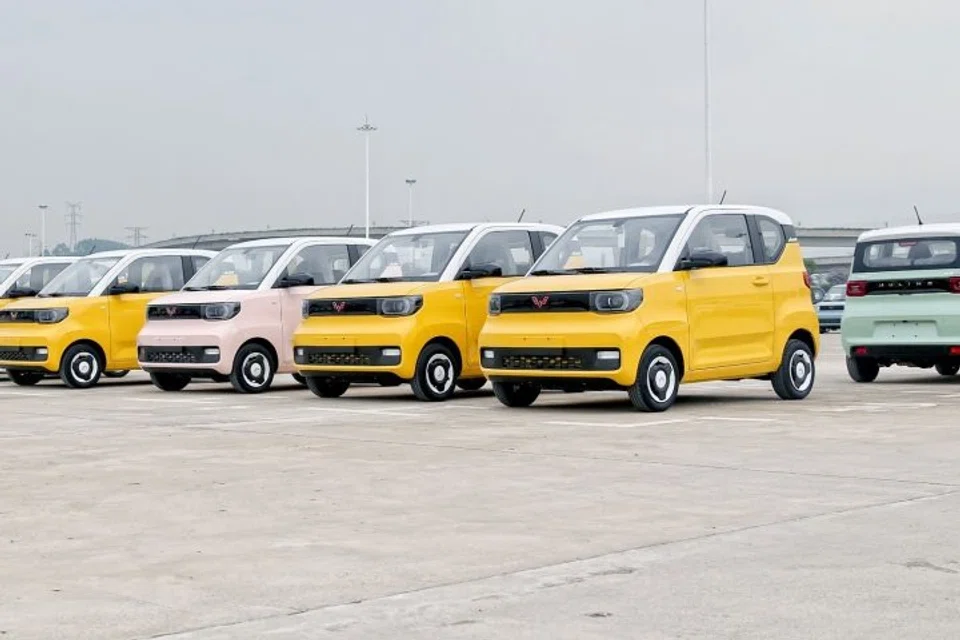
Meanwhile, the joint venture of General Motors and two Chinese partners – SAIC Motors and Wuling Motors – announced a collaboration with Vietnamese automaker TMT Motors to manufacture and distribute Wuling’s mini electric cars in Vietnam.
The Wuling HongGuang MiniEV – touted as the best-selling mini EV model in the world with an expected starting price as low as 100 million Vietnamese dong (S$5,671) – will be available in Vietnam in the second quarter of 2023.
Linh had his doubts about whether these cheaper models would be popular in Vietnam, given that many consumers see a car as a luxury item and regard it as a status symbol.
These China low-cost car brands are looking to muscle their way into an industry that has largely been dominated by Japanese and South Korean companies – Toyota, Mitsubishi, Hyundai and Kia, among others – that collectively have a market share of 80 per cent.
On the whole, while the gap in car sales between Vietnam and Thailand, Indonesia and Malaysia has narrowed, Vietnam still lags their Asean neighbours when it comes to production capacity.
According to the Asean Automobile Federation, Thailand is still the region’s top auto manufacturer, followed by Indonesia, Malaysia and then Vietnam.
TRENDING NOW

Grab CEO’s wife Chloe Tong on life with Anthony Tan and finding her purpose
Stocks to watch: DBS, DFI Retail, Frasers Property, Clint, ESR-Reit, Centurion, Coliwoo
DFI Retail to bag US$340 million, Starbucks business in Asia in deal with Maxim’s Caterers
Green fuels, autonomous ships: How Singapore is future-proofing its shipping industry

