
Weak rupiah, job crisis could test Indonesia’s rosy growth showing
Steady Q3 growth offers some reassurance after a cautious 2026, leaving room for rate hike, analysts say

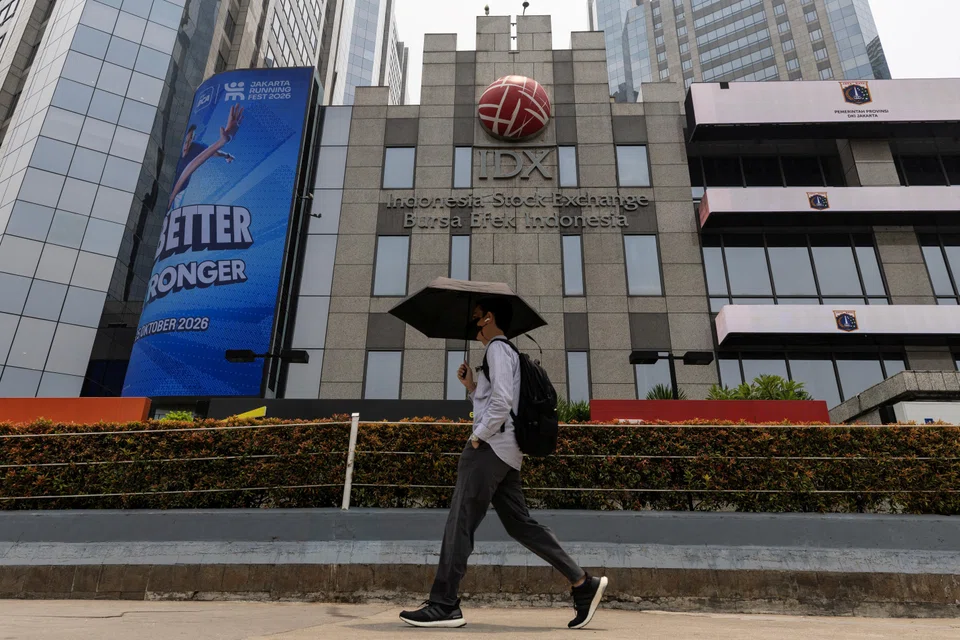
[JAKARTA] Indonesia’s economy grew faster than expected in the third quarter, but analysts believe sustaining that expansion will depend on generating jobs and lifting household incomes, amid a weaker rupiah and pressure on the financial market.
Gross domestic product expanded 5.47 per cent year on year in the three months to Sep 30, accelerating from 5.29 per cent in the previous quarter and 5.04 per cent a year earlier, Statistics Indonesia said on Thursday (Nov 5).
The reading exceeded the 5.2 per cent median estimate in a Bloomberg survey of economists. Growth was supported primarily by domestic activity, with government spending providing the strongest boost.
The growth figures come as Indonesia faces mounting pressure in its financial markets, with concerns over the country’s stock market classification by global benchmark provider MSCI and broader policy uncertainty.
Worries about jobs and the cost of living have also drawn more attention to the government’s economic plans.
Josua Pardede, chief economist at Bank Permata, said that policy focus should be on creating jobs, restoring household purchasing power and attracting investment that generates greater value within the domestic economy.

“The main challenge,” he said, “is not the pace of economic growth, but its quality.”
Lavanya Venkateswaran, senior Asean economist at OCBC, said the Q3 figures highlight the continued contribution of government spending and selected investments to growth, with exports playing a smaller role. She expects full-year growth to reach 5.2 per cent, with upside risks to that forecast.
Government consumption grew by nearly 9 per cent year on year, partly reflecting increased spending on priority programmes, including the free meals scheme, which has received 75 trillion (US$4.1 billion) in funding.


Pardede said timely government spending and payments for ongoing projects would help support business activity, while investment incentives should prioritise labour-intensive manufacturing, agriculture, trade and small businesses.
“However, these efforts would need to be balanced against fiscal constraints and rupiah stability,” he added.
Investment expanded by around 6 per cent, while household consumption, which accounts for more than half of Indonesia’s economy, remained steady at about 5 per cent.
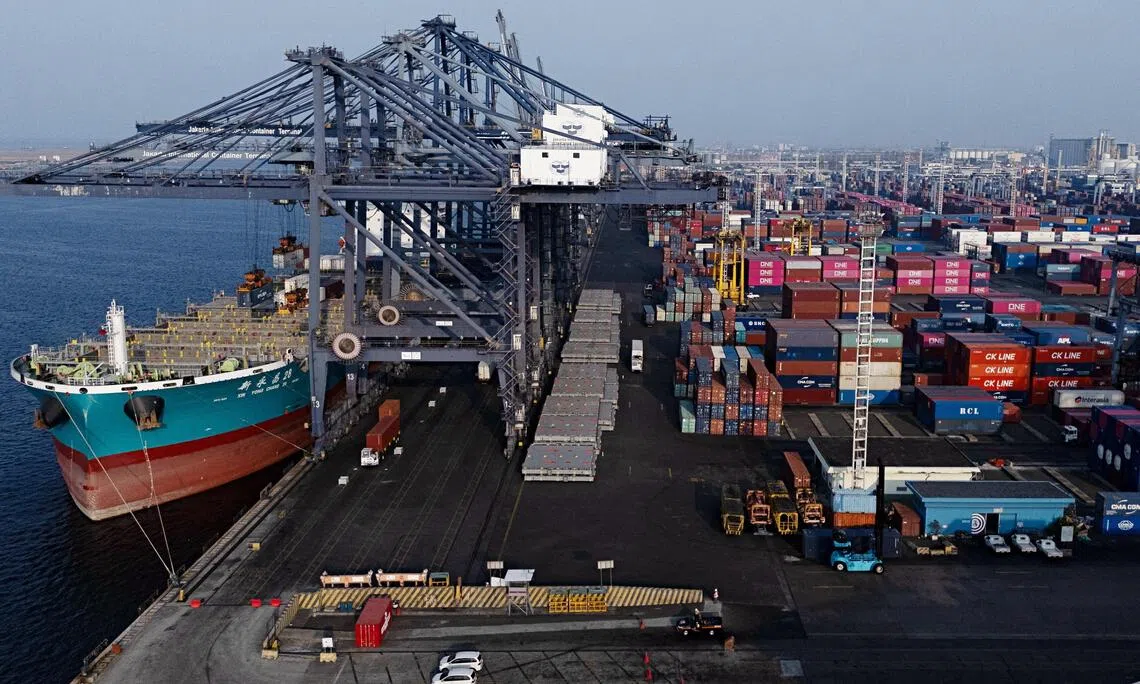
Manufacturing activity also provided support to growth amid external headwinds, underpinned in part by the government’s downstreaming drive.
Nickel processing, in particular, has drawn investment into smelters and battery-related industries, supporting industrial growth, which accelerated to more than 5 per cent year on year in Q3.
Exports provided some support to growth, with Indonesia’s shipments rising 11.87 per cent year on year to US$27.59 billion, driven by stronger non-oil and gas exports, particularly manufactured goods.
Barclays economist Brian Tan expects Indonesia’s economic growth to accelerate further, supported by continued government spending and fiscal headroom provided by a relatively modest budget deficit.
However, he pointed out that sustained pressure on the rupiah, partly stemming from uncertainty surrounding MSCI’s review of the Indonesian market, could complicate the outlook.
Like its regional peers, Indonesia faces mounting external pressures. Rising global energy prices amid tensions around the Strait of Hormuz have pushed up import costs, adding to inflationary pressures and complicating the government’s efforts to maintain price stability.
Inflation stood at 3.23 per cent year on year in October, with higher energy-related costs continuing to add to price pressures.
The rupiah is one of Asia’s worst-performing currencies in 2026, having weakened 8.3 per cent against the US dollar as at Thursday. This compares with declines of 7.7 per cent in the Philippine peso and 6.6 per cent in the baht.
Bank Indonesia has stepped up efforts to stem the rupiah’s decline through interventions in the foreign-exchange market, including using other monetary instruments to stabilise the currency and maintain market confidence.
Venkateswaran from OCBC said the stronger growth could also give Bank Indonesia room to tighten monetary policy to support the rupiah and contain inflationary pressures.
OCBC expects the central bank to raise its benchmark interest rate by 25 basis points at its December meeting.
Bank Indonesia has raised its benchmark interest rate three times since May, delivering a cumulative 100 basis points of tightening.
The current tightening cycle puts Indonesia broadly in line with the Philippines, which has also raised rates by a cumulative 100 basis points over four consecutive meetings. Malaysia and Thailand have kept their benchmark rates unchanged.

Forest fires
Indonesia has experienced in 2026 some of its most severe forest fires in a decade, with El Nino-driven droughts intensifying the blazes and sending thick haze across South-east Asia.
Edy Mahmud, deputy head at Statistics Indonesia, said the fires have disrupted economic activity in affected parts of the country, though their impact on national growth has remained relatively limited.
The economic toll has been more visible in Kalimantan, one of the regions hardest-hit by recurring fires. The island’s economy grew 1.31 per cent year on year in Q3, slowing from 3.11 per cent in the previous quarter, data showed.
The forestry subsector, which includes timber production and other forest-based activities, contracted 2.25 per cent, reversing a 6.02 per cent expansion in Q2.
The Macroeconomic, Finance and Political Economy Research Group at the University of Indonesia’s Institute for Economic and Social Research warned that El Nino poses another potential risk to the economy for the remainder of 2026.
“If the weather phenomenon materialises, it could disrupt agricultural production, push more people into poverty and fuel inflation, further eroding household purchasing power,” the group said.
“It could also strain the government’s fiscal position as demand for social protection programmes increases.”
Decoding Asia newsletter: your guide to navigating Asia in a new global order. Sign up here to get Decoding Asia newsletter. Delivered to your inbox. Free.
Copyright SPH Media. All rights reserved.