
What is Asean’s Defa, and what is in it for Singapore businesses?
The regional pact aims to cut digital trade barriers, but benefits may take time to materialise

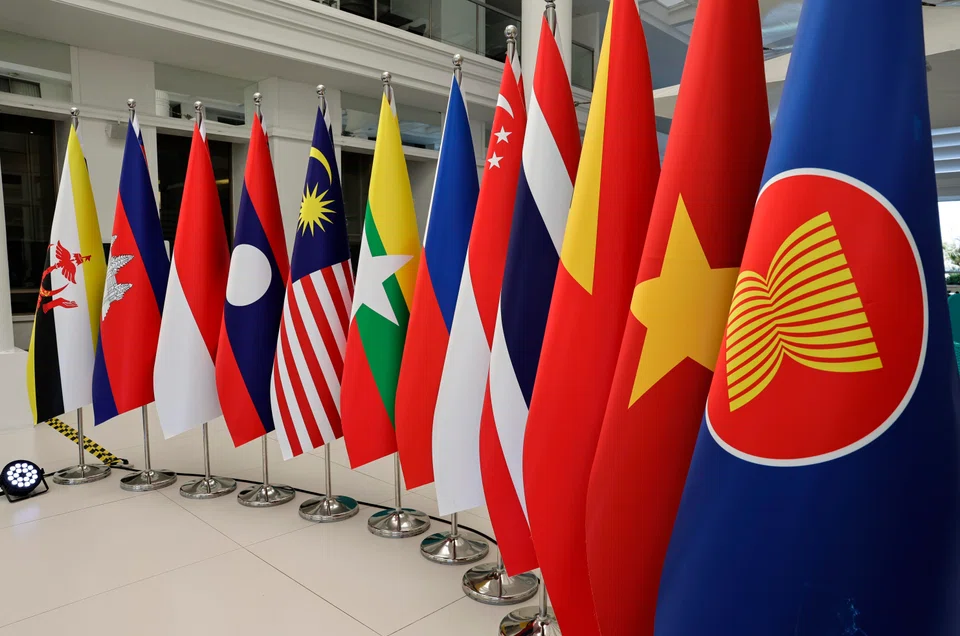
[SINGAPORE] Singapore companies could find it easier to do business in South-east Asia under a proposed regional agreement that aims to reduce paperwork, simplify digital transactions and make it easier to transfer data between countries.
The Asean Digital Economy Framework Agreement (Defa) is expected to be signed at the 49th Asean Summit in Manila, which runs from Sunday (Nov 15) to Tuesday.
The agreement is among Asean’s efforts to strengthen economic integration, as leaders of the 11-member grouping gather in the Philippine capital to discuss regional cooperation and other challenges.
But what exactly is Defa, and how will it benefit Singapore businesses?
What is Defa?
Put simply, it aims to make it easier for companies to conduct business digitally across Asean.
Today, each country has its own rules governing activities such as transferring customer information, accepting electronic documents and making online payments.

This means a Singapore company operating in several Asean markets would have to fall in with the varying requirements in these markets. Defa seeks to bring these rules closer together, and reduce the complexity of doing business across borders.
Negotiations began in 2023 and ended in May 2026.
A 2023 study commissioned by Asean member states and endorsed by their economic ministers estimated that the region’s digital economy could reach almost US$1 trillion by 2030 on its existing growth trajectory.

The successful implementation of Defa could double that figure to as much as US$2 trillion, the study said.
Syetarn Hansakul, a senior analyst at the Economist Intelligence Unit, told The Business Times that more consistent digital rules could encourage trade in services and make Asean more attractive to overseas investors.
How will businesses benefit?
One potential benefit is that it would be easier for companies to transfer information between countries.
For example, a Singapore business with customers in Indonesia and Malaysia may need to transfer their information between offices or computer systems. However, different national rules governing how data is stored and transferred can make this complicated and costly.
Ying Wang, a technology lawyer at Ashurst Perkins Coie, said Defa could make these requirements more predictable, although countries would still retain their own data protection laws.
“The real test is whether Defa makes new localisation rules harder to introduce,” she said, referring to requirements that certain data be stored or processed within a country’s borders.
Another benefit would be less paperwork when trading across borders.
Singapore already recognises certain electronic shipping documents, but other countries may have different requirements, forcing businesses to continue using paper.
For instance, a Singapore exporter may issue an electronic bill of lading, a document used to record the shipment of goods, but if the receiving country does not recognise it, physical documents may still need to be prepared.
“A digital trade document is only as good as its weakest border,” Wang said.
Defa aims to encourage greater recognition of electronic documents and signatures across Asean, although differences in technical standards and customs procedures could remain.
The agreement also seeks to improve cooperation on digital payments, potentially making cross-border transactions easier.
Why should Singapore businesses care?
Singapore is already one of the region’s more digitally advanced economies, but companies expanding overseas still face different rules in each market.
Defa could make regional expansion easier by reducing some of these differences.
This could be particularly useful for smaller businesses, which may lack the resources to navigate different regulatory requirements when entering new markets.
Hansakul said digital services offer an important growth opportunity for Singapore, given its limited land and labour resources.
Industries that could benefit include e-commerce, finance, gaming, entertainment and online travel. Manufacturing, healthcare, education and professional services could also gain from greater digitalisation, she said.
When will businesses see the benefits?
Not immediately.
Asean countries have different levels of digital infrastructure and regulatory development, which could affect how quickly the agreement is implemented.
Hansakul expects implementation to be smoother in Asean’s six largest economies – Indonesia, Malaysia, the Philippines, Singapore, Thailand and Vietnam – while smaller economies could face greater challenges.
Countries may also need to make changes to their domestic laws and regulatory practices to implement Defa’s commitments.
Even where countries agree on common rules, businesses may have to wait for changes to national legislation, technical systems and government procedures before they can take full advantage of them.
Wang said changes would arrive gradually rather than all at once.
“In the near term, Defa’s value is as a compass rather than a switch,” she added.
Decoding Asia newsletter: your guide to navigating Asia in a new global order. Sign up here to get Decoding Asia newsletter. Delivered to your inbox. Free.
Copyright SPH Media. All rights reserved.