Asia-Pacific airlines call for government support as high fuel costs bite
Regional airline body also calls for efforts to boost sustainable fuel supply, passenger rights, cabin safety

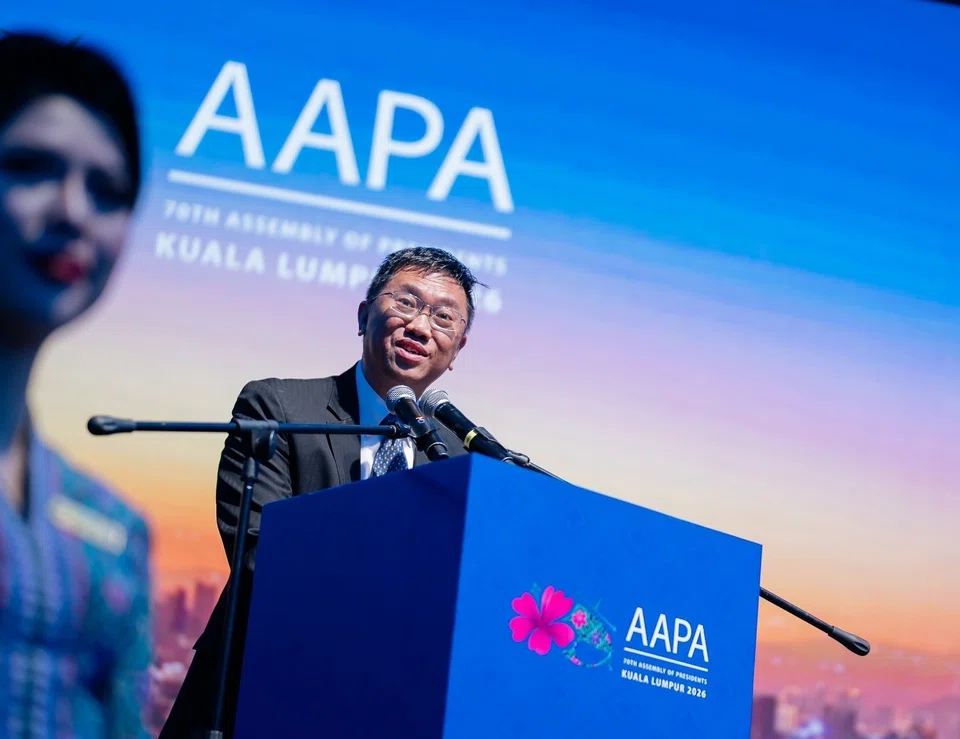
[KUALA LUMPUR] The Association of Asia-Pacific Airlines (AAPA) has urged regional governments to support airlines as elevated aviation fuel prices begin to hurt the sector.
The organisation also called for more co-operation to address the lack of sustainable jet fuel, as well as issues pertaining to cabin safety, such as lithium battery fires and unruly travellers.
Wong Hong, director-general of the AAPA, said: “The operating environment for Asia-Pacific airlines has changed markedly (in the past year). The sharp escalation in fuel prices, coupled with other cost pressures and operational uncertainties, has created a far more demanding environment.”
The 17 member airlines of the trade body passed resolutions on these issues at its annual Assembly of Presidents meeting in Kuala Lumpur on Friday (Nov 13).
On high fuel prices, AAPA asked that governments provide timely, practical support to airlines facing sharply higher fuel prices and mounting operational hurdles.
Wong added: “Governments must recognise these pressures and work constructively with the industry to provide support that safeguards the long-term viability of air transport in the region.”

Improving sustainability, safety
On support related to operating costs, Wong said the specifics would vary by market and carrier: “I urge governments to engage with their respective home carriers to find solutions or better answers for them… (These) can be quite different for different carriers, depending on market conditions and depending also on the level of urgency.”
The 2026 Iran conflict has driven jet fuel prices to almost US$200 a barrel in recent months, up from around US$100 or less before the war broke out there in February.
Many airlines have passed price increases onto consumers through fare increases and fuel surcharges.
SEE ALSO


International Air Travel Association projections show that net profit margin for airlines in 2026 will be down to 2 per cent, the weakest performance in more than a decade.
AAPA monthly data indicated that passenger traffic in the region has already shown weakness, evidenced by an aggregate decline in passenger volumes from April to August 2026.
The association has also called on governments to take the lead in developing a supply of sustainable aviation fuel; it listed eight key principles that could guide the planning of national and regional policies to this end.
Among other things, the principles espouse clear, long-term policymaking and encourage competition and a technology-agnostic approach, based on actual greenhouse gas reductions and clear certification guidelines.
Sustainable aviation fuel is a linchpin of the aviation industry’s plans for net-zero decarbonisation by 2050.
The trade body has also suggested more standardised passenger rights across territories. These include finding a balance between protecting passengers and industry competitiveness, and delivering appropriate care of passengers when disruptions occur.
In the area of cabin safety, AAPA noted the recent increase in on-board incidents involving smoke or fire from lithium batteries, as well as unruly passengers, medical emergencies and evacuations.
The four resolutions passed by AAPA set out a practical shared agenda for airlines, governments and regulators, it said.
Wong said: “These resolutions show how Asia-Pacific airlines intend to build an aviation industry that is sustainable, safe, secure and resilient.”
Decoding Asia newsletter: your guide to navigating Asia in a new global order. Sign up here to get Decoding Asia newsletter. Delivered to your inbox. Free.
Copyright SPH Media. All rights reserved.