

China’s funding of development institutions up sharply: study
But its voting power and presence in international bodies still lag its economic weight
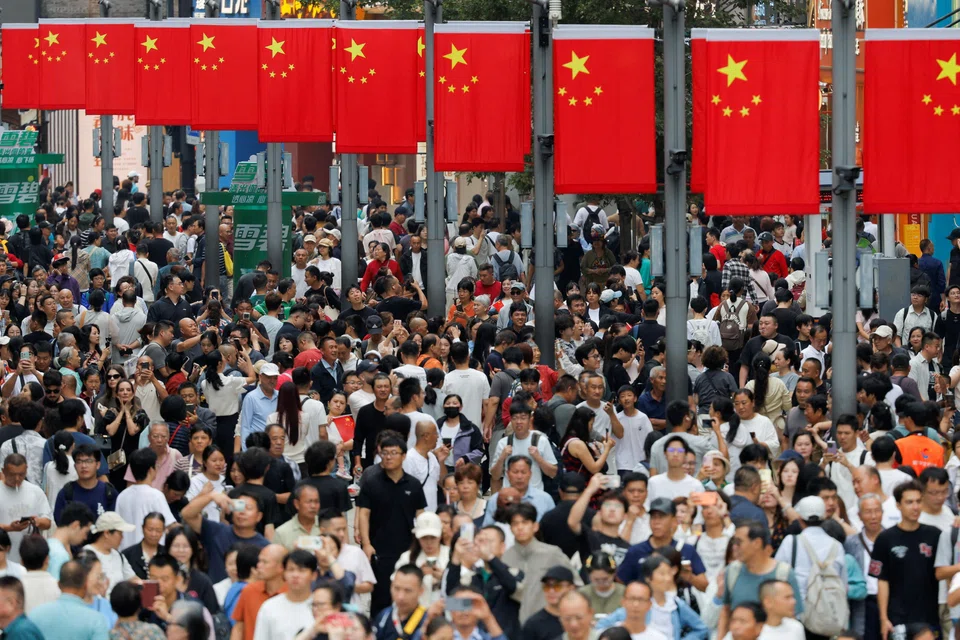
[WASHINGTON] China, the world’s second-largest economy, has boosted funding of multilateral development institutions tenfold since 2010, but its voting power and presence in international bodies still lag its economic weight, a new study released on Thursday (Oct 8) said.
Beijing’s funding for development banks reached US$3 billion in 2024 while its funding for UN development-related bodies surged by 47 per cent, according to the report by the Center for Global Development.
China also sharply increased its funding for multilateral climate finance to US$5.25 billion in 2025, but slashed its support for funds like Gavi, a public-private partnership to procure and distribute vaccines in low-income countries, by 32 per cent.
“This is a big step up from 15 years ago, but it’s still a tiny share of China’s economy,” said Ian Mitchell, co-author of the report, noting China’s funding decisions had been quite selective. “It hasn’t supported much of the UN voluntarily. It hasn’t supported the verticals virtually at all, and it’s continued its bilateral efforts, but at a smaller scale.”
Co-author Beata Cichocka said that China has made some large contributions to the World Health Organization while the US withdrew from the body, but Beijing was not filling all the gaps left by Washington and other Western powers, many of which have cut development outlays.
China has long pushed for a bigger role at the World Bank and IMF to better reflect its size and contributions. China’s share of the World Bank of around 6 per cent is less than half what the fund’s own economic formula suggests, while the US retains veto power with its shareholding of around 16 per cent.
US and other Western officials have put the brakes on changes to the shareholder structures of the IMF and World Bank that would give China a larger voting power, arguing there is no consensus on realignments and China lacks transparency.
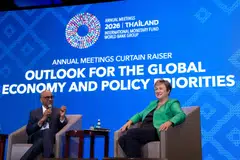
The study, released ahead of the annual meetings of the IMF and World Bank in Bangkok next week, showed China was now the fifth-largest donor to the World Bank’s fund for the poorest countries, the International Development Association, following a US$1.5 billion pledge during the last replenishment.
China also boosted funding for zero- and low-interest multilateral bank lending programmes by 92 per cent in the last five years, it said.
Only 11 per cent of Beijing’s contributions to UN entities were voluntary, which Mitchell called a telling sign of China’s strategic emphasis. Over 70 per cent of US contributions were voluntary.
Chinese nationals hold five senior management jobs at the World Bank and other multilateral development banks, a number that has held steady since 2021. But Beijing has lost top jobs at several UN institutions since 2020, including the WHO and the International Telecommunication Union, the study found.
China, close to being declared a high-income country, has sharply reduced its borrowing from development banks, with total borrowing down to US$4.7 billion in 2024 from US$8 billion in 2021, the study found.
Once the World Bank’s biggest borrower in 2017, it now ranks 18th, and the bank recently announced that it will stop all lending to China after 2031. REUTERS
Decoding Asia newsletter: your guide to navigating Asia in a new global order. Sign up here to get Decoding Asia newsletter. Delivered to your inbox. Free.
Share with us your feedback on BT's products and services
TRENDING NOW

DBS, OCBC, UOB rout lops billions off STI as inflation, rate concerns spook investors

Grab CEO’s wife Chloe Tong on life with Anthony Tan and finding her purpose

OCBC sheds S$8 billion in value as shares close nearly 6% down; analysts cautious on banks

Deal between tycoon friends sparks scrutiny of Philippine power sector

