ECB monitoring euro but rally not dramatic: council member
The remarks come less than a day after the central bank left its deposit rate at 2% for a fifth meeting
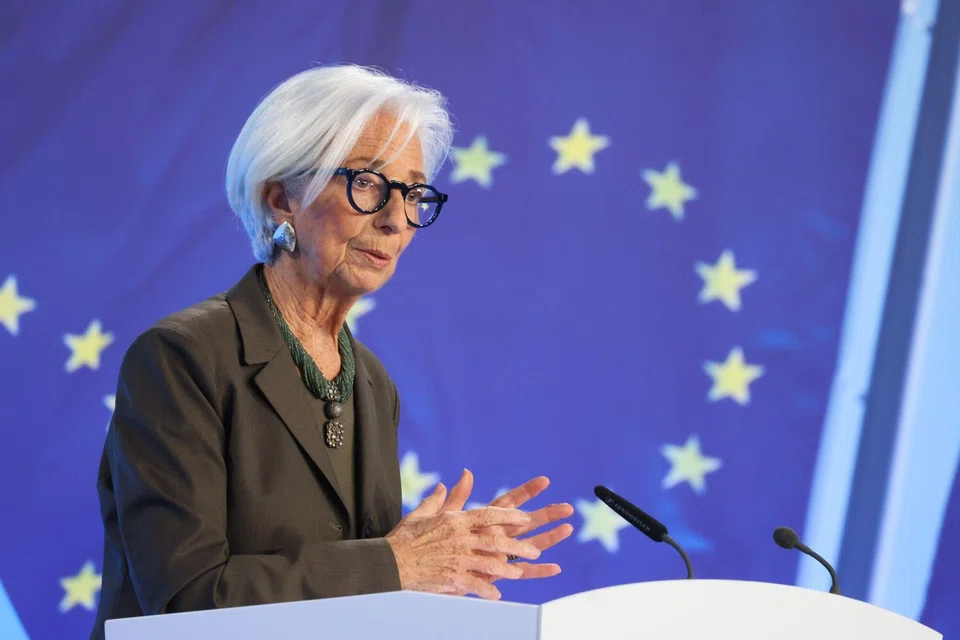
[FRANKFURT] The European Central Bank (ECB) is keeping an eye on the euro’s recent rally, but governing council member Yannis Stournaras sees no cause for alarm.
“We’re monitoring exchange rates and monitoring all variables that affect activity and inflation,” the Greek central bank chief told Bloomberg TV, stressing that the strengthening since March 2025 is already a part of the ECB’s projections and that the common currency remains within a historic trading range to the US dollar.
“Most of the appreciation has taken place in the first quarter of last year,” he said on Friday (Feb 6). “So it is not something dramatic that should lead us to change our course of action.”
The remarks come less than a day after the ECB left its deposit rate at 2 per cent for a fifth meeting, with its president, Christine Lagarde, on Thursday repeating that officials consider themselves to be in a “good place” and also playing down the euro’s recent rise.
Most investors and economists expect no further reductions in borrowing costs following the eight which have already enacted this cycle.
Other policymakers agreed with Stournaras on the euro.
“Movement on the US dollar has stabilised in recent days,” Bank of France governor Francois Villeroy de Galhau told BFM Business TV. “We are around US$1.18. Coincidentally, it’s the historic rate when you look at the average since the creation of the euro.”
Austria’s Martin Kocher said the US dollar-euro exchange rate has not changed significantly since mid-2025, adding that it is not “a very good anchor for decision-making”.
“We don’t actually see that much euro strength – our growth is too weak for that,” he told reporters in Vienna. “The exchange rate has remained relatively stable lately.”


Latvia’s Martins Kazaks also highlighted that the euro rate has fluctuated in a relatively narrow corridor in recent months, saying the moves are already “baked into” the ECB’s baseline scenario.
He warned, though, that a “sizeable and pacey” strengthening would lower the inflation outlook, “potentially triggering a policy response”.
Stournaras sees risks to the outlook for inflation and economic growth as balanced, describing officials as “quite confident”.
“We don’t feel that we should change the course of action,” he said. “We are data dependent. It has proven a very good practice up to now.”
Speaking separately, Spain’s Jose Luis Escriva was also relaxed about the current situation around prices, though he stressed that officials stand ready to act quickly if needed.
“We see that inflation expectations are anchored at that level, and our forecasts for the next two years are to remain in that environment,” he told Cadena Ser radio. “Everything points to the fact that the best course at this moment is interest-rate stability.”
Europe’s economy has shown resilience to headwinds like tariffs, expanding by 0.3 per cent in the fourth quarter, better than expected. Growth is likely to be underpinned by heftier government spending in Germany and elsewhere.
Risks remain, however. Erratic US trade policy is the main one, while euro-area inflation sank to 1.7 per cent in January.
That could embolden the governing council’s dovish minority, even as the ECB forecasts a return to 2 per cent in 2028.
“There is a real risk of lower-than-expected inflation,” Finland’s Olli Rehn said in a blog post, citing subdued economic expansion, a slowdown in wage gains, the stronger euro and an increase in Chinese imports.
Professional forecasters kept their inflation outlook unchanged from October, an ECB survey published on Friday said. They see euro-area price gains at 2 per cent in the longer term – after a dip below the mark this year and a blip above in 2028.
Analysts expect growth to be slightly faster in 2026 than previously anticipated, after the economy performed better at the end of 2025.
“There have been no major surprises in the eurozone economy over the past few months,” Estonia’s Madis Muller said in a blog post. “The ECB’s December forecast continues to provide a good basis for making interest-rate decisions.”
Stournaras said the ECB has achieved a soft landing, calling the current situation a “stable equilibrium”.
Commenting separately, Ireland’s Gabriel Makhlouf said policymakers’ data-dependent approach “calls for patience rather than action at this stage”. BLOOMBERG
Decoding Asia newsletter: your guide to navigating Asia in a new global order. Sign up here to get Decoding Asia newsletter. Delivered to your inbox. Free.
Share with us your feedback on BT's products and services