

Farage’s reform surges in bruising election for Starmer’s Labour
The results are likely to deepen rumblings within Labour about Starmer’s leadership
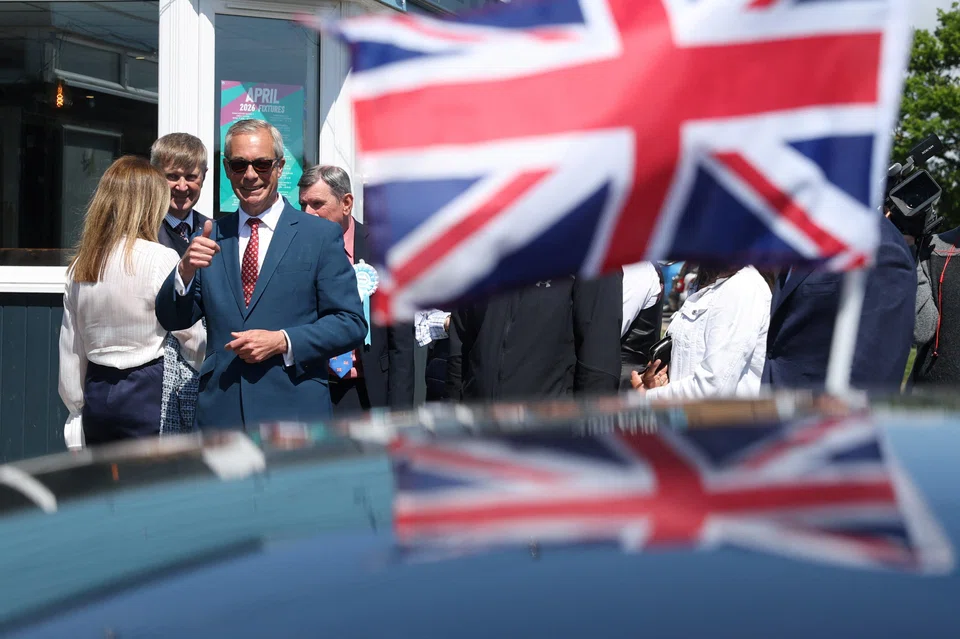
PRIME Minister Keir Starmer said he had no plans to step aside as Labour leader after early results in local elections showed Nigel Farage’s populist Reform UK racking up sweeping gains over Britain’s governing party.
With counts completed in approaching a third of English councils, Reform had posted a net gain of 275 seats, while Labour’s tally was down by 204. The governing party have lost almost half of the seats they were defending, although that’s below the pace of some of the worst-case predictions.
Labour retained control of 10 councils — but lost the helm in eight. Reform wrested control of the council in Newcastle-Under-Lyme from the Conservatives, and Faraged also declared victory in the party’s first London council, Havering.
The results underscore a splintering of British politics that’s seen the insurgent Reform and Green parties make up ground on the right and left against the Tory-Labour duopoly that’s dominated British politics for more than a century.
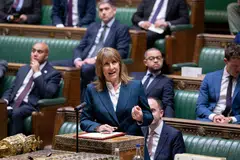
They also threaten to deepen discontent within Labour about Starmer’s leadership, with potential rivals Angela Rayner, Starmer’s former deputy, and Health Secretary Wes Streeting weighing a challenge.
“These are really tough results — I’m not going to sugarcoat it,” Starmer told broadcasters on Friday, while resolving to stay on as prime minister until the next election. “The voters have sent a message about the pace of change, how they want their lives improved. I was elected to meet those challenges, and I’m not going to walk away from those challenges and plunge the country into chaos.”
There were rumblings within the Labour left in particular, with former shadow chancellor John McDonnell, telling BBC radio that his party should have a “conversation” about Starmer’s future, and Rebecca Long-Bailey, the Member of Parliament who was runner-up to Starmer in the 2020 leadership race calling it a “really soul-destroying night,” noting the party had been squeezed by both Reform and the Greens.
But Deputy Prime Minister David Lammy argued “you don’t change the pilot during the flight.”“You carry on, and you recognise, too, that governments sometimes, particularly incumbent governments, have it hard,” he said.
Long-dated bonds, which are more sensitive to political and fiscal risks, edged higher after Starmer’s comments, sending the 30-year yield three basis points lower to 5.61 per cent. The pound held an earlier gain of 0.1 per cent versus the euro at around 0.8645.

Britain’s long-term borrowing costs hit a 28-year high earlier this week, amid renewed worries about political instability. One concern for investors is that the results could prompt Labour to adopt a looser fiscal policy than the one so far maintained by Starmer and his chancellor of the Exchequer, Rachel Reeves.
Adding to the swirl of leadership speculation, the Times newspaper reported that Energy Secretary Ed Miliband privately urged Starmer to consider setting out a time line for his resignation to avoid party strife. Miliband, himself a former leader of the Labour Party, made the suggestion in a meeting around two weeks ago, sources told the Times.
A spokesperson for Miliband said they wouldn’t comment on private conversations but did not accept the Times’ account, while refusing to comment on any specifics of the story. The spokesperson said Miliband has always supported the prime minister and continues to do so, declining to deny that Miliband had suggested Starmer set a departure timetable.
As well as voting for some 5,000 councilors, Britons on Thursday also cast ballots to elect the parliaments of Scotland and Wales. No counts have yet been completed in those elections, though Labour has reconciled itself to losing to John Swinney’s Scottish National Party north of the border.
In the Welsh assembly, known as the Senedd, the governing party appears set to place third behind Reform and Rhun ap Iorwerth’s Plaid Cymru. That would be an extraordinary collapse in political fortunes for Labour in a part of the country where they’ve come out on top in every election for the parliaments in Westminster and Cardiff for more than a century.
Counts showed voters had also punished the main opposition Conservative Party, which had more than a quarter of its seats, with the Greens almost doubling their count and the Liberal Democrats also making gains.
“Our fractured politics has been fully confirmed and illustrated over the last few hours,” John Curtice, professor of politics at the University of Strathclyde, told the BBC.
Reform was buoyant, hosting a results party in its Millbank Tower headquarters featuring ample wine, beer and a cocktail bar that served drinks including the “Rachel Reeves ‘Rita” with the tagline “no growth included” and the “Kemi Bounce Bellini” with “short-lived sparkle.”
“We’re proving in a big way, we can win in areas that Labour have dominated, frankly, since the end of World War I,” Farage told journalists in London on Friday. “You’re witnessing an historic shift in British politics. This is now the most national of all parties. We’re competitive in the north of Scotland. We were competitive in Cornwall in the county elections last year. We’re competitive in every part of the country, and we’re here to stay.”
Reform’s finance spokesman, Robert Jenrick — who defected from the Tories earlier this year — earlier told Sky News that the results highlighted a “new force emerging, a truly national party, which is going to go on to win the next general election.”
Farage spoke in Havering, where he said that Reform had for the first time secured overall control of a London council. However, the party failed to take over in Bexley in south-east London, where it had harbored hopes of defeating the Tories.
Elsewhere in London, which has traditionally been a Labour stronghold, pre-election projections suggested the governing party would slip to its lowest share of the vote since the early 1900s, with Zack Polanski’s Greens making big advances.
Early results showed they retained control of the London boroughs of Ealing, Merton and Hammersmith & Fulham, while ceding Westminster to the Tories and losing a majority in Wandsworth, where no party won enough seats to control the council. A number of councils where the Greens are expected to challenge Labour, including Lewisham, Hackney and Lambeth, are yet to report results.
In Hammersmith, Labour’s council leader, Stephen Cowan said that his party’s councilors would lose control in many parts of the country “for no fault of their own.”
“This is a wake up call across the political spectrum, across Western Europe and North America, for people who are centrist in the main parties to really focus on making the arguments to beat the populists,” he said in an interview. BLOOMBERG
Decoding Asia newsletter: your guide to navigating Asia in a new global order. Sign up here to get Decoding Asia newsletter. Delivered to your inbox. Free.
Share with us your feedback on BT's products and services
TRENDING NOW

Deal between tycoon friends sparks scrutiny of Philippine power sector

Canada is upping oil flows to Asia, but South-east Asia’s refineries aren’t ready to handle them yet

Grab CEO’s wife Chloe Tong on life with Anthony Tan and finding her purpose

China got cool for foreigners. But can they find a job there?

