


Ambani’s Jio surges in debut after India-record US$3.1 billion IPO
The gain has made it the country’s second-most valuable listed company after parent Reliance Industries
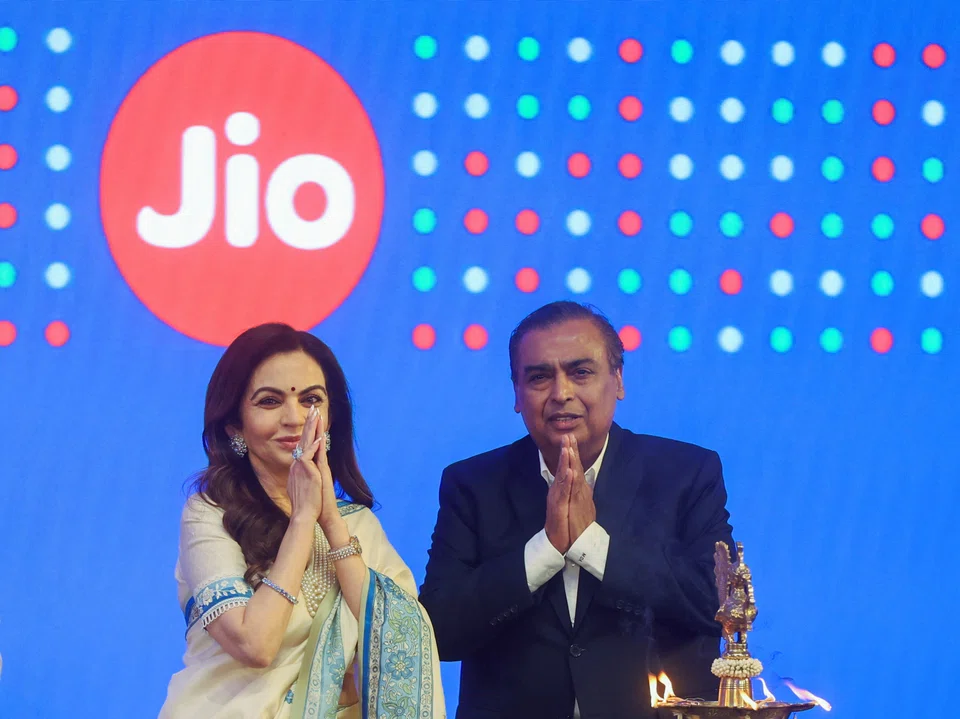
JIO Platforms surged in its debut, bucking a poor track record of India’s biggest share sales and giving investors a rare bright spot amid a bruising equity sell-off.
Shares of billionaire Mukesh Ambani’s telecom and digital services giant jumped 27 per cent to 1,417.5 rupees at close, after it raised a record US$3.1 billion in India’s biggest initial public offering.
The rally valued Jio at US$137 billion, making it India’s second-most valuable listed company after parent Reliance Industries and lifting the Ambani empire past Tata Group as the nation’s most valuable conglomerate.
“Jio’s historic listing reflects investors’ faith in India’s growth story and, more importantly, their confidence in Reliance Group’s vision and ability to execute,” said Dharmesh Mehta, managing director of DAM Capital Advisors.
The debut “underscores the growing depth and maturity of Indian markets”, he added.
In the build-up to the deal – lead by the patriarch’s oldest son Akash Ambani – the company’s brass sold Jio, the telecom and financial services arm of Reliance, as a full-throttle tech giant. In the end, the valuation fell short of some earlier expectations amid a sell-off in Indian stocks and global equity market volatility. Still, strong demand for the offering fuelled expectations of a robust debut.
Ambani, Asia’s third-richest person, took a major Reliance Industries unit public for the first time in almost 20 years in an offering that was subscribed more than 22 times.
With Jio’s listing, Reliance Group has become India’s most valuable conglomerate, with a combined market capitalisation of 30.36 trillion rupees, overtaking Tata Group.
That strong start also broke with the recent trend of India’s biggest IPOs, which have often stumbled out of the gate. The four IPOs that raised at least US$2 billion this decade posted a weighted-average decline of 9.9 per cent on their first day, with only one – National Stock Exchange of India in September – recording a gain on debut, according to data compiled by Bloomberg.
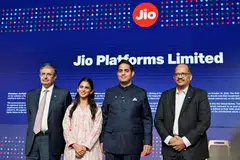
The longer-term record is hardly more encouraging. Each of India’s five biggest previous IPOs is now trading below its offer price, underscoring how blockbuster share sales have often struggled to reward investors.
Hyundai Motor India, whose 279 billion-rupee IPO held the record before Jio’s, is about 6 per cent below its offer price. NSE, which raised about US$2.4 billion in September, has also slipped below its offering price. Paytm parent One97 Communications and state-owned Life Insurance Corporation of India are both down more than 20 per cent.
Still, some analysts see Jio as better placed for longer-term gains. Nomura initiated coverage of Jio with a buy rating, citing its market leadership and the prospect of a sharp improvement in free cash flow. Analysts including Bineet Banka set a target price of 1,340 rupees.
The optimism is partly fuelled by extraordinary demand for the offering. Jio’s IPO was fully subscribed within 100 minutes of opening, according to BSE data. The deal attracted more than US$78 billion of bids and nearly 14 million applications.
At 1,119 rupees a share, the company is valued at about 15 times fiscal 2026 enterprise value to Ebitda on a post-issue basis, implying a premium to industry peers, according to Geojit Investments.
Geojit said the premium is supported by Jio’s market leadership, improving monetisation and strong cash generation. Cloud computing, artificial intelligence, enterprise solutions, entertainment, digital platforms and fixed broadband could provide additional earnings drivers over the medium to long term, it said.
Risks, though, include Jio’s dependence on telecommunications licences and spectrum, with delays in approvals, non-renewal of licences or difficulties acquiring additional spectrum threatening to weigh on the business, according to Religare Broking. BLOOMBERG
Decoding Asia newsletter: your guide to navigating Asia in a new global order. Sign up here to get Decoding Asia newsletter. Delivered to your inbox. Free.
Share with us your feedback on BT's products and services
TRENDING NOW

If Europe goes to war, the fallout will be felt in East Asia

COE review: Motor traders suggest using vehicle length, engine size and power to classify cars
Firms linked to haze pledge cooperation in meeting with Shanmugam; government to table changes to haze law

Indonesia stocks suffer worst plunge in nearly 30 years as MSCI proposes standalone status

